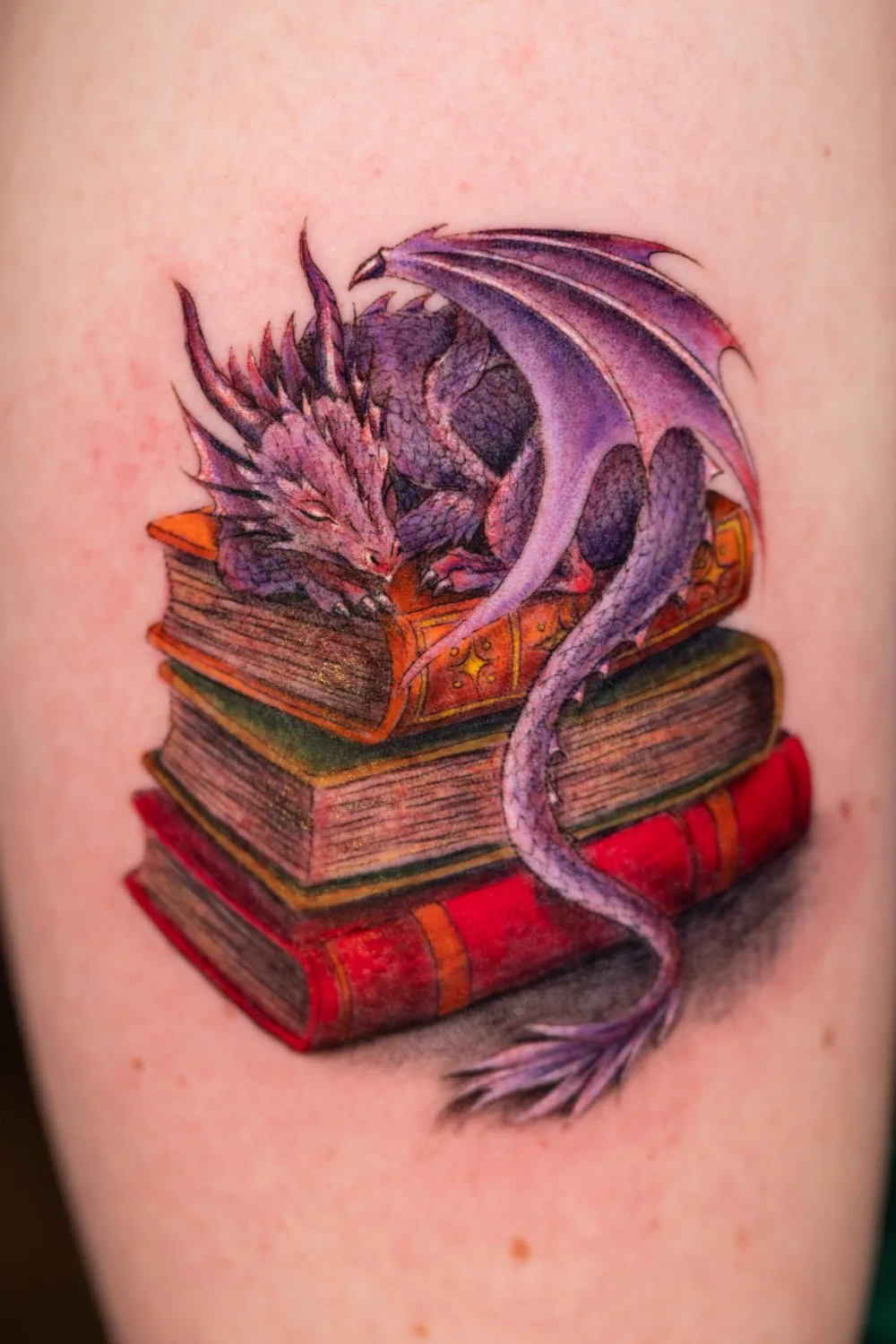
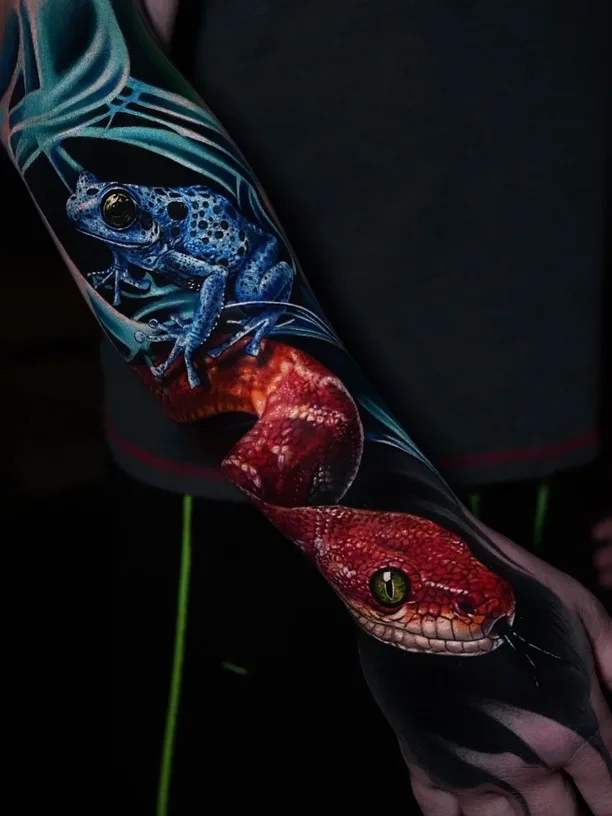
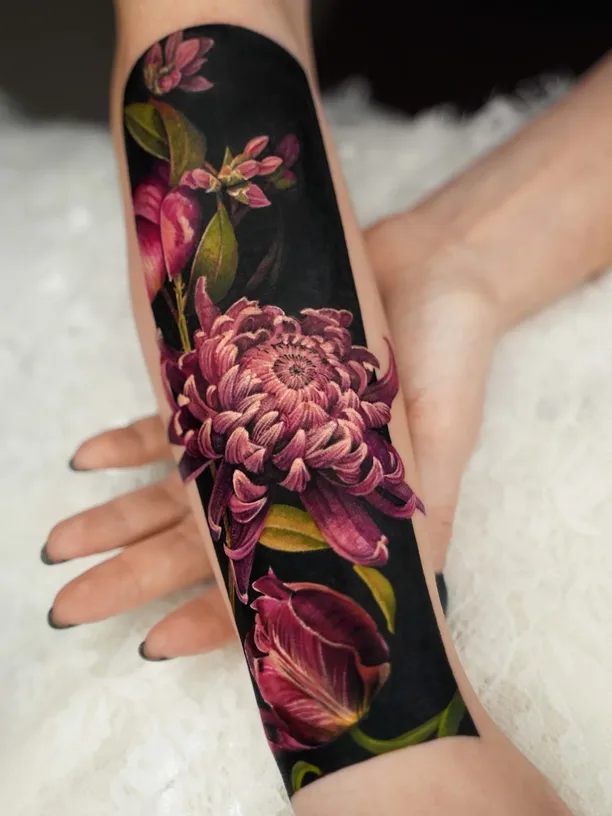
Oriana Merchan's tattoos have a quality that takes a second to name. Fine lines. Color that feels almost held back, restrained in a way that reads as intentional. And somewhere inside the composition, a moth, a flowering branch, an otter mid-story, something tips into the feeling of a painting you'd stop in front of at a museum, not a piece of flash pulled off a studio wall.
Merchan grew up in Venezuela and studied illustration at the Design Institute of Caracas, beginning to tattoo while still working through her formal art education. The two paths ran alongside each other for a while. She was tattooing roughly once a week, treating it more like a hobby, absorbing the craft the way most people absorb things when they're young and genuinely curious, no fixed destination, no particular plan.
The destination clarified itself slowly. Watching how her work landed with people, and recognizing how much she actually enjoyed the process, shifted her thinking. Tattooing stopped being a side interest. It became the thing she wanted to be serious about, and that decision fed directly back into her studio practice. The more committed she became to tattooing, the harder she pushed herself as a painter and draughtsperson, because she understood early that the two were inseparable. You can't really develop one without pulling on the other.
"It motivated me to become a better artist because I knew that would ultimately make me a better tattoo artist."
Her illustration background shows in almost every compositional decision she makes. The way elements are weighted against each other, the handling of values, the sense that each piece is telling a specific story rather than simply sitting on skin, these are the instincts of someone trained to think hard about images long before she was trained to tattoo them. She still paints in oil and gouache, still works with colored pencil. Ongoing research, she'd probably call it. Not nostalgia for a different career path.
Miami was where the career properly opened up. After relocating from Venezuela, Merchan built her clientele there over several years, working across a wider range of clients and developing the confidence to combine styles that don't typically share the same composition. Realism alongside botanical illustration. Fantasy sitting next to portraiture. The work got more detailed, more painterly. She was finding her range.
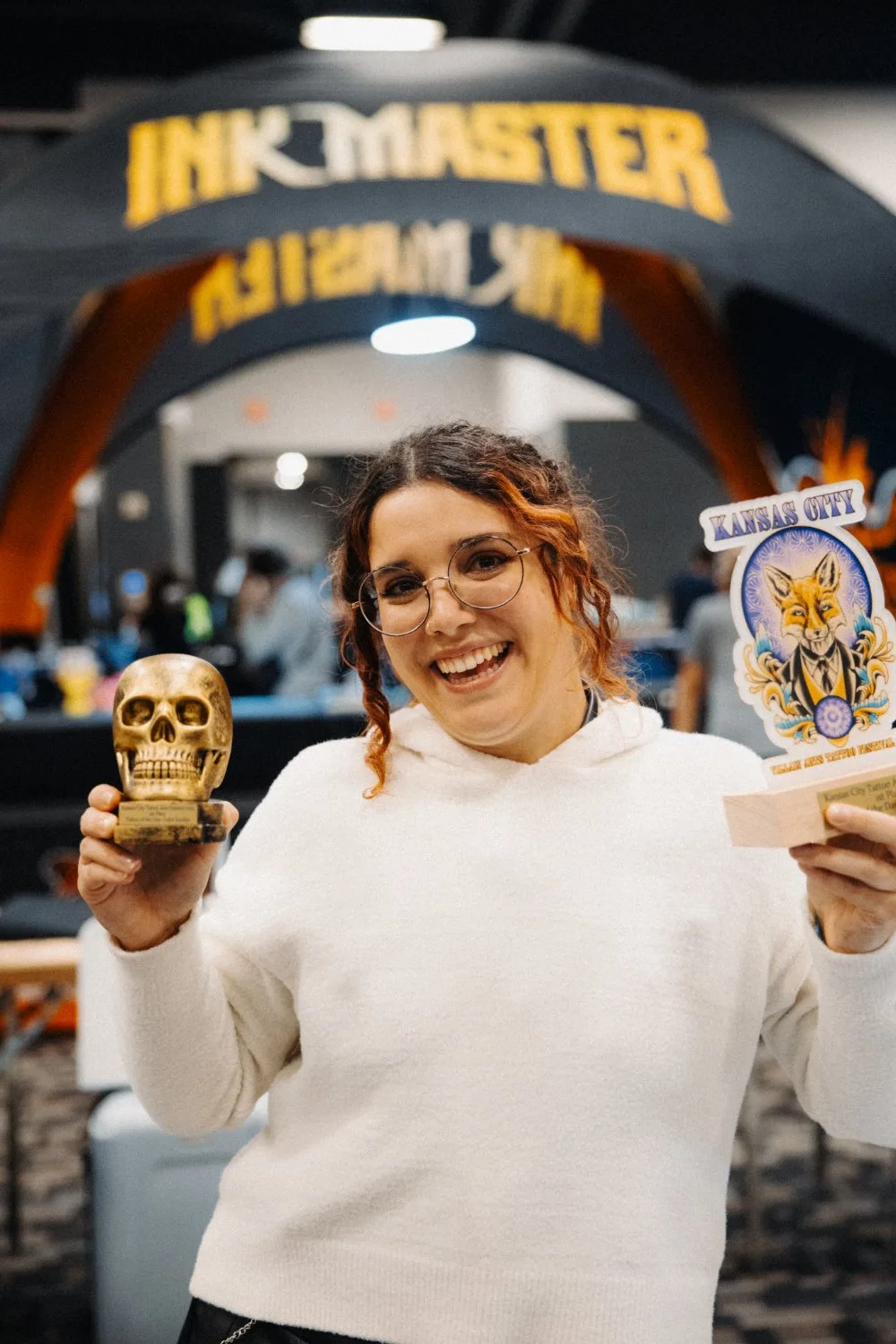
In 2025 she moved to Kansas City and, by her own account, started over. New city, no existing clientele, the particular anxiety of rebuilding something you already built once. The response surprised her. Kansas City absorbed her work quickly, and within that first year she was competing at the Kansas City Tattoo Arts Festival, where she took first place for Color Tattoo of the Day. A second year of competing followed. The city had, in a short time, become central to her story.
Conventions have sharpened something in her. Being surrounded by a high concentration of skilled artists in a compressed span of time pushes her toward attempts she might not make in the ordinary rhythm of studio work. The awards matter, sure, but probably less than what she describes as the confidence of putting work out to be judged. The willingness to be seen clearly, without the buffer of a curated portfolio.
"Being surrounded by so much talent makes me want to try things I might not attempt in my normal routine."
Her style resists a clean category label, which seems entirely intentional. Microrealism and fine line form the structural foundation, but the work pulls freely from botanical illustration, fantasy, and a kind of whimsy that reads as elegant rather than merely decorative. High contrast runs consistently across the portfolio. So does a palette she describes as moody, colors that carry weight without announcing themselves.
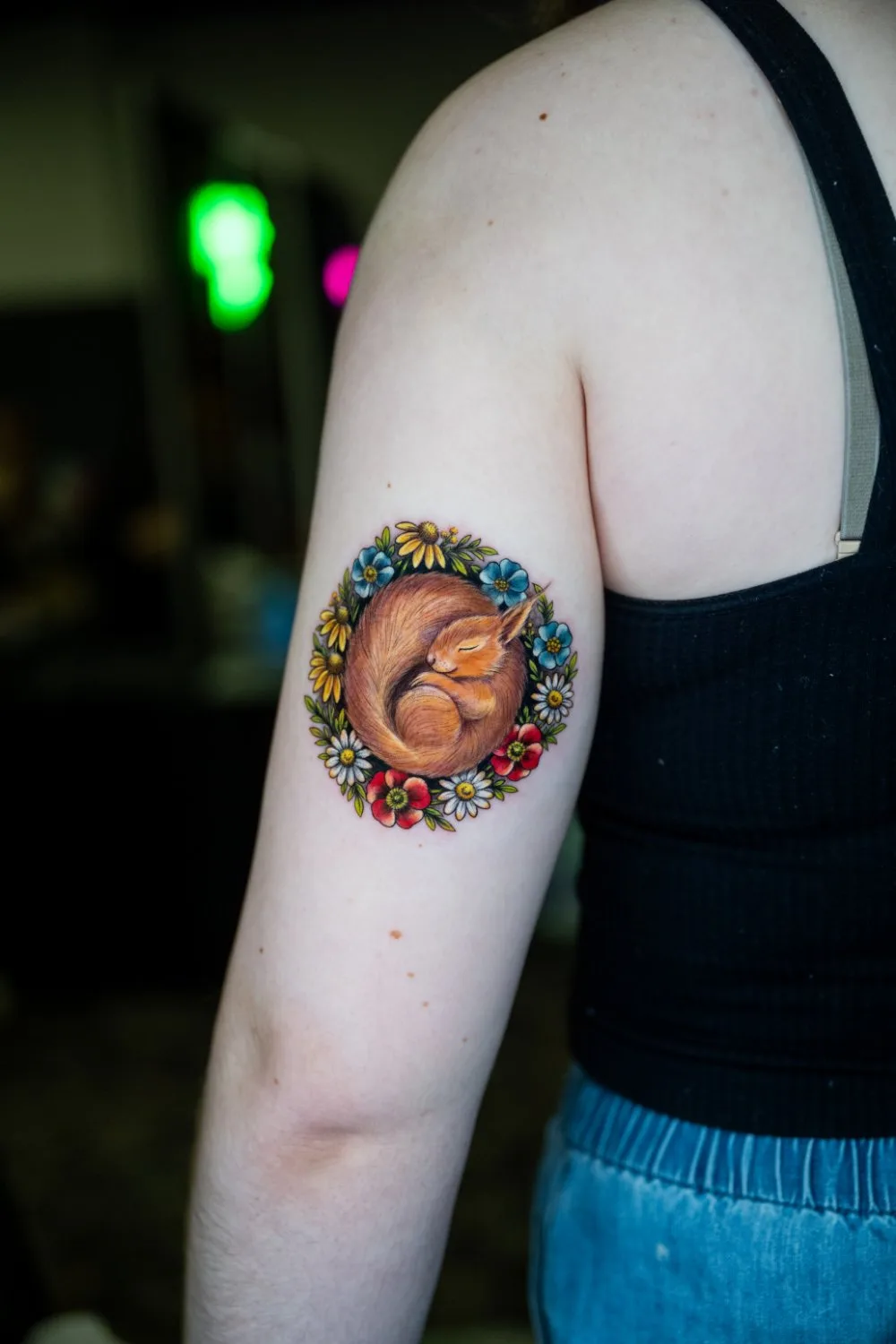
Color, for Merchan, is a technical decision as much as an aesthetic one. She thinks about how a palette will behave as skin ages, how layering affects the long-term readability of a piece, how contrast in the underpainting keeps the image legible years after the session. Her more recent studies in oil painting have made her more intentional about all of it. She's using the canvas, in a sense, to solve problems she'll eventually face on skin.
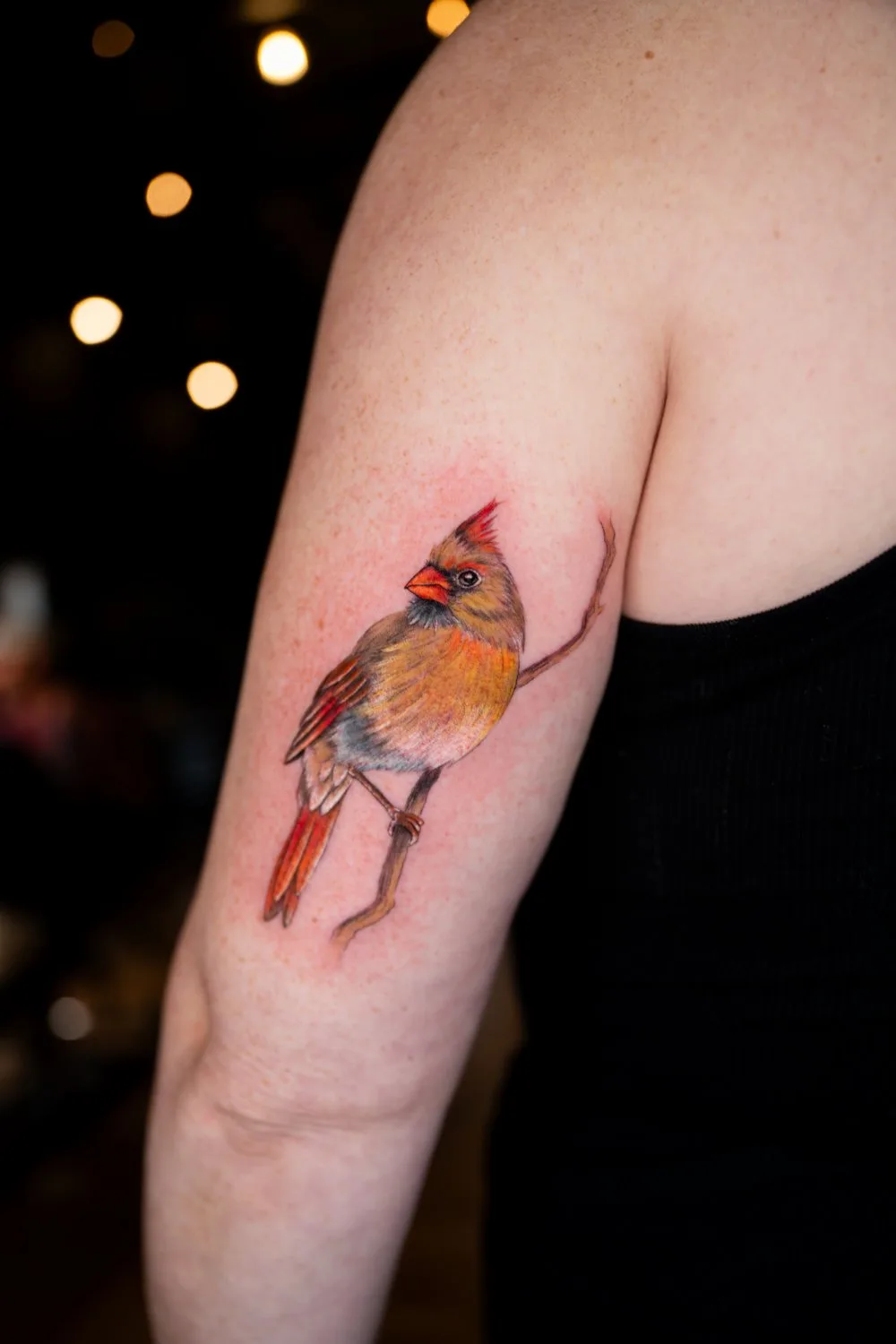
That relationship between traditional media and tattooing runs through almost everything she says about her process. Painting teaches her about light and layering in ways tattooing alone can't replicate. She's constantly working out which parts of those lessons actually translate. Some don't, and knowing that, she'll tell you, is useful too.
Longevity shapes her technical choices in specific ways. She factors in how close details sit to each other, how much information a design is trying to carry, how the composition will shift as skin changes over decades. Sometimes that means recommending a larger scale than the client initially imagined. Sometimes it means simplifying a design that would photograph beautifully but age poorly. She's plainly more interested in the second concern.
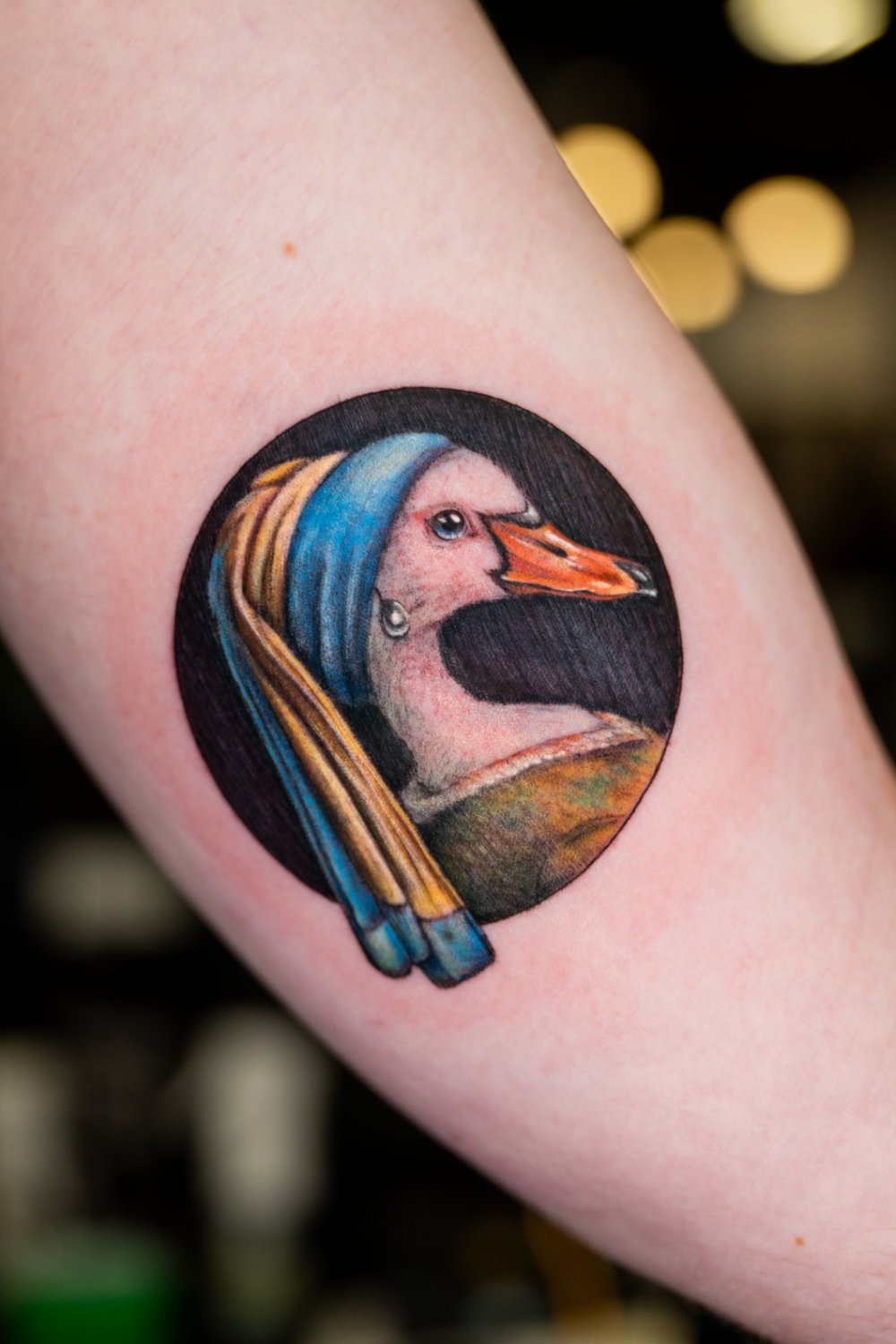
Oriana Merchan: Vermeer-inspired goose portrait
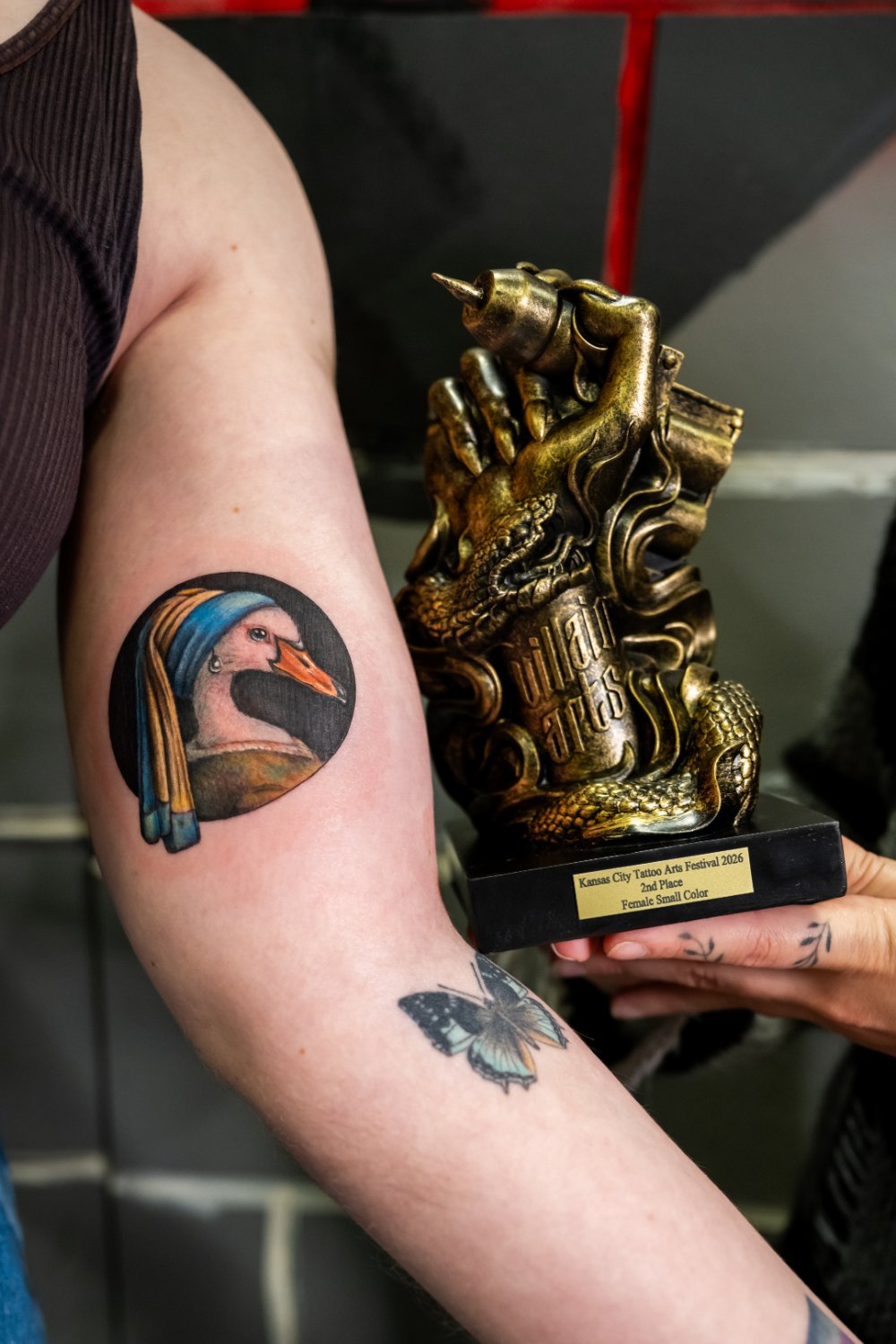
Oriana Merchan, realistic duck portrait
"I'd much rather make that adjustment now than create something that only looks good for the photograph."
She'll occasionally enlarge eyes or other focal details slightly so they stay readable as the tattoo settles into the skin. Healed work, she says, is one of the best teachers available. Fresh tattoos can look strong and still tell you very little about whether your decisions will hold. She photographs healed pieces and studies them. The technique keeps adjusting as a result.
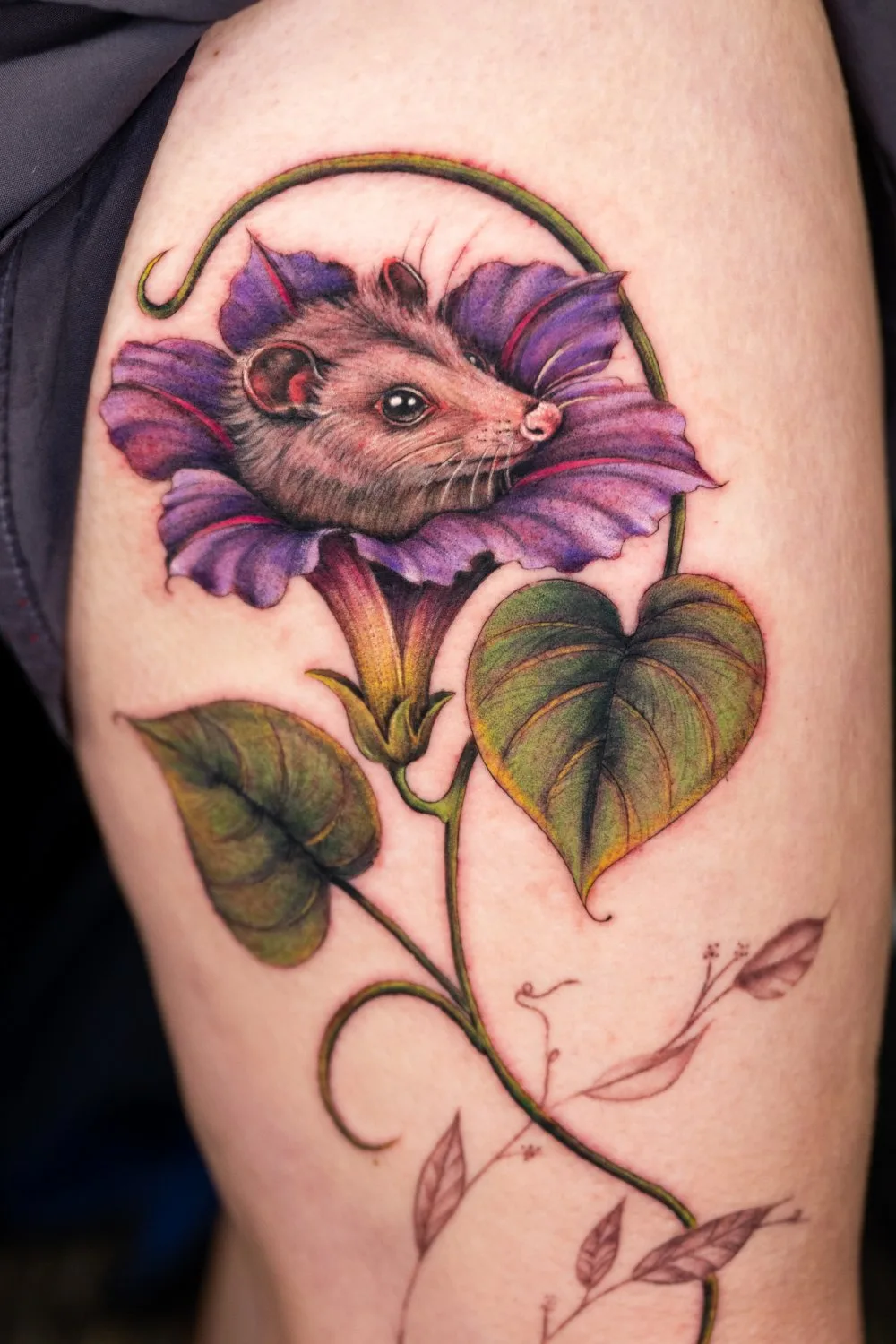
The subjects she's drawn to, fantasy literature, botanical forms, mythology, old paintings, plants encountered while traveling, reflect a deliberate effort to keep her visual references broad. She's wary of consuming only tattoo art, aware that a diet of reference drawn entirely from one medium tends to narrow rather than expand what you can imagine. A painting in a museum, a plant spotted on a walk, a passage in a book: any of them can become a starting point.
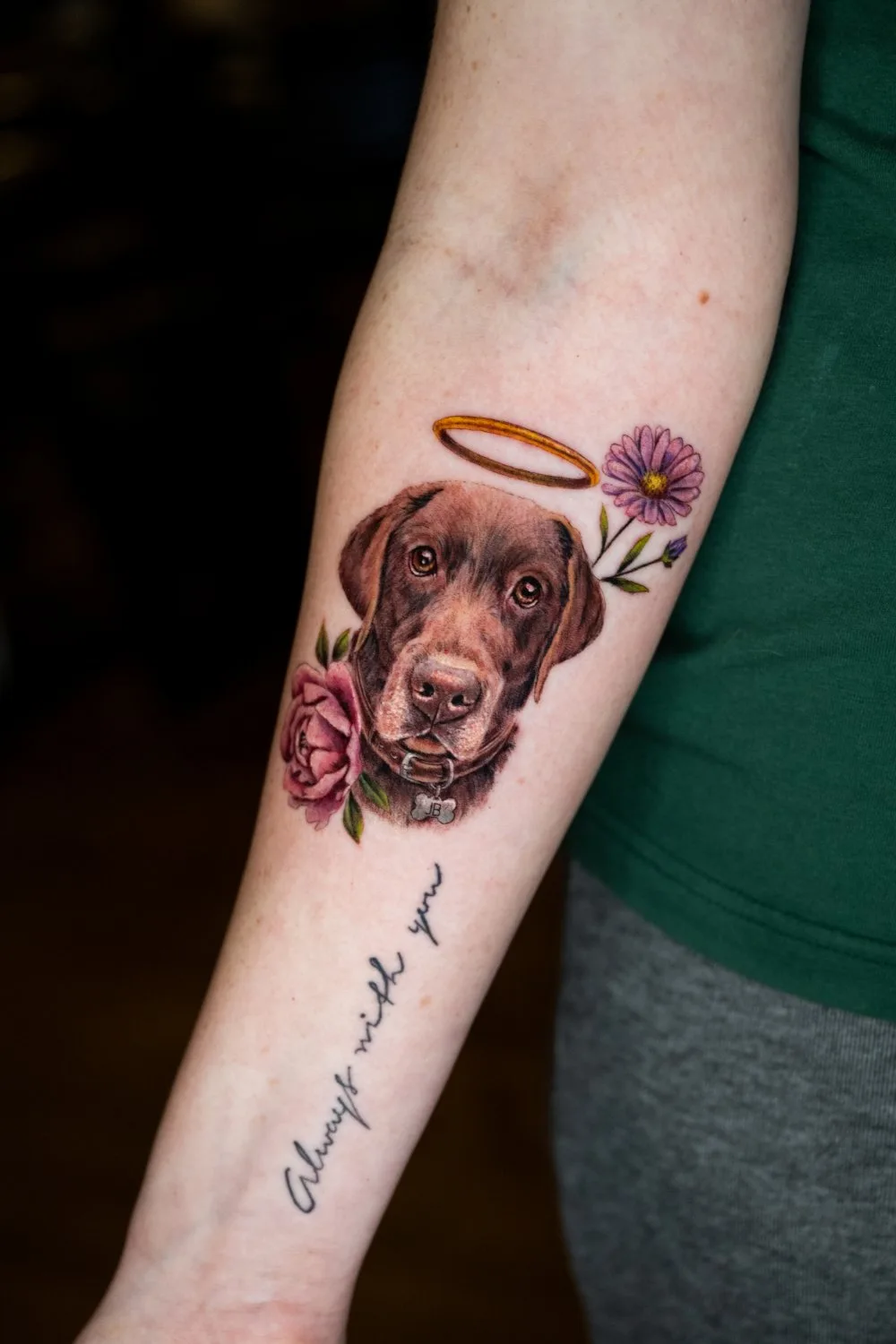
When a client brings her a personal story, she reads it first for which elements actually matter, then thinks about how those elements can live together inside a composition. Literal representation works sometimes. Symbolism works better in others. The body's geometry enters the decision late but firmly: the flow of a limb, the curve of a shoulder, the way a composition needs to move with the skin rather than pull against it.
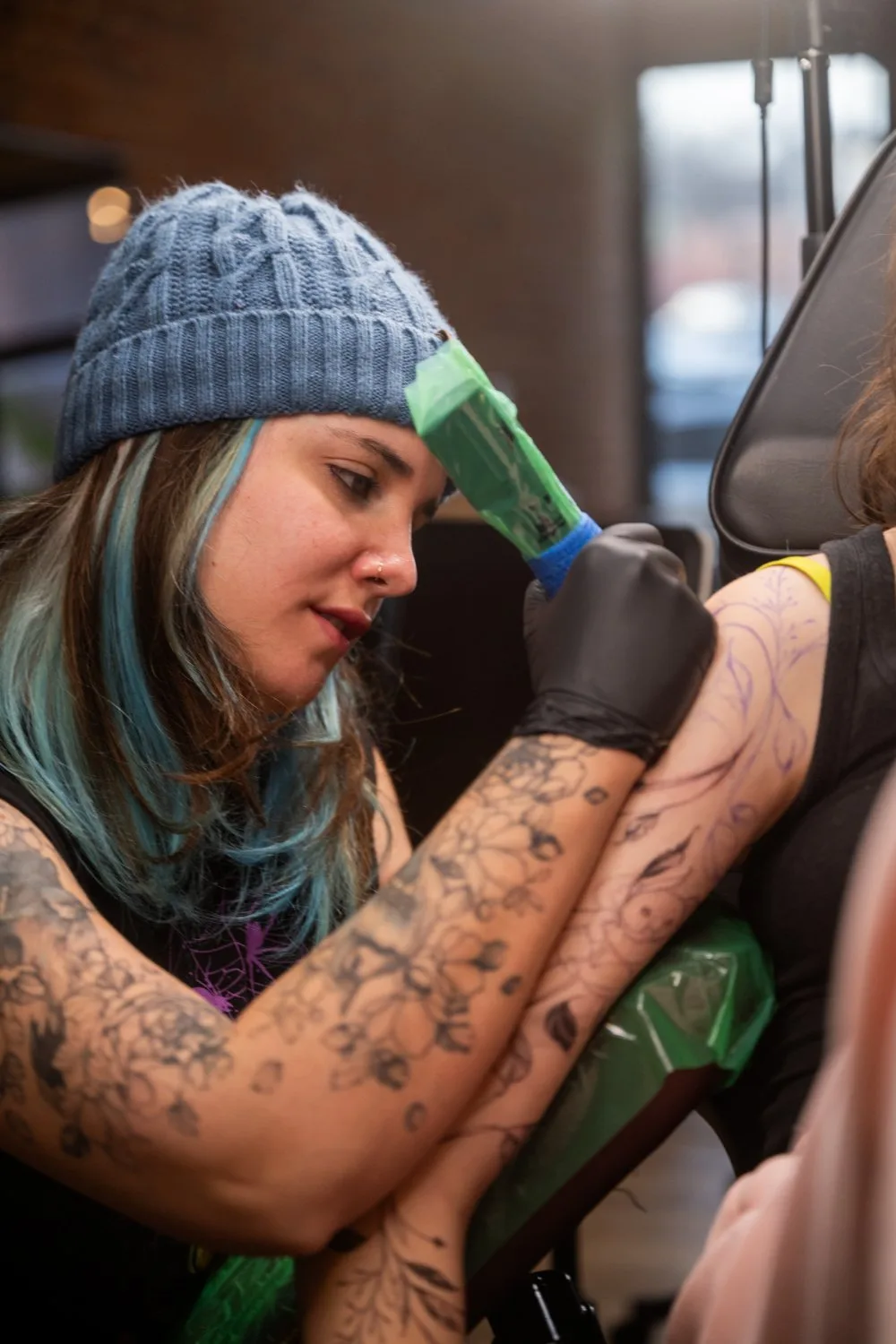
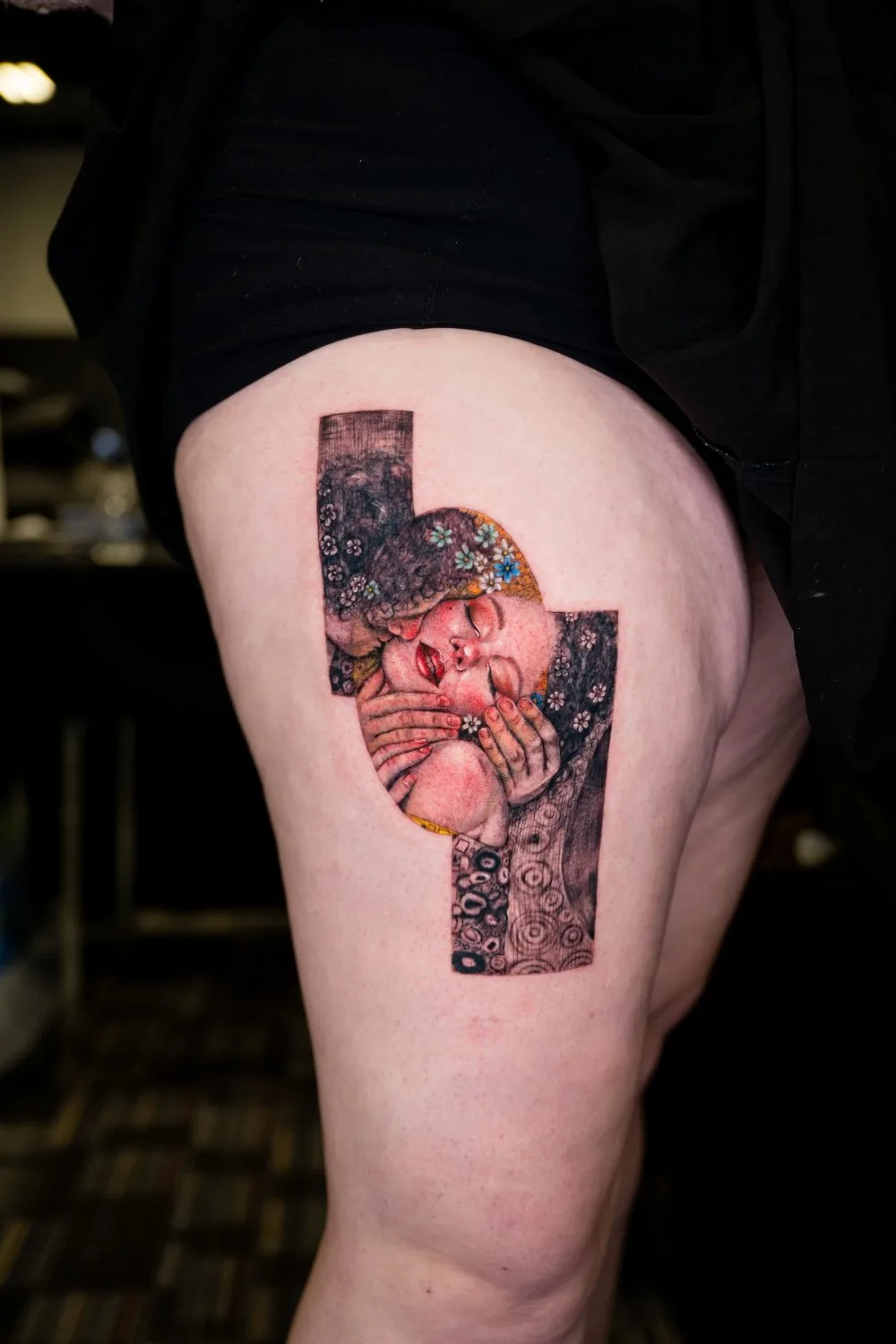
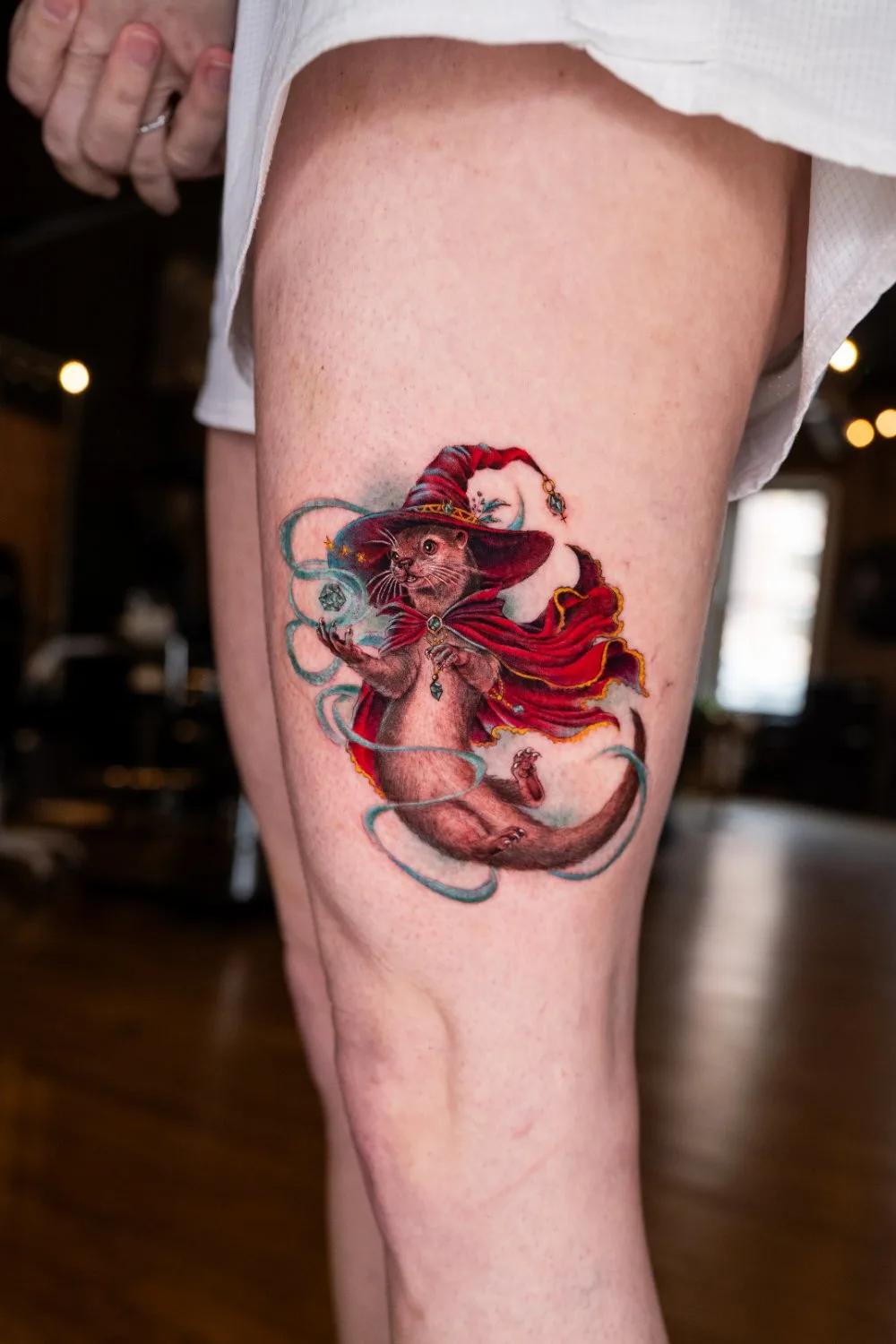
The piece she made after Klimt's The Kiss and the Magical Otter sit at very different ends of her range, one referencing a century-old masterwork, the other conjuring an entire small fantasy world inside a compact image, yet they share the same underlying ambition: to make something that transports the viewer, however briefly, the way a strong painting does in a gallery. That feeling of being completely absorbed by an image is, by her own account, the standard she holds herself to.
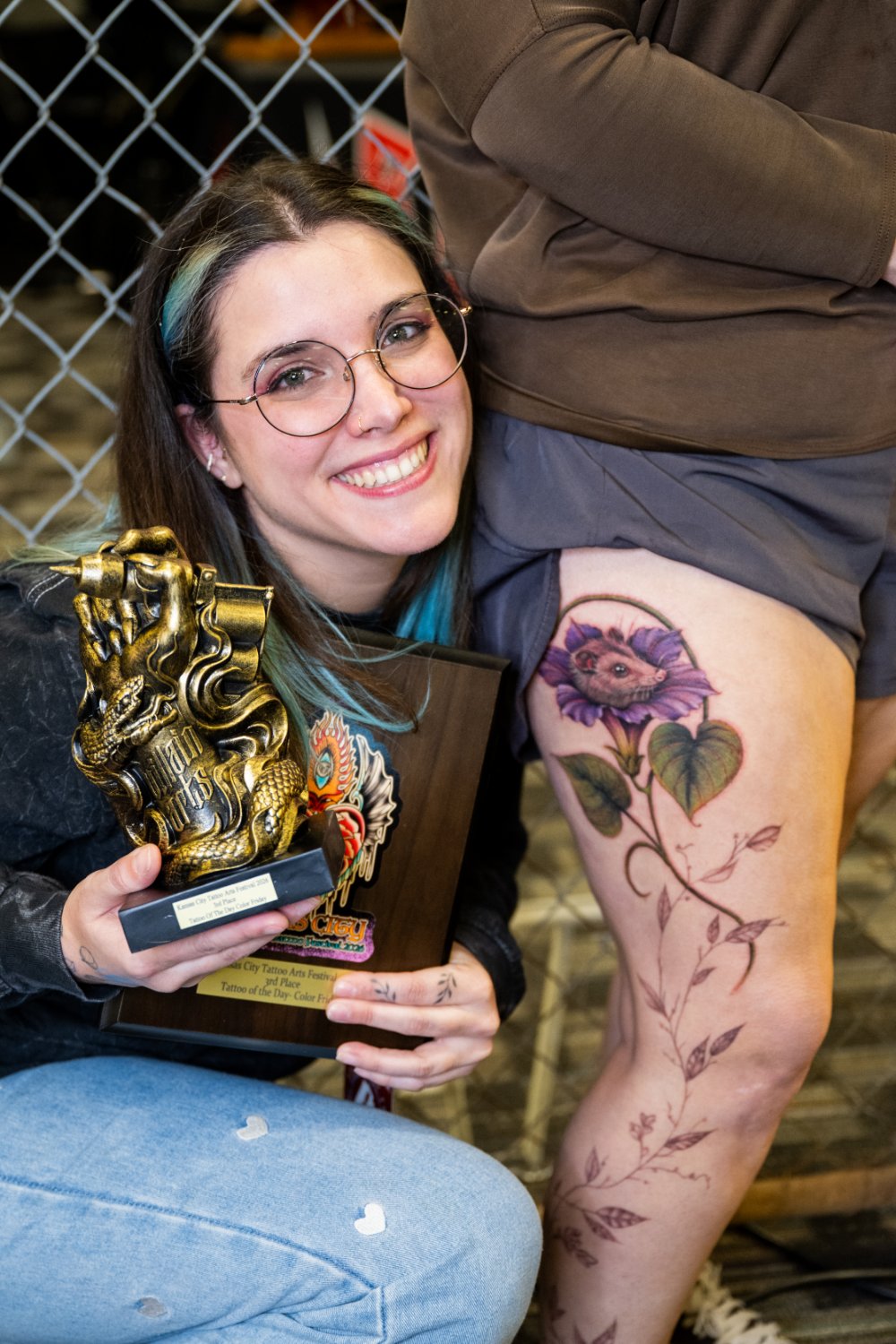
Oriana Merchan, illustrative realism
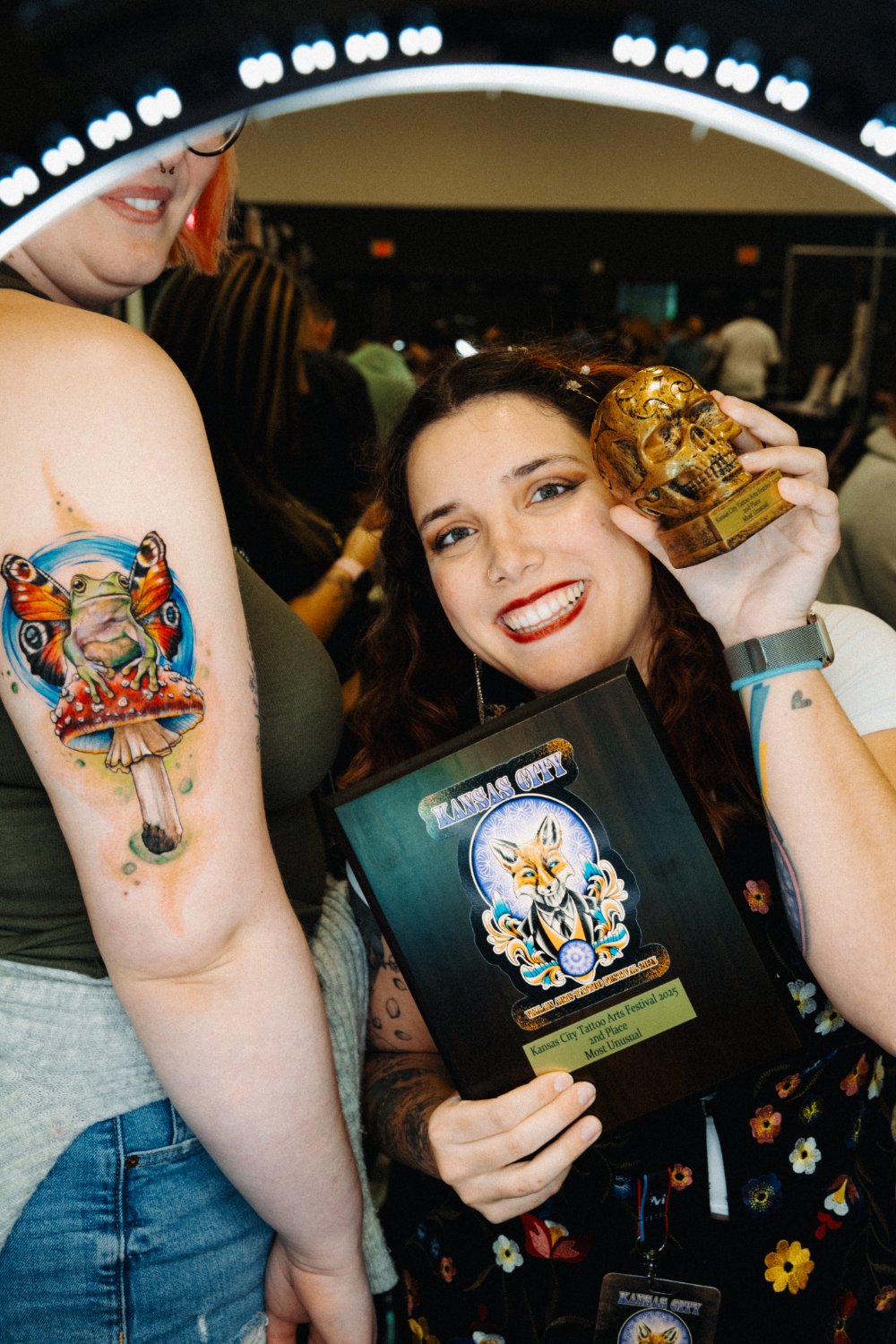
Oriana Merchan, illustrative portrait style
She has been studying painting and color layering with increasing focus. The goal is to see how far those techniques can be pushed into large-scale tattooing, pieces with enough real estate to build a full composition, to tell a story that genuinely requires space. The ambition is clear. So is the patience behind it. She wants the technical vocabulary in place first, scale earns its place only when the composition genuinely needs it.
"I don't want to become too comfortable. I want my work a few years from now to surprise me."
What she resists, more than any particular subject or style constraint, is comfort. The work she is making now is more refined and more confident than what she made in 2017, and she expects the same distance to exist between now and whatever she is producing five years from here. That expectation, that the work should surprise her, is probably the clearest thing she has said about where she is headed.