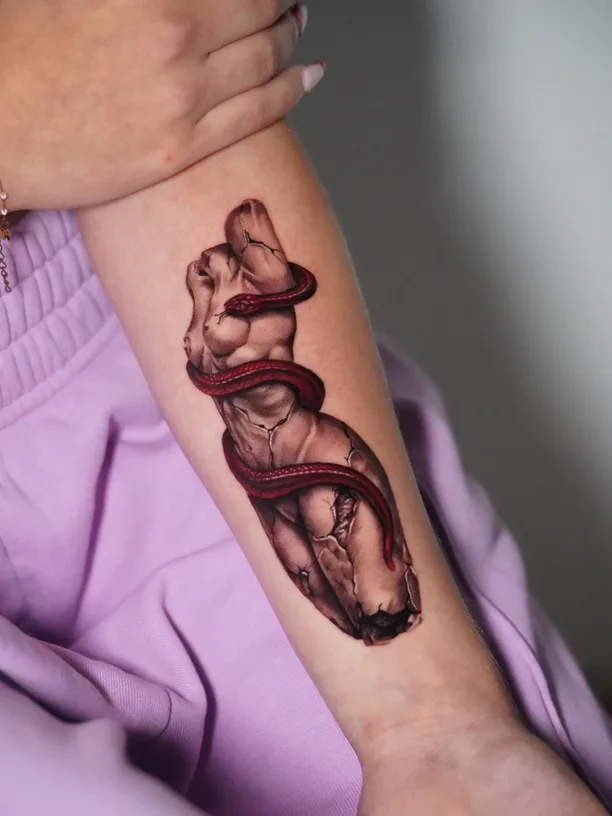
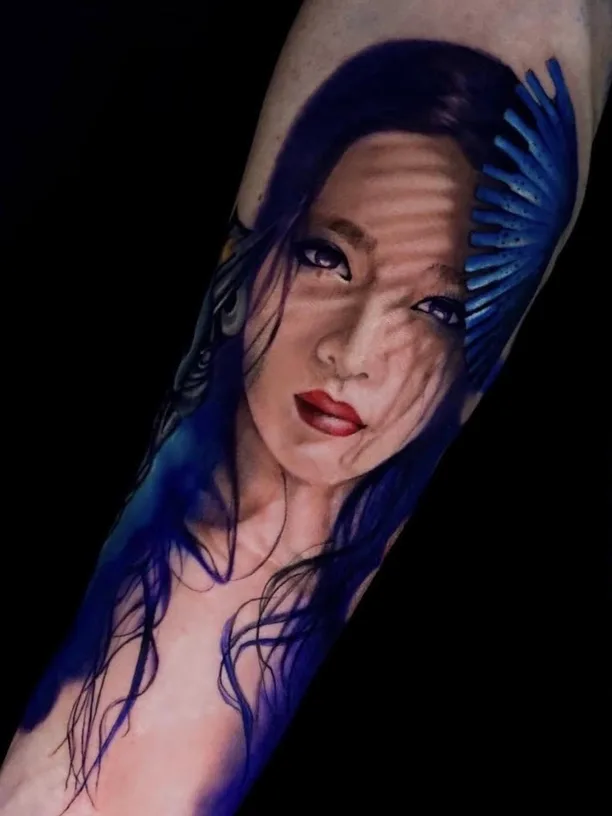
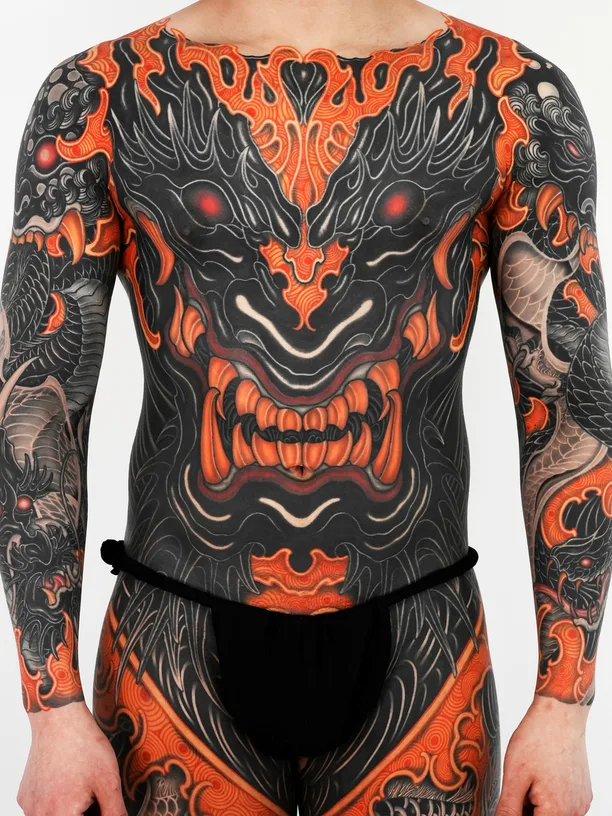
Jason Kim, also known as Jaehun Kim, is a Korean tattoo artist currently based in Brownsville, Texas, where he has built his practice around custom black-and-gray realism. With more than a decade of experience, he creates detailed, emotionally driven tattoos shaped by light, shadow, texture, and a strong sense of personal storytelling.
His work often brings together portraits, animals, religious imagery, sculpture-inspired forms, and natural elements, turning each composition into something deeply connected to the client’s story.
A winner of Tattoo of the Day at Palm City Tattoo Expo 2024 and a judge at Palm City Tattoo Expo 2026, Jason continues to grow within the international tattoo community while developing a body of work defined by discipline, depth, and lasting meaning.
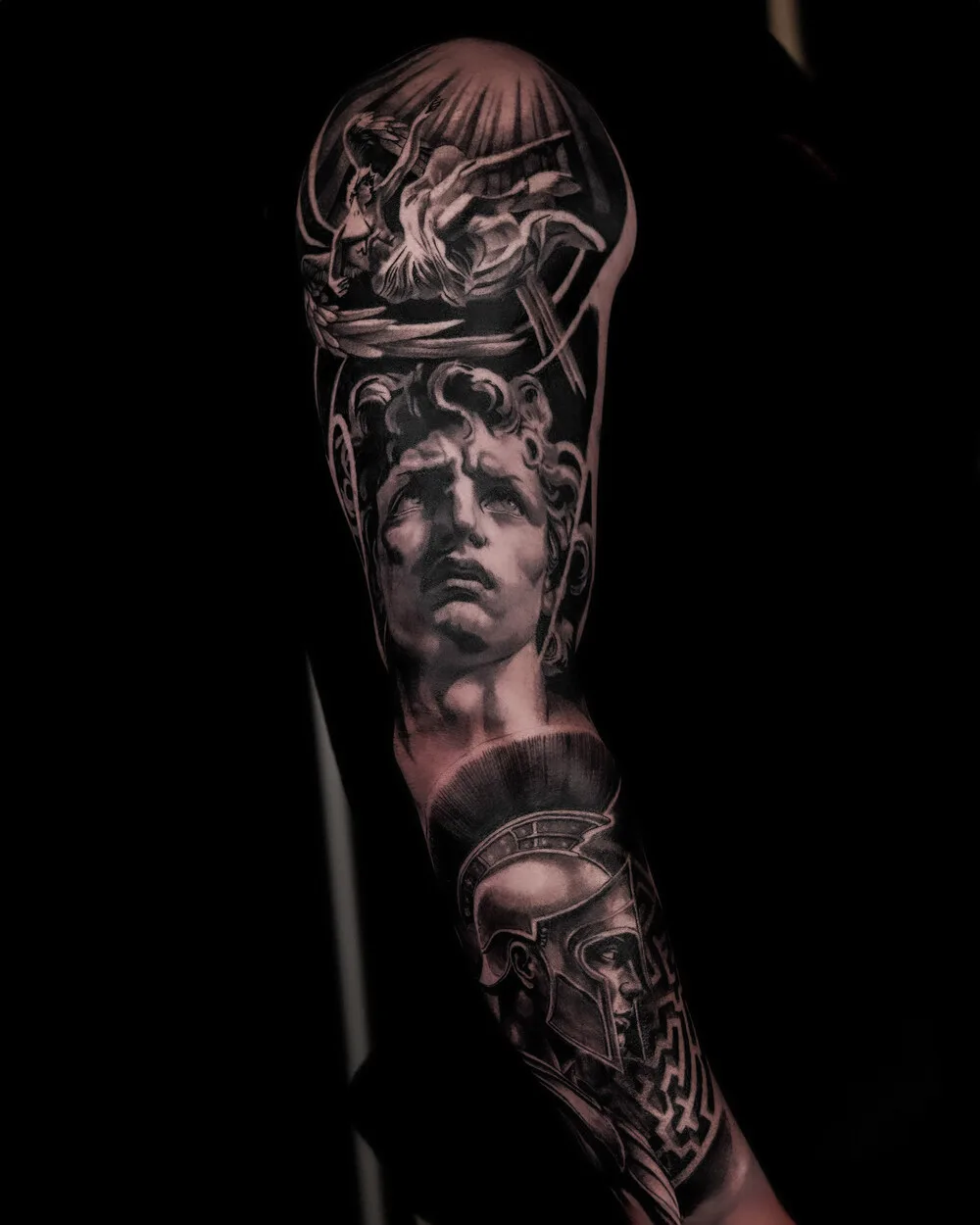
Jason, could you tell us a little about yourself? How did your journey into this profession begin?
— My name is Jaehun Kim, also known professionally as Jason Kim. I am a tattoo artist specializing in custom black-and-gray realism.
My journey into tattooing began through apprenticeship, observation, and continuous practice. Early in my career, I explored a variety of styles to build a strong foundation and better understand the artistic and technical aspects of tattooing. Over time, I found myself increasingly drawn to realism, particularly black-and-gray realism, because of its ability to convey emotion, depth, and storytelling through subtle tonal transitions and contrast.
Today, my work focuses on creating tattoos that combine technical precision with personal meaning, allowing each piece to tell a unique story for the individual wearing it.
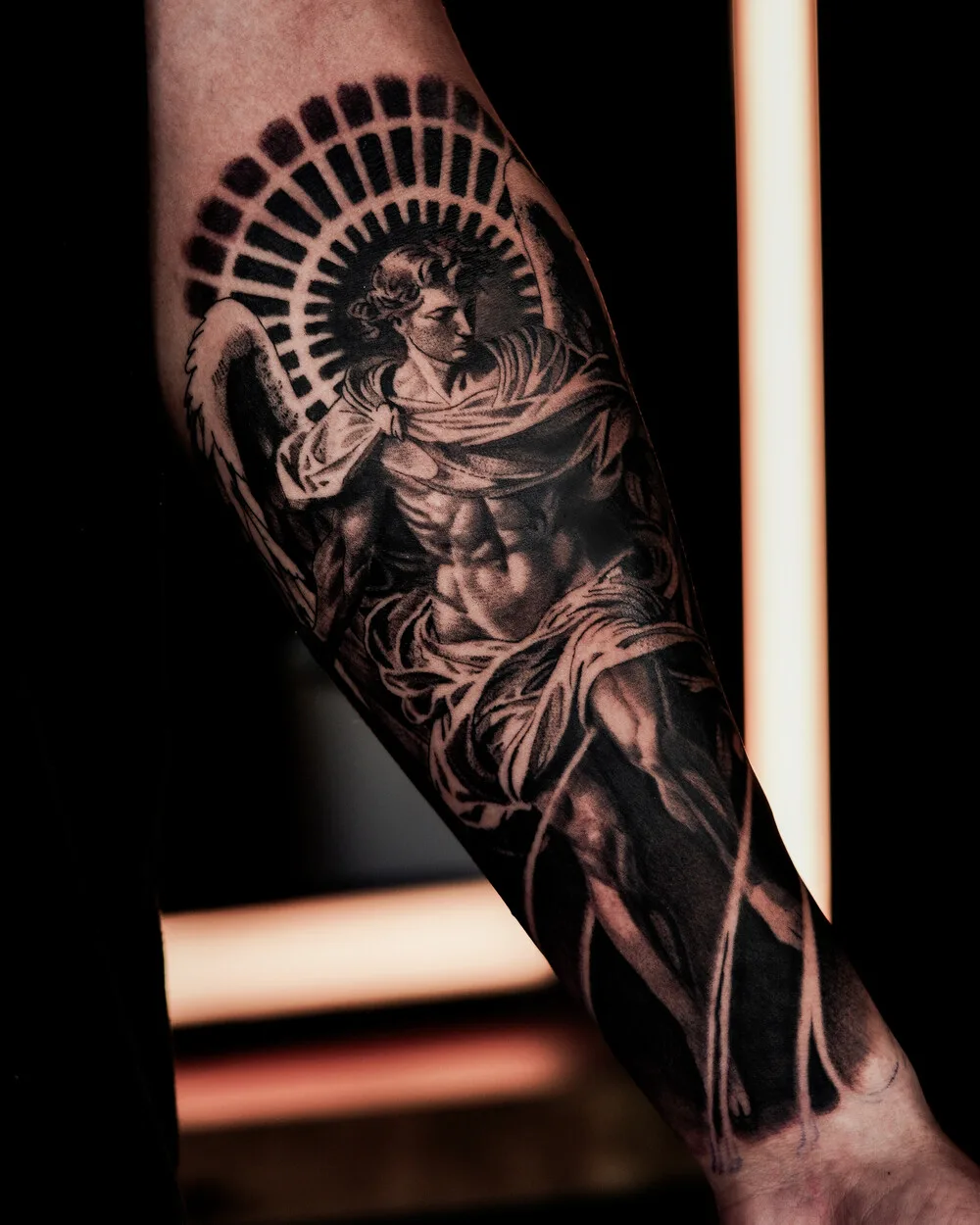
Do you have an art education or any other creative background that has influenced your work as a tattoo artist?
— Yes, my art education has played an important role in the way I approach tattooing. I studied at ESAD Global Art Academy in Korea, where I built a foundation in drawing, composition, visual structure, light, shadow, and balance. Later, I also earned an Associate Degree in Visual Arts, which helped me continue developing that foundation in a more structured way.
That experience has had a strong influence on my work, especially in black-and-gray realism. Tattooing requires technical skill, but it also requires an understanding of form, contrast, anatomy, composition, and the natural flow of the body. A tattoo has to be strong as an image while also living naturally on the skin.
I continue to study classical art, sculpture, photography, and realism because I believe an artist should always keep learning.
Every new observation helps me understand light, form, texture, and emotion more deeply.
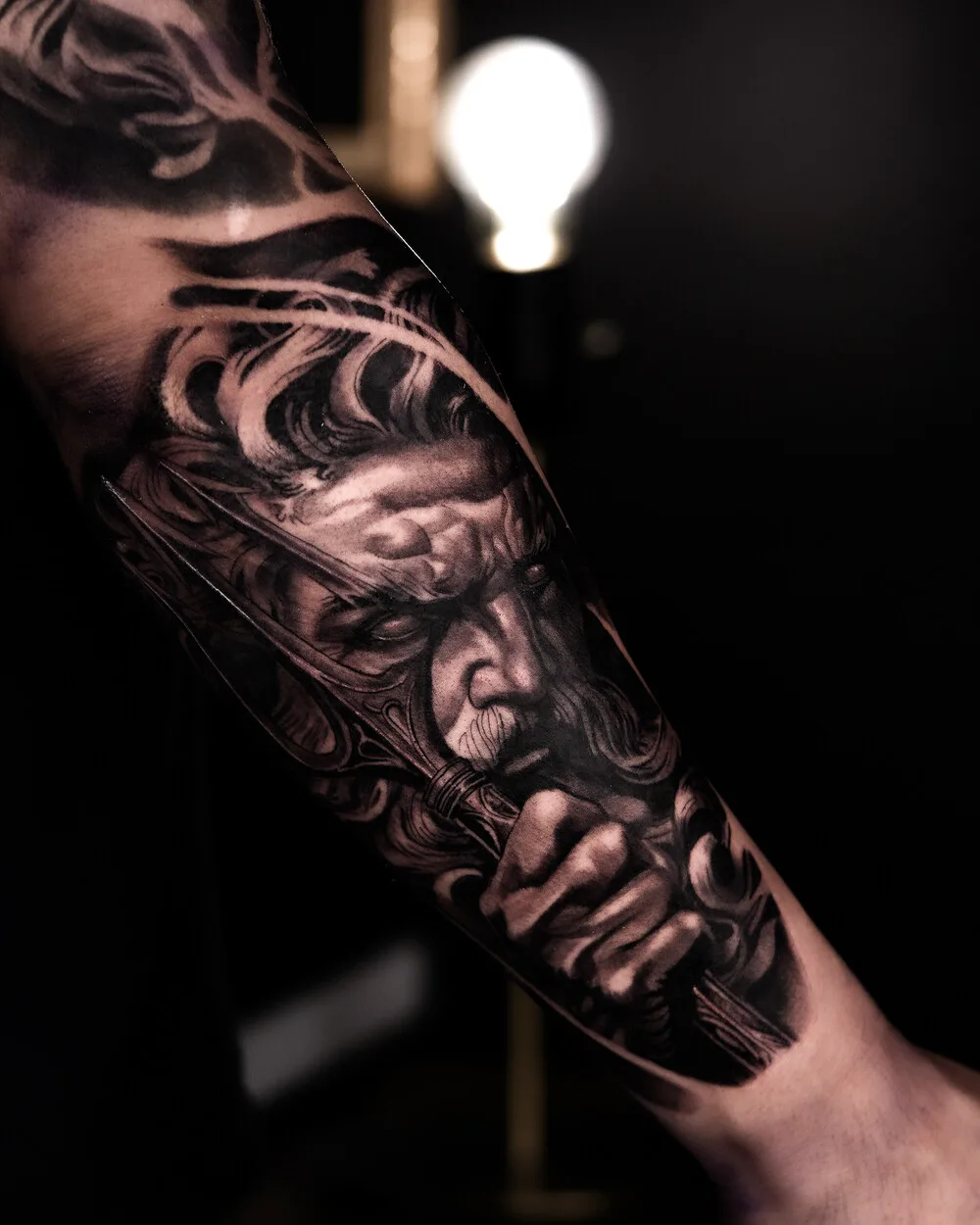
You work in custom black-and-gray realism. What attracted you to this direction?
— I was drawn to the emotional depth of black-and-gray realism. Without color, everything depends on light, shadow, contrast, texture, and smooth transitions. That challenge feels very natural to me.
When it is designed well, black-and-gray realism can feel timeless. It can be soft, dramatic, powerful, or emotional depending on the subject and composition. I also appreciate the discipline this style requires: every tone has to be intentional, and the structure has to be strong enough for the tattoo to remain readable over time.
For me, black-and-gray realism gives me the ability to create serious, personal, and long-lasting works.
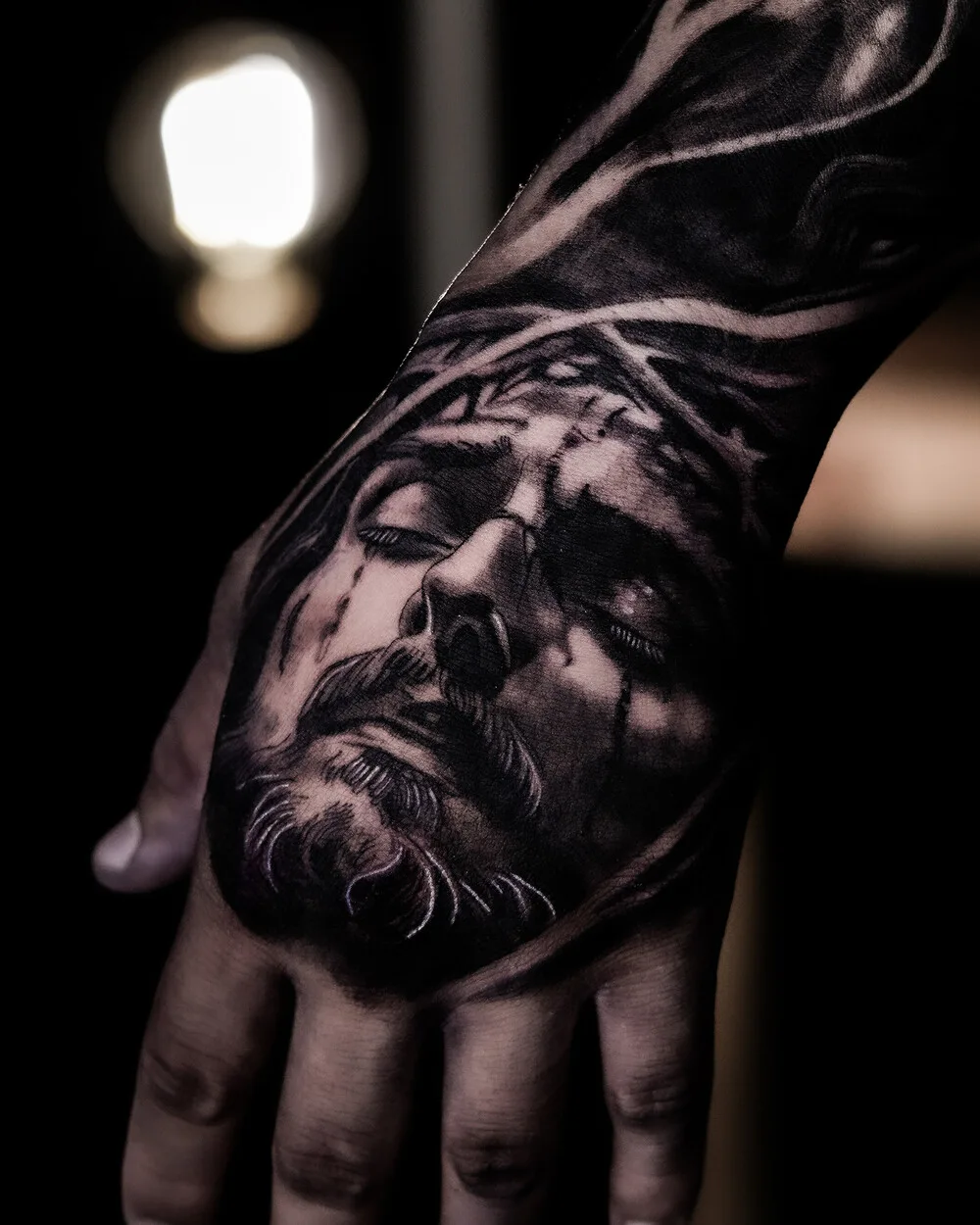
What does “custom” mean to you in your work, and how do you turn a client’s idea into a personal tattoo design?
— To me, “custom” means that the tattoo is created specifically for one person, rather than copied from an existing image. Even when the subject may seem common, the meaning behind it is always personal.
The process starts with understanding the idea, the emotion, and the story behind the future tattoo. From there, I think about how the design will work on the body: placement, movement, contrast, scale, and long-term readability all matter.
I may use several references to build a composition, but the final design should feel unique to the person wearing it. A strong custom tattoo should be visually powerful while still being connected to the client’s personal story.
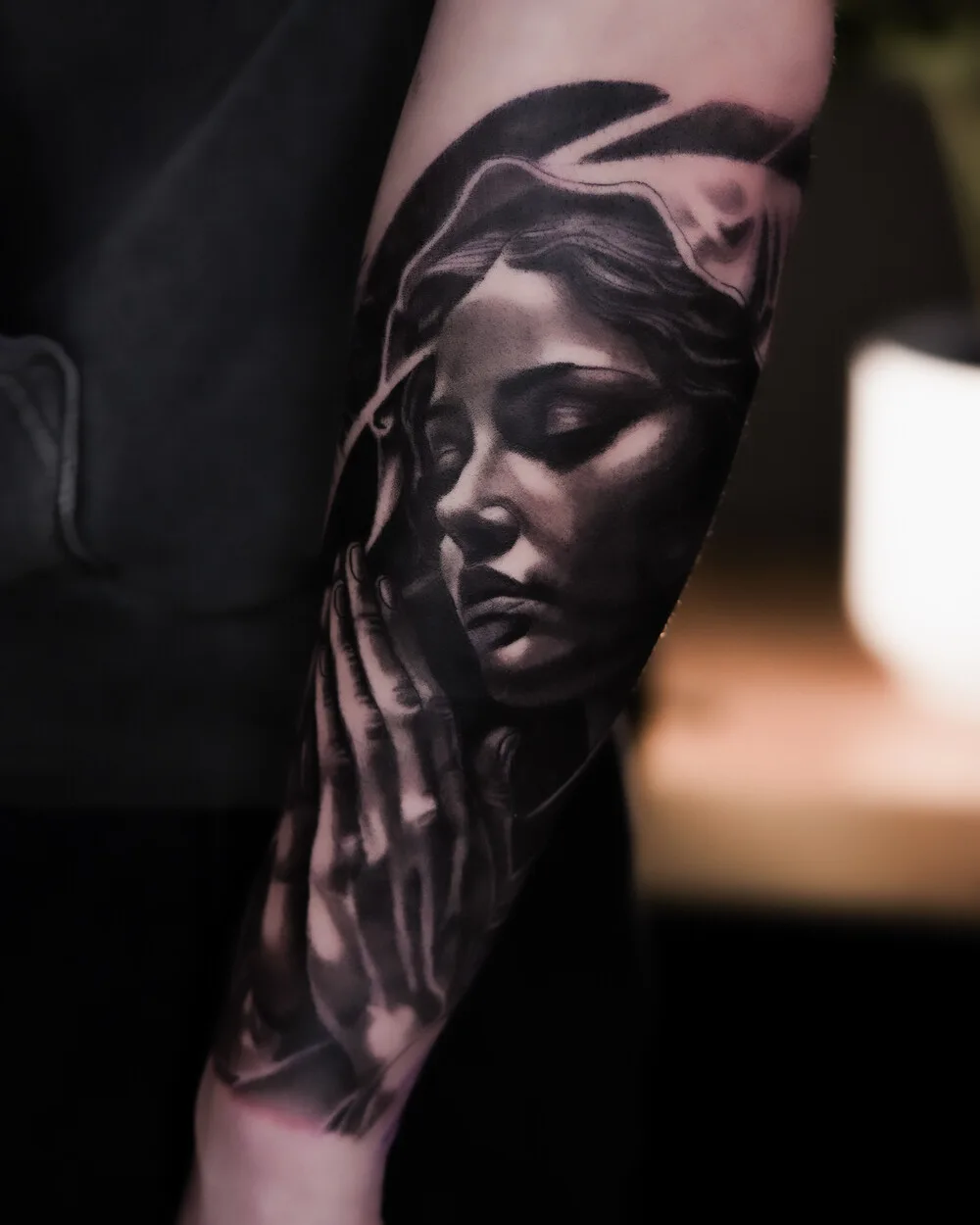
What themes in realism feel especially close to you, and why?
— I’m drawn to themes that carry strong emotion, clear structure, and a sense of story. That is why I often work with portraits, animals, religious imagery, sculpture-inspired subjects, and natural elements.
Portraits can express memory, identity, and connection. Animals often carry symbolism such as strength, loyalty, protection, or freedom. Religious and sculpture-inspired imagery allows me to work with dramatic light, emotion, and forms that feel timeless. Natural elements can bring movement, softness, and balance into a larger composition.
I like imagery that feels powerful while still remaining personal.
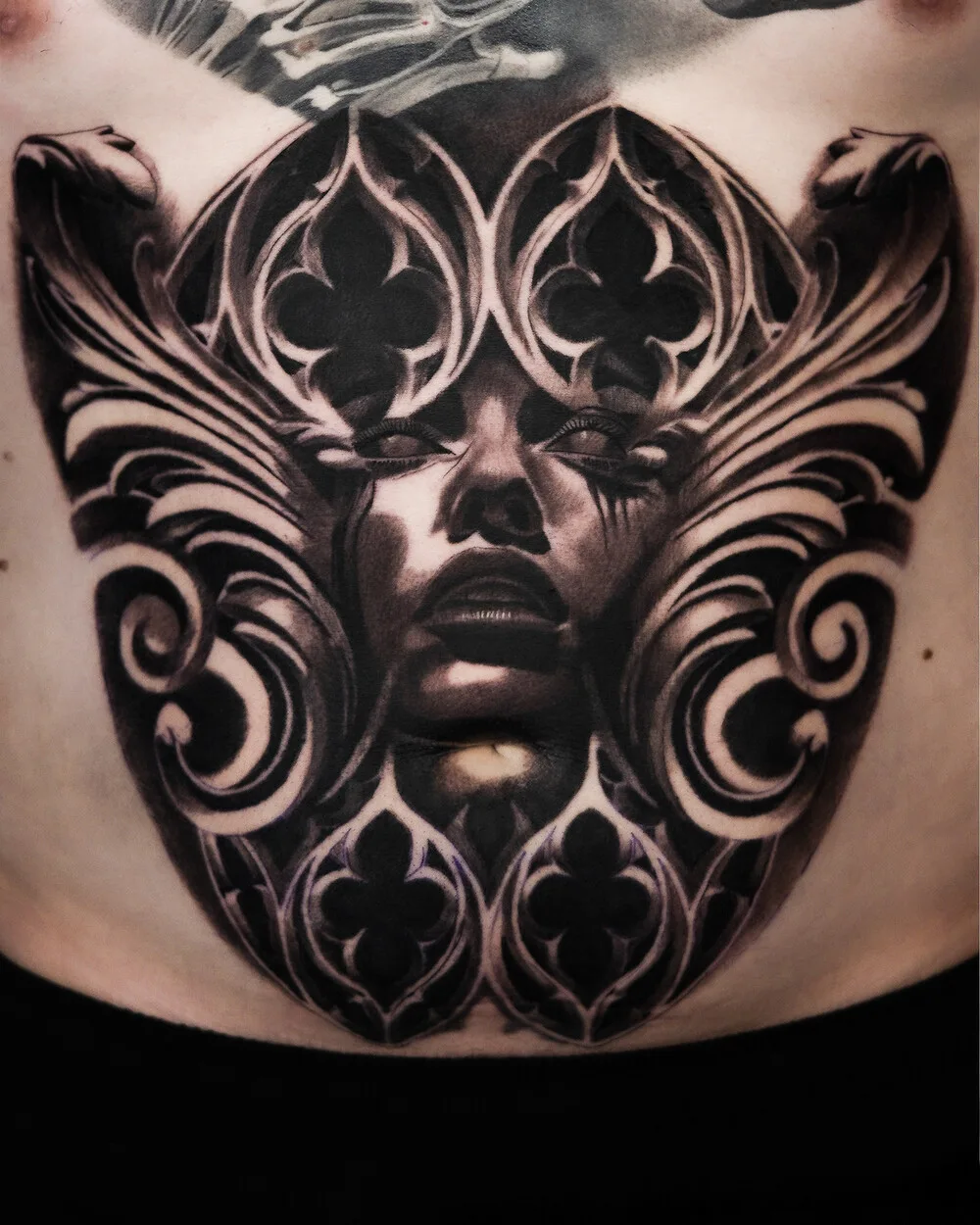
Your tattoos require very careful work with light, shadow, and volume. How did you develop your technique?
— I developed my technique through years of practice, observation, and continuous study. In black-and-gray realism, light and shadow play a major role. The way light touches a face, a sculpture, an animal, or an object can completely change the feeling of the piece.
Technically, I focus on smooth tonal transitions, clean saturation, strong contrast, soft edges, and readable structure. I also pay close attention to how a tattoo will heal, because a piece should look strong beyond the day it is finished. It should keep its clarity and impact after healing.
I still see my technique as something that is constantly evolving. Growth comes through discipline, attention, and the willingness to keep learning.
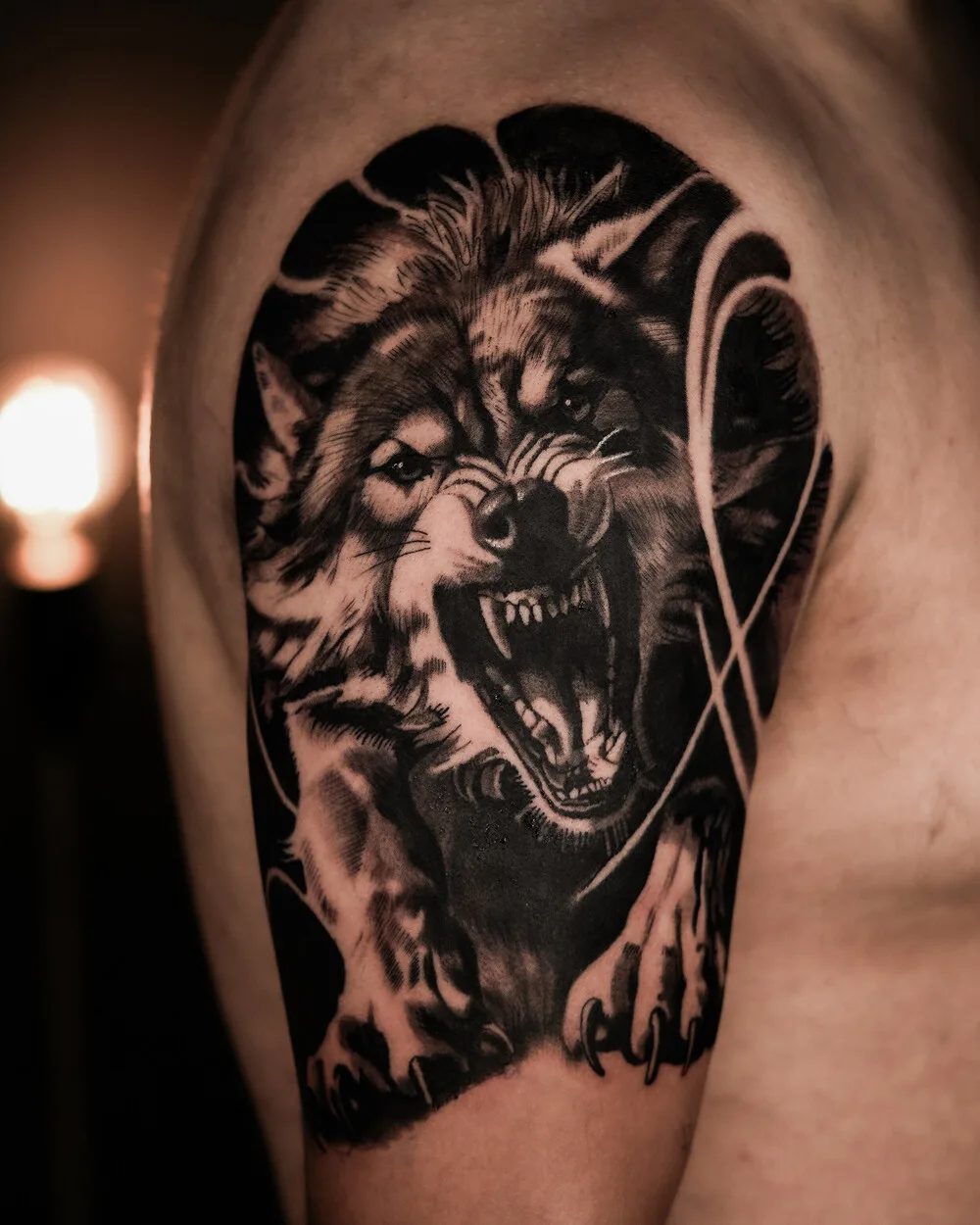
Do you usually work with prepared references, or do you build the composition yourself from several images?
— Most of the time, I build the composition myself from several references. One image is usually not enough to create a complete custom tattoo design.
I might use one reference for the main subject, another for lighting, another for texture, and another for background or movement. Then I adjust everything so the final composition works on the body.
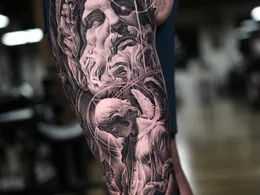
Tattoo design is different from creating an image for paper or a screen. It has to take into account the body’s natural shape, movement, and placement. References are important, but they are only the starting point. The final composition has to feel intentional and personal.
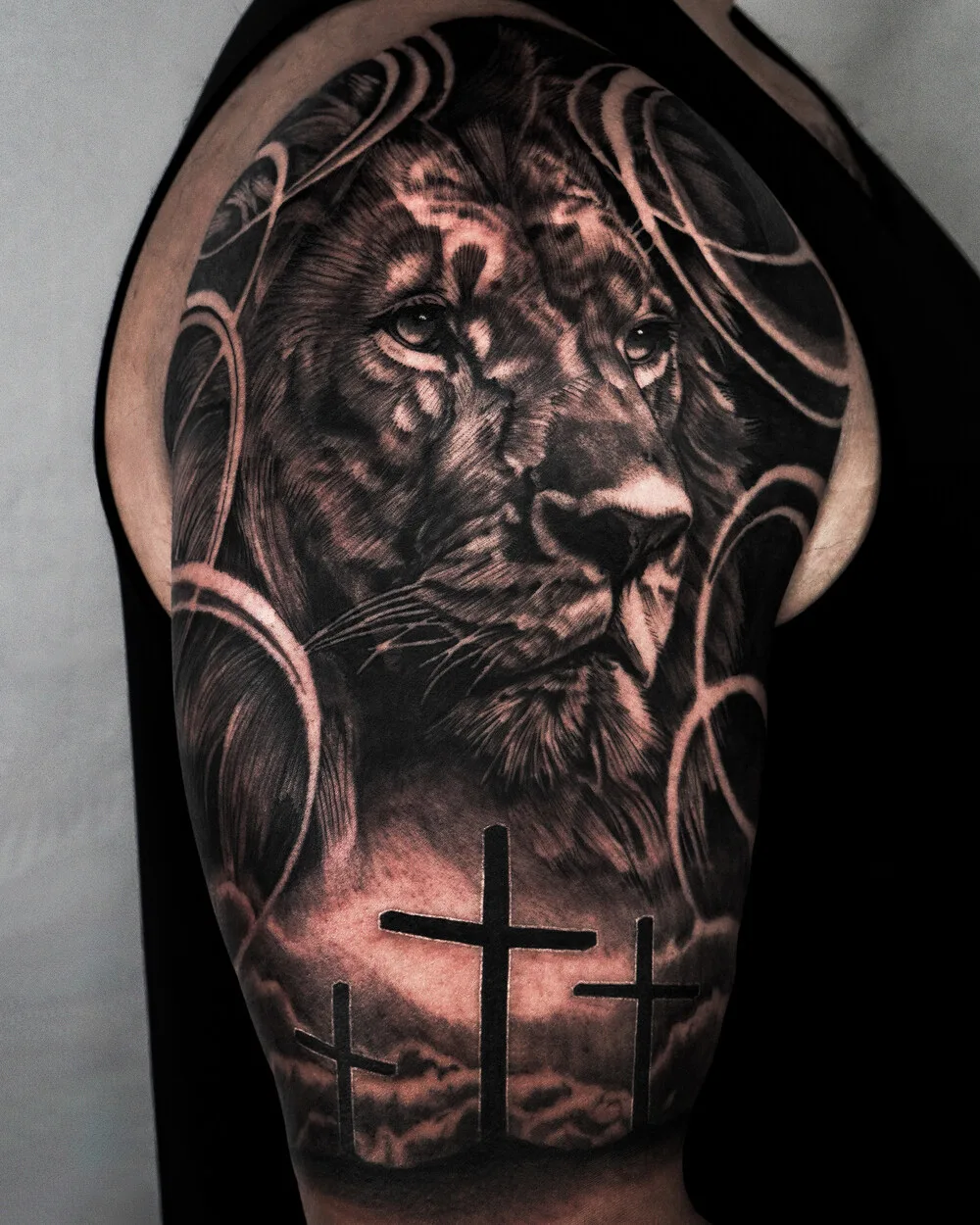
Can you tell us about one or two projects that were especially meaningful or memorable for you?
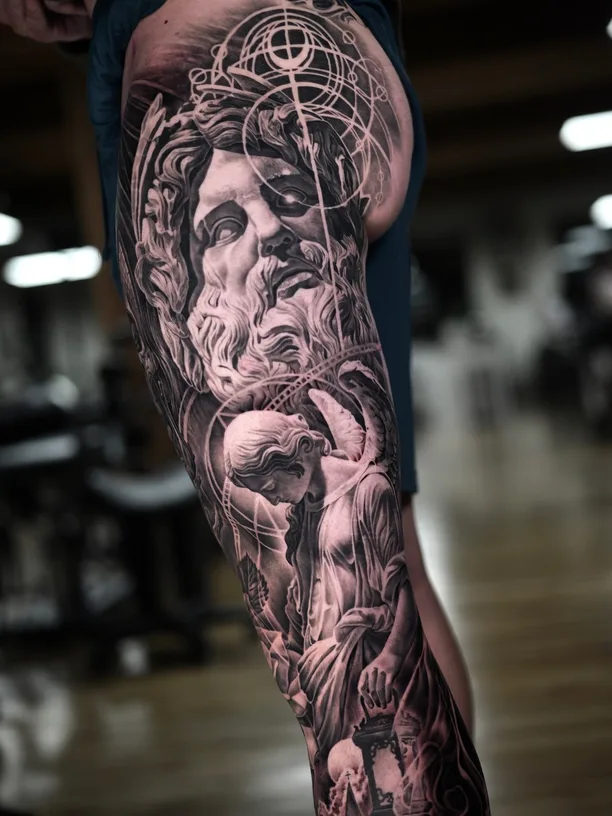
— One of the most memorable projects for me was a large-scale leg piece inspired by Greek mythology. It was a black-and-gray realism project, and I really enjoyed the entire process, from developing the design to completing the tattoo.
The theme itself was very inspiring. It allowed me to work with classical figures, sculpture-like forms, dramatic light and shadow, and a strong sense of storytelling. I enjoyed building the composition and making sure the design flowed naturally with the shape of the leg.
What made this project especially meaningful was the connection that developed throughout the process.
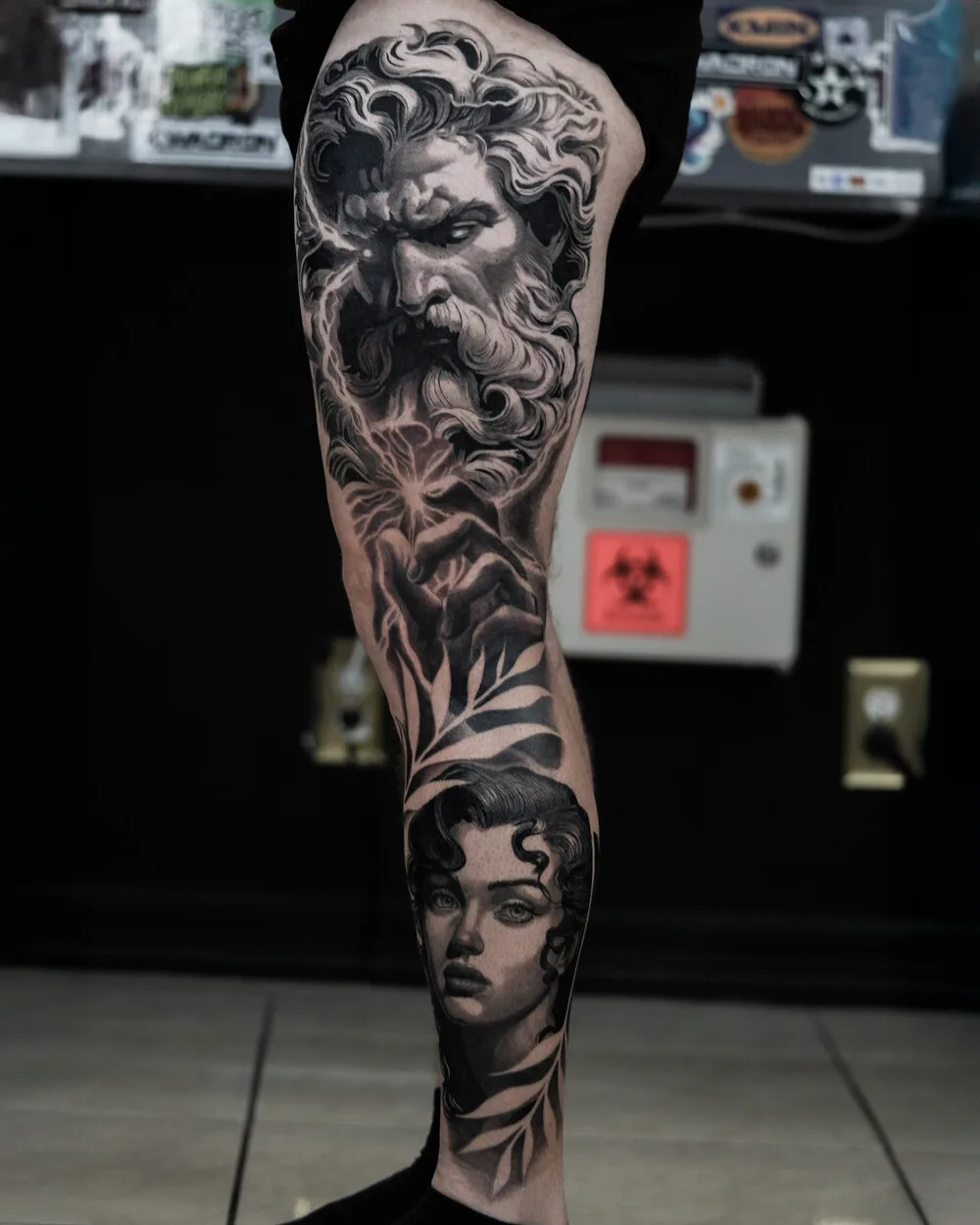
— With large-scale projects, you spend many hours together: discussing the design, going through multiple sessions, talking, and building trust. By the end, it often feels like you have completed more than a tattoo — you have also built a real human connection. Sometimes the client almost becomes a friend, and that is one of the most rewarding parts of tattooing for me.
For me, memorable projects are the ones where the story, the design, the final result, and the human connection all come together.
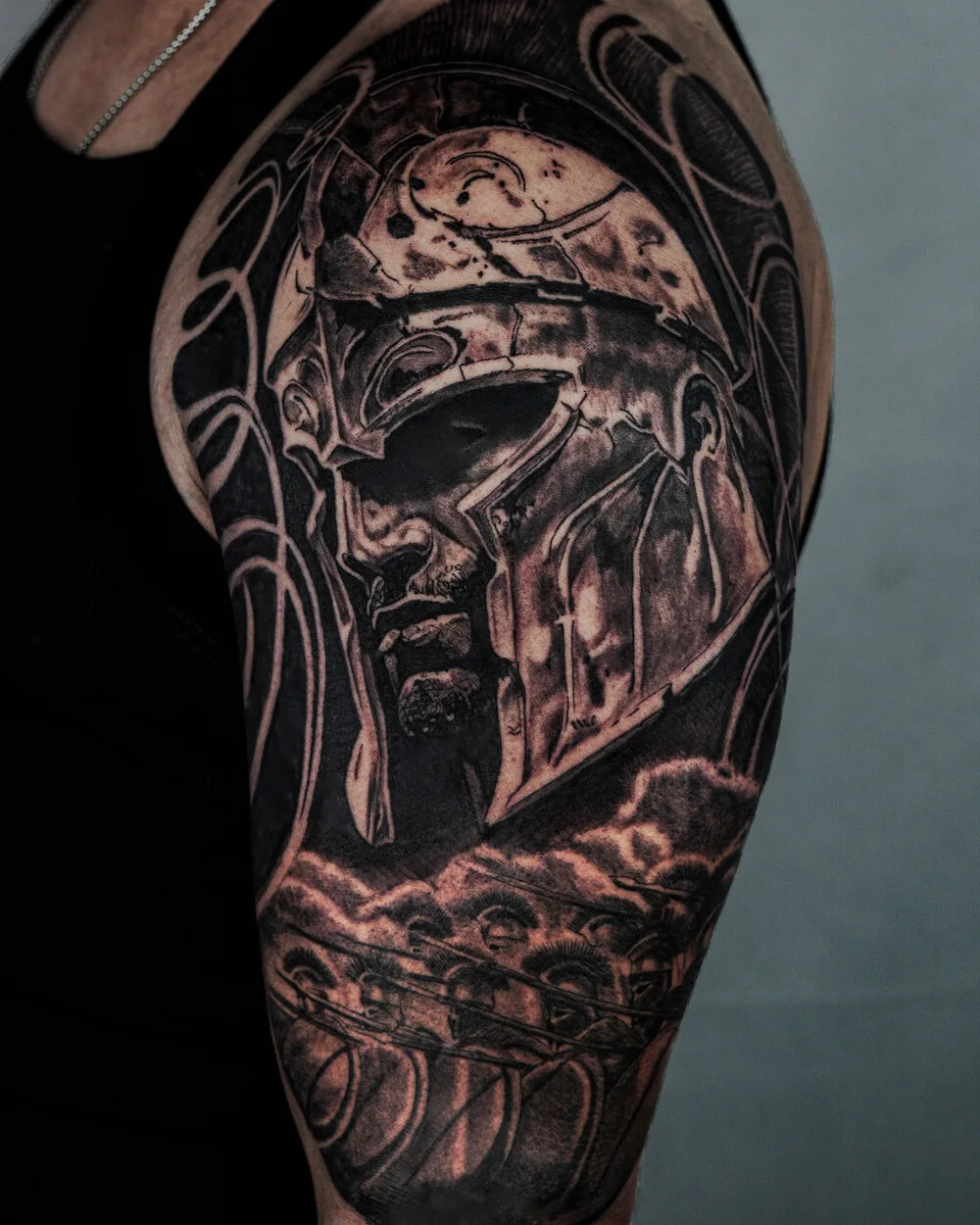
As an artist, what do you believe separates a good tattoo from a truly great tattoo?
— In my opinion, technical execution is only one part of a great tattoo. A tattoo can be technically well done, but if it lacks intention, balance, or meaning, it may not leave a lasting impression.
What separates a truly great tattoo is the combination of strong craftsmanship, thoughtful design, and a genuine connection to the person wearing it. Every element—from composition and contrast to placement and flow—should work together to create something that feels natural on the body.
I also believe a great tattoo should remain strong over time. Beyond creating an image that looks impressive on the day it is finished, I always consider how the piece will age and how it will continue to tell its story years later.Ultimately, the best tattoos are the ones that balance artistic quality with personal meaning.

Jason Kim, black-and-gray realism

Jason Kim, samurai, black-and-gray realism

Jason Kim, black-and-gray realism

Jason Kim black-and-gray lion realism
Could you tell us about your most important experiences, awards, or professional achievements?
— I have participated in tattoo conventions and competitions in different places, including the United States and international events.
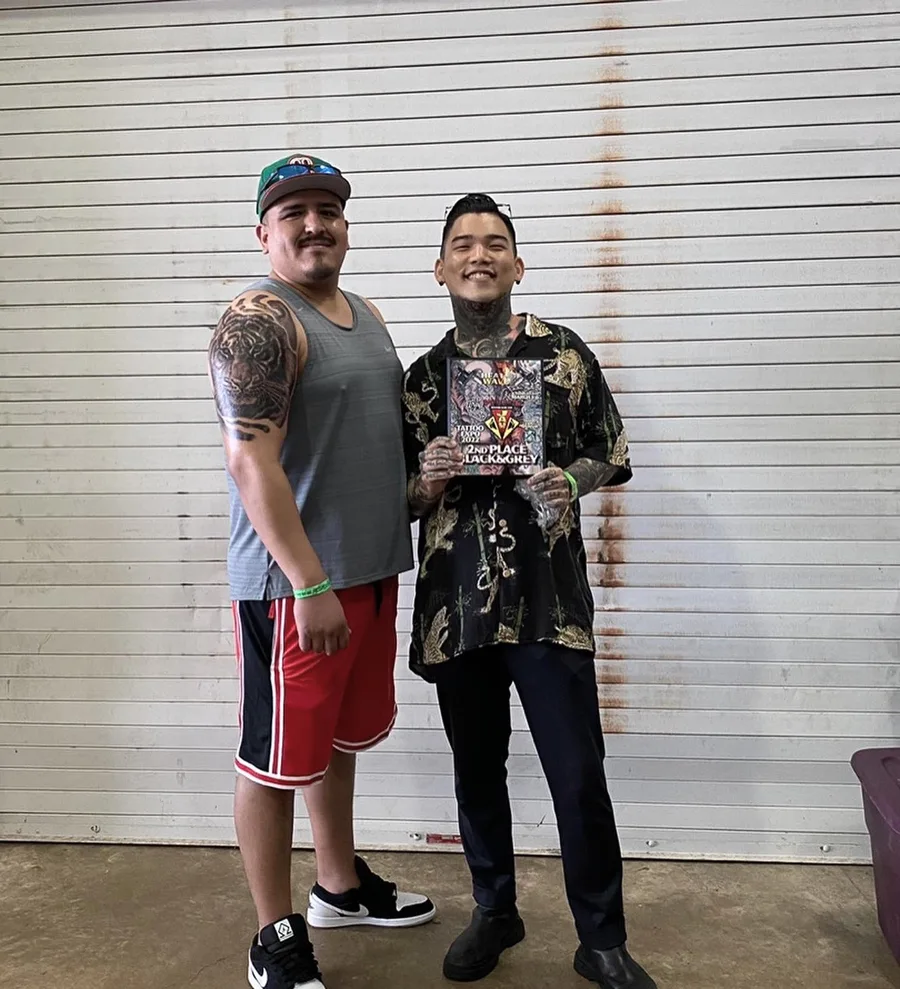
One of my important achievements was winning Tattoo of the Day at the Palm City Tattoo Expo in 2024. I also received 2nd Place in Small Color at the HeartWork Tattoo Festival in New Delhi, India, in 2019, and 2nd Place in Black and Grey at the Heat Wave Tattoo Expo in 2022.
Jason Kim, black-and-gray realism
Jason Kim, samurai, black-and-gray realism
Jason Kim, black-and-gray realism
Jason Kim black-and-gray lion realism
In 2026, I was invited to serve as a tattoo competition judge at the Palm City Tattoo Expo in McAllen, Texas. That experience was meaningful because judging requires responsibility, fairness, and respect for other artists’ work. It allowed me to look at tattooing from a different perspective and contribute to the professional tattoo community.
These experiences have helped me grow both as an artist and as a professional in the industry.
What professional goals and plans would you like to pursue in the future?
— I want to continue developing my black-and-gray realism, especially large-scale custom compositions that work naturally with the body. I’m interested in creating tattoos where strong technical execution is combined with deeper storytelling.
— In the future, I would like to take part in more tattoo conventions, guest spots, publications, and international artistic projects. Staying connected with the tattoo community through conventions and media is important to me: it gives me the opportunity to share my work, learn from others, and continue growing professionally.
My main goal is to stay disciplined, keep learning, and create tattoos that carry meaning, strength, and lasting value.