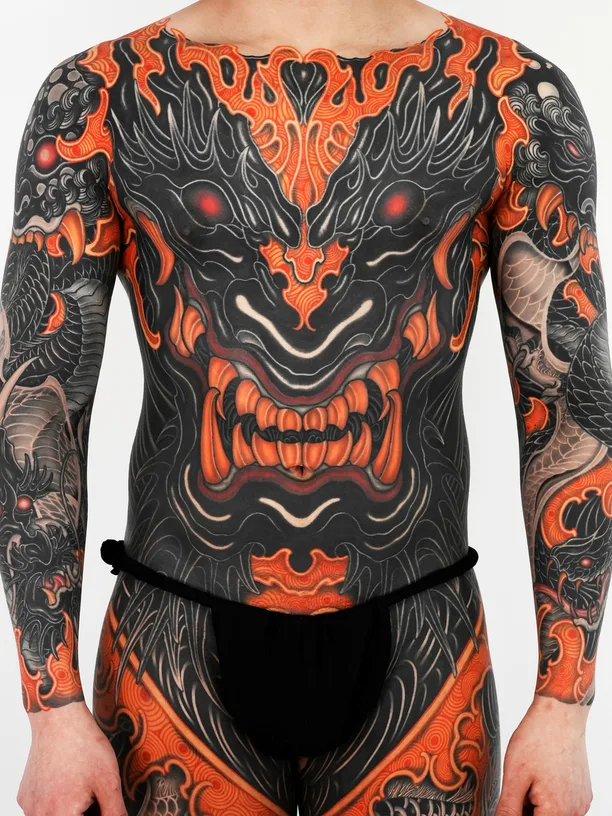
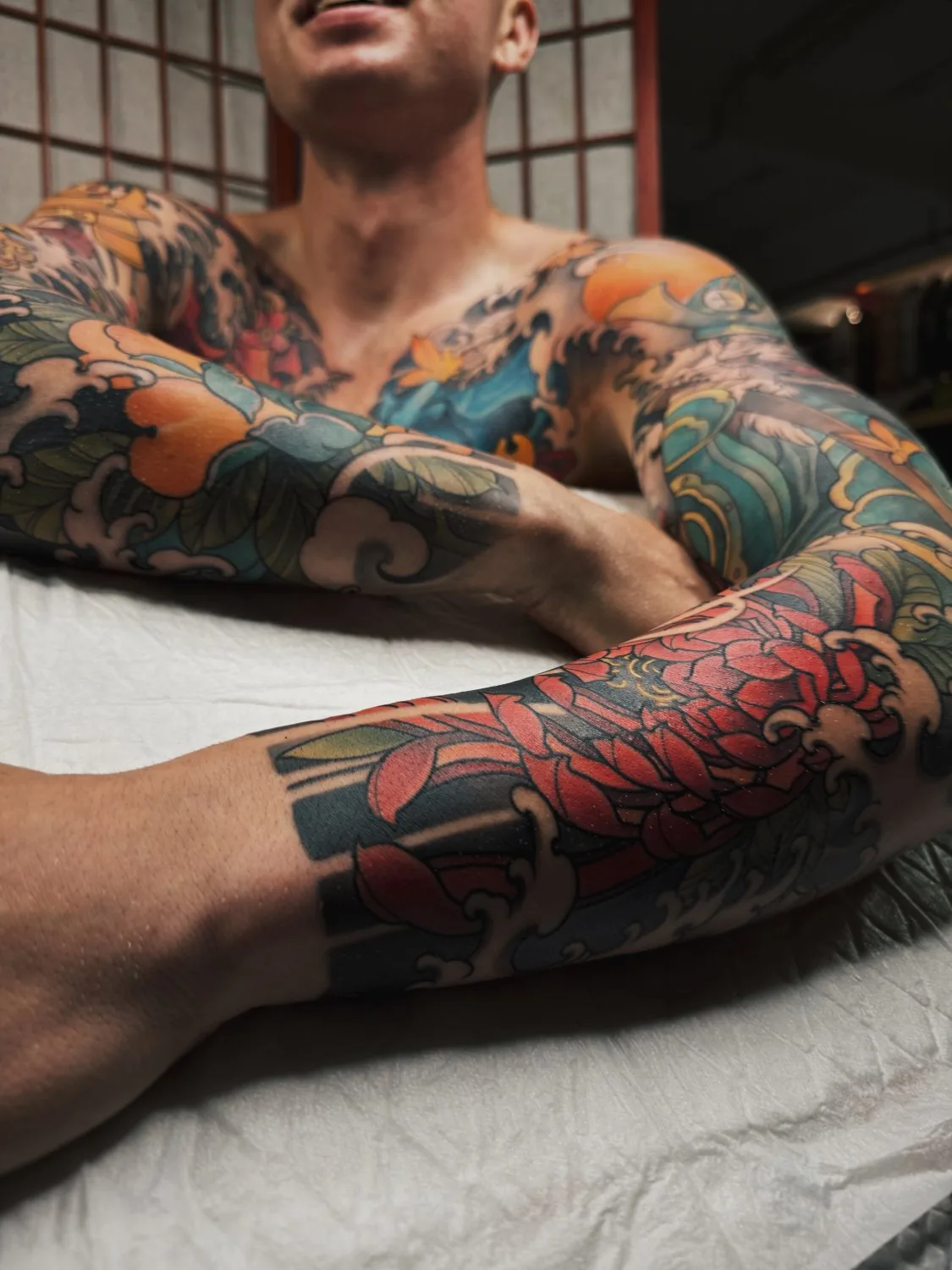
In the works of Valeria Elshina, scale is never an end in itself. Her large Japanese compositions captivate with how confidently color, contrast, and movement are assembled within them. Even in the most saturated projects, everything remains in its place: the narrative is clear, the composition holds its form, and vibrant color only enhances the overall impression.
Valeria, a 27-year-old tattoo artist from Ukraine, has been working in the profession since 2017. By education, she is a designer and architect, and perhaps that's why she pays such close attention to proportions, rhythm, and the construction of large forms. Starting with Neo Traditional, over time she delved deeper into Japanese tattooing, and today, large-scale projects have become her main focus. Valeria currently lives in Moscow, is taking appointments, and welcomes clients seeking expressive, technically strong, and truly cohesive tattoos.
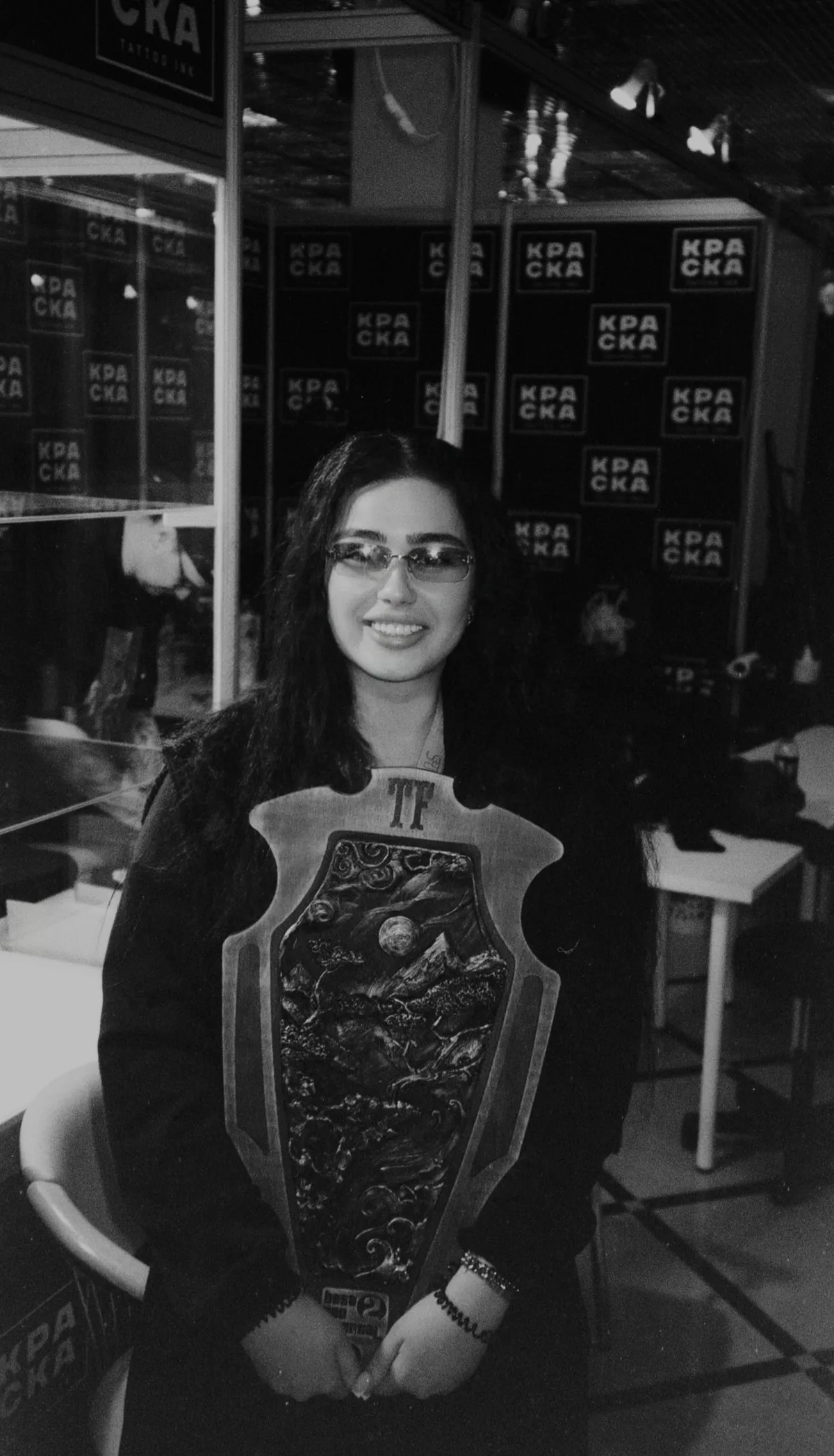
In 2023, she took second place in the Neo Oriental category at the XXII Moscow Tattoo Festival and second place in the Oriental category at the INKSIDE festival. She appeared as a guest speaker at the Krasnodar Tattoo Festival 2024 and as a judge at Red Ink. She works as an ambassador for WJX. All this, in eight years of practice, began with a single tattoo and a decision to truly understand this art.
Why did you choose Japanese tattooing as your main direction?
I started my journey with Neo Traditional, later moved to Neo-Japanese tattooing, and then began to study the classical Japanese tradition more deeply. The more I immersed myself in it, the more I understood that behind every element there is much more than just a beautiful form.
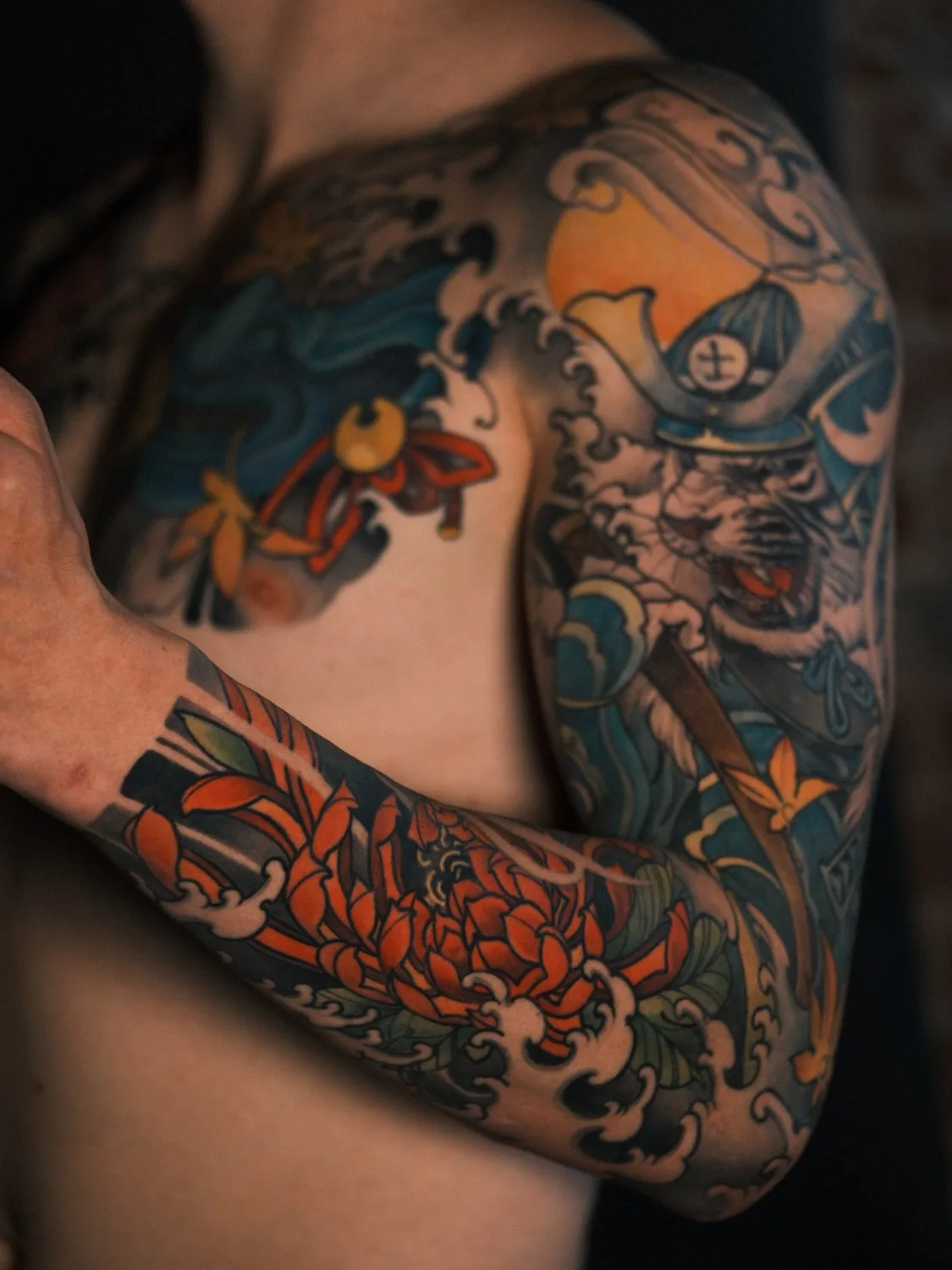
I believe Japanese tattooing is one of the few artistic systems where every element doesn't exist in isolation. Behind every character, plant, or natural phenomenon lies a specific meaning, character, and story.
What attracts me is not so much an individual symbol, but the system itself in which it exists. Japanese tattooing teaches you to see the composition as a whole. It's not just about what you depict, but also how the elements interact with each other, in what direction the composition moves, and what mood it creates.
It has respect for tradition and at the same time, immense space for personal creativity. This approach has become my main source of inspiration.
What is most important to you in Japanese tattooing: tradition, symbolism, scale, composition, working with the body, or color?
Honestly, I can't choose just one thing, because everything in Japanese tattooing is interconnected. That's what makes it unique. If you remove even one element, the work loses its integrity.
But if I were to rank them by personal importance, composition would be first. It unites everything else and sets the direction for the future work.
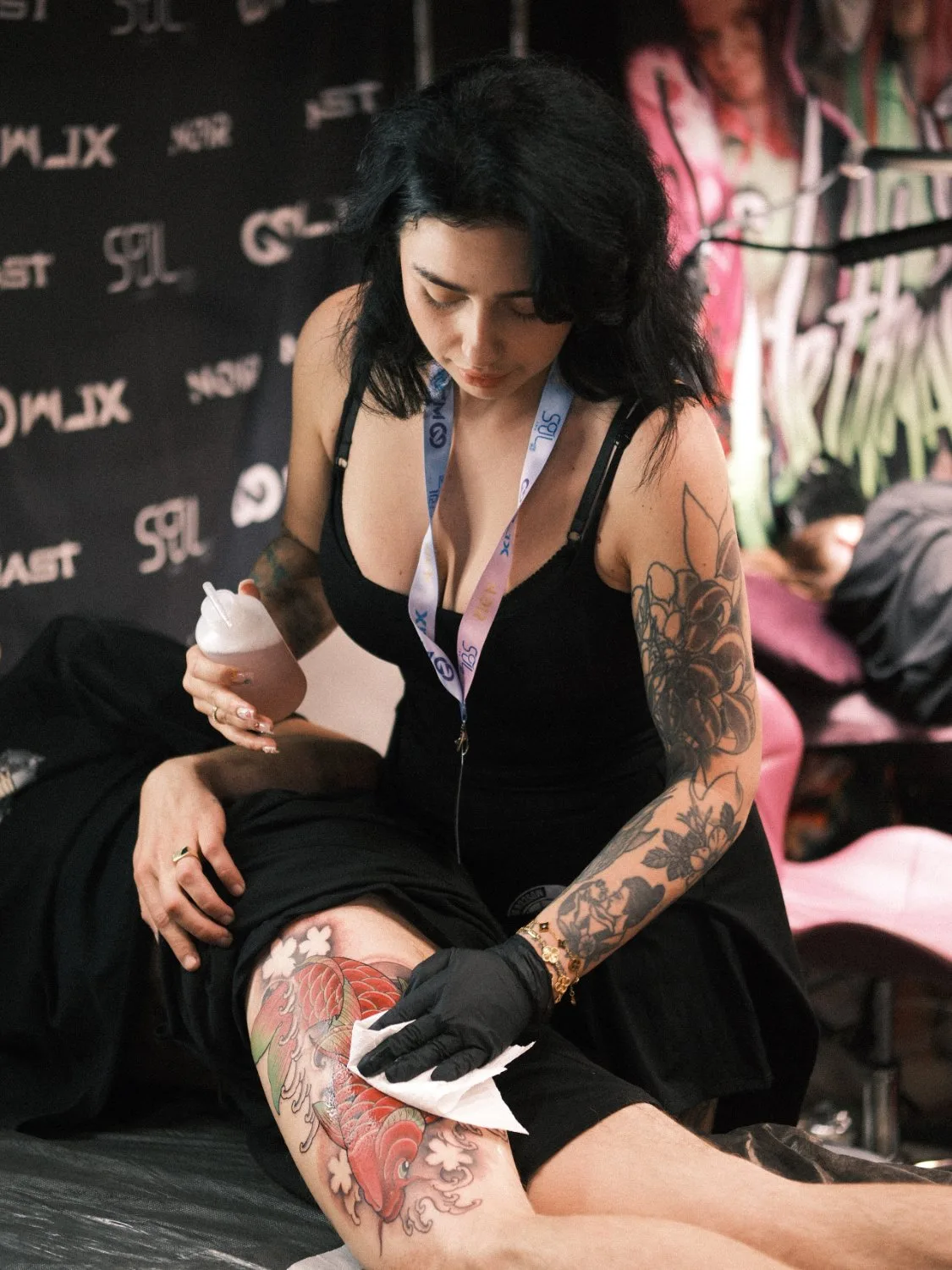
Next comes working with the body. It's important to understand anatomy, movement, and proportions so that the image doesn't just sit on the skin, but truly becomes a part of the person.
Then the work develops in stages: I choose the plot and symbols, build their interaction, think through the background, movement, and rhythm, and then add color.
All these stages should lead to one feeling: the tattoo looks as if it has always belonged to this body.
How did you study Japanese tattooing? Were there any artists, books, schools, or specific works that greatly influenced your understanding of this style?
My introduction to Japanese tattooing happened gradually. I started with neo-traditional, then moved to neo-Japanese, and later began to delve deeper into classic Japanese tattooing through books, the history of the style, and the works of masters.
I was particularly influenced by Horiyoshi III, Kazuo Oguri, Filip Leu, and Shiyo. I found it interesting to observe how each of them maintained respect for tradition while remaining a recognizable artist.
Neo-traditional gave me a love for expressive form and color, while classic Japanese tattooing taught me to think about composition, scale, and the body as a single space. My style gradually formed at the intersection of these directions.
Your works are mostly large-scale, sleeves, backs, large compositions. Why are you interested in large formats specifically?
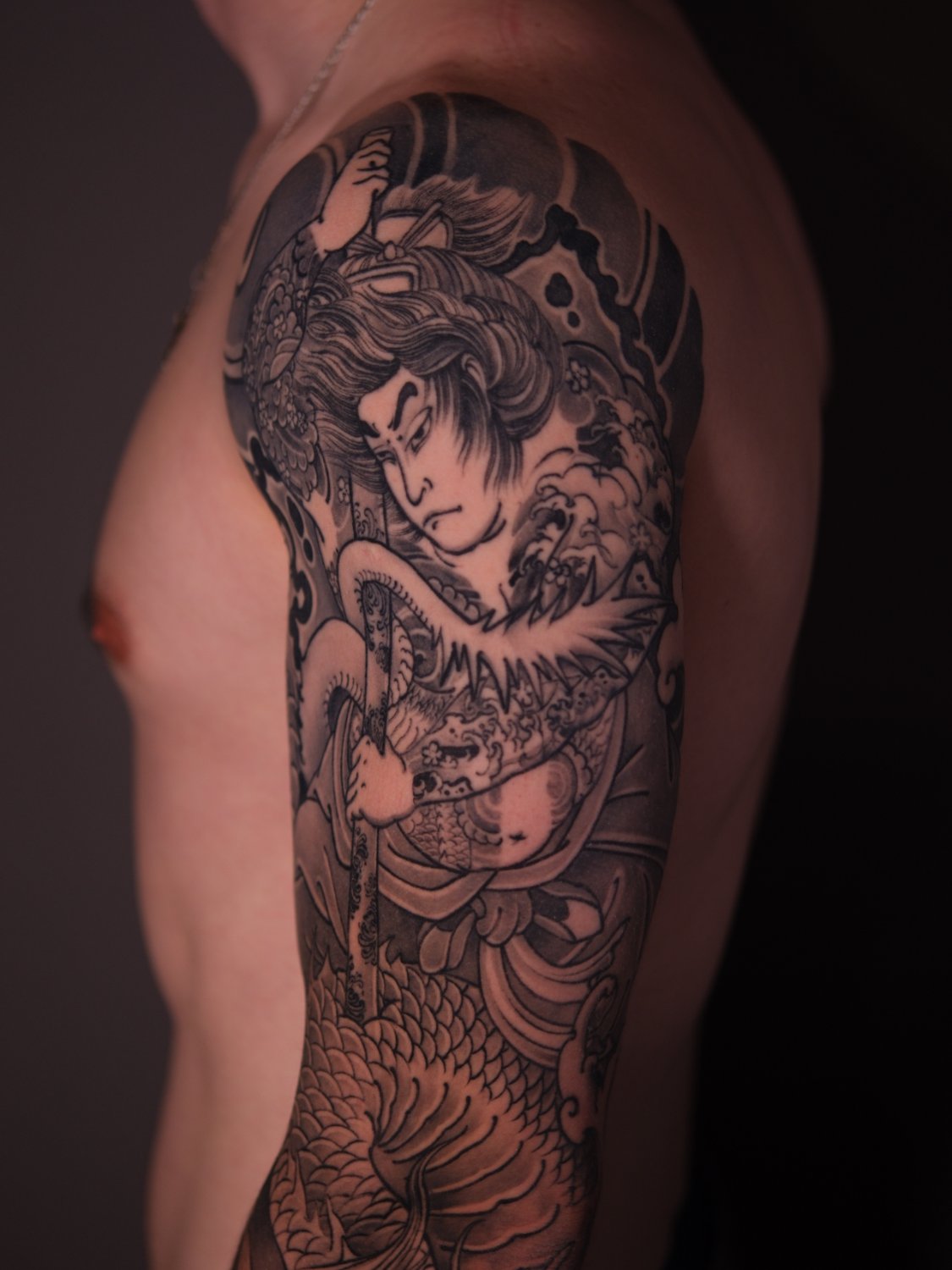
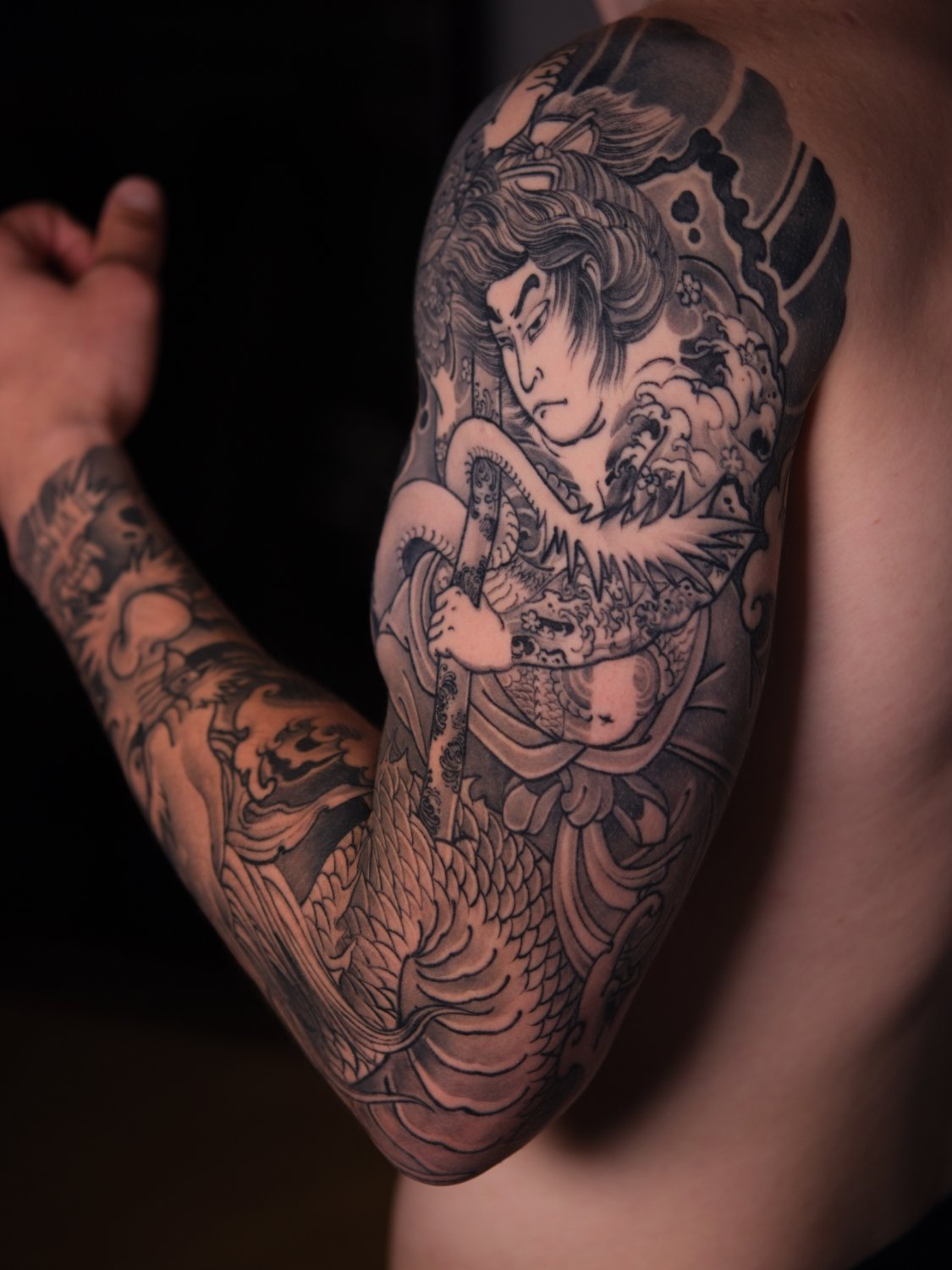
I don't just like to do tattoos. I like to create an entire world with its own life, weather, and a captured moment.
“Only in large format does Japanese tattooing fully reveal itself.”
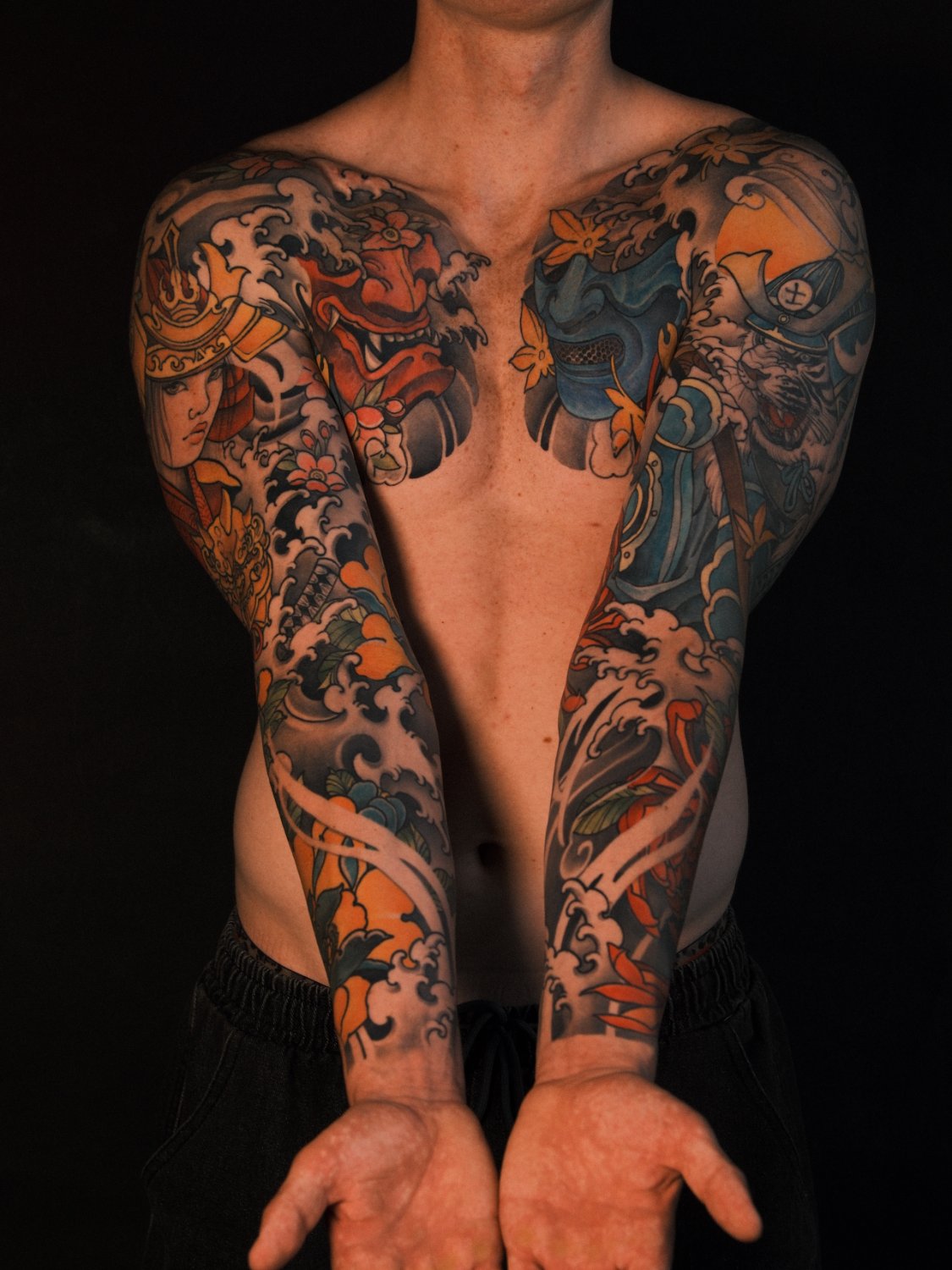
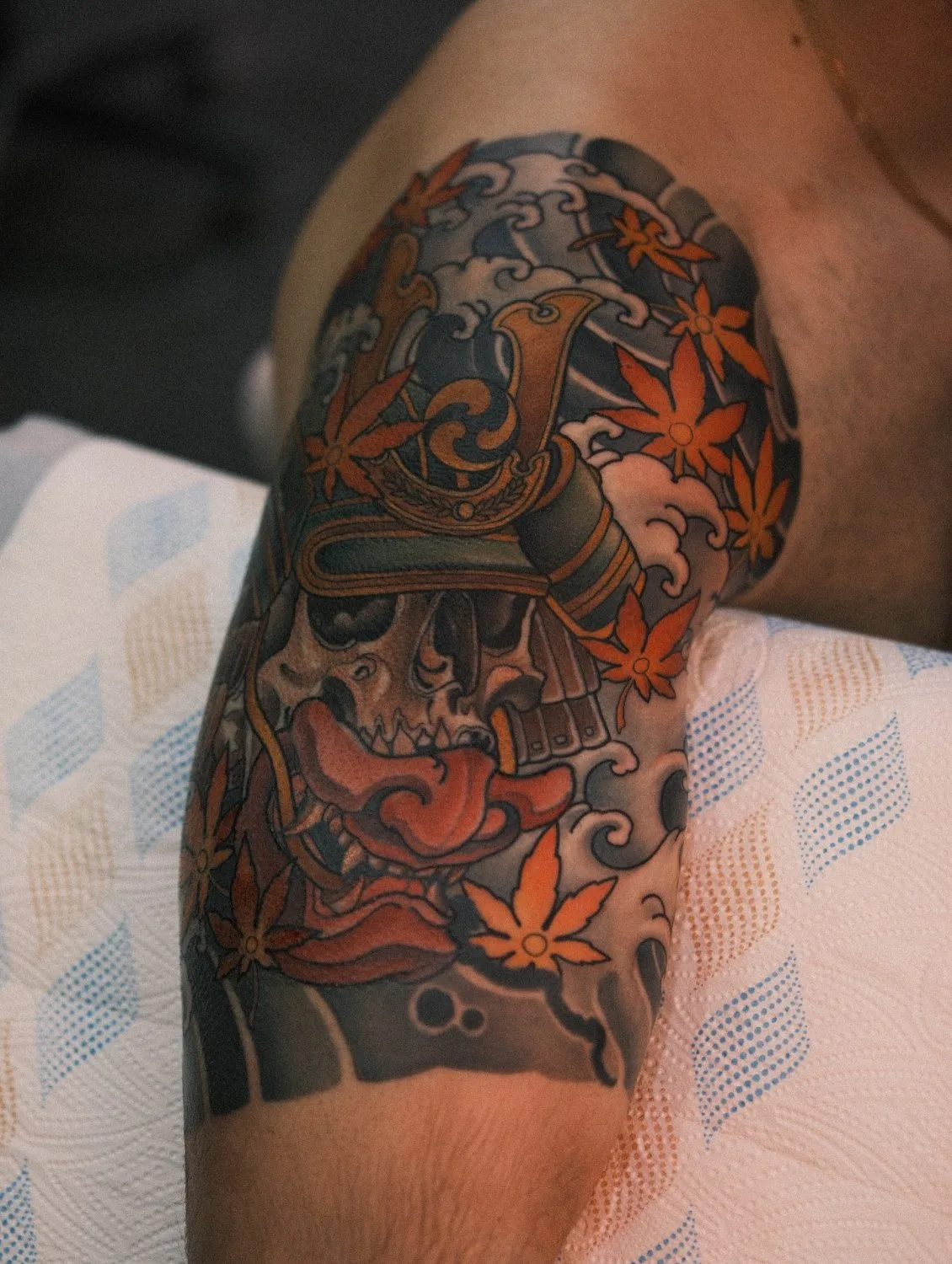
Japanese Irezumi full chest and sleeve tattoo
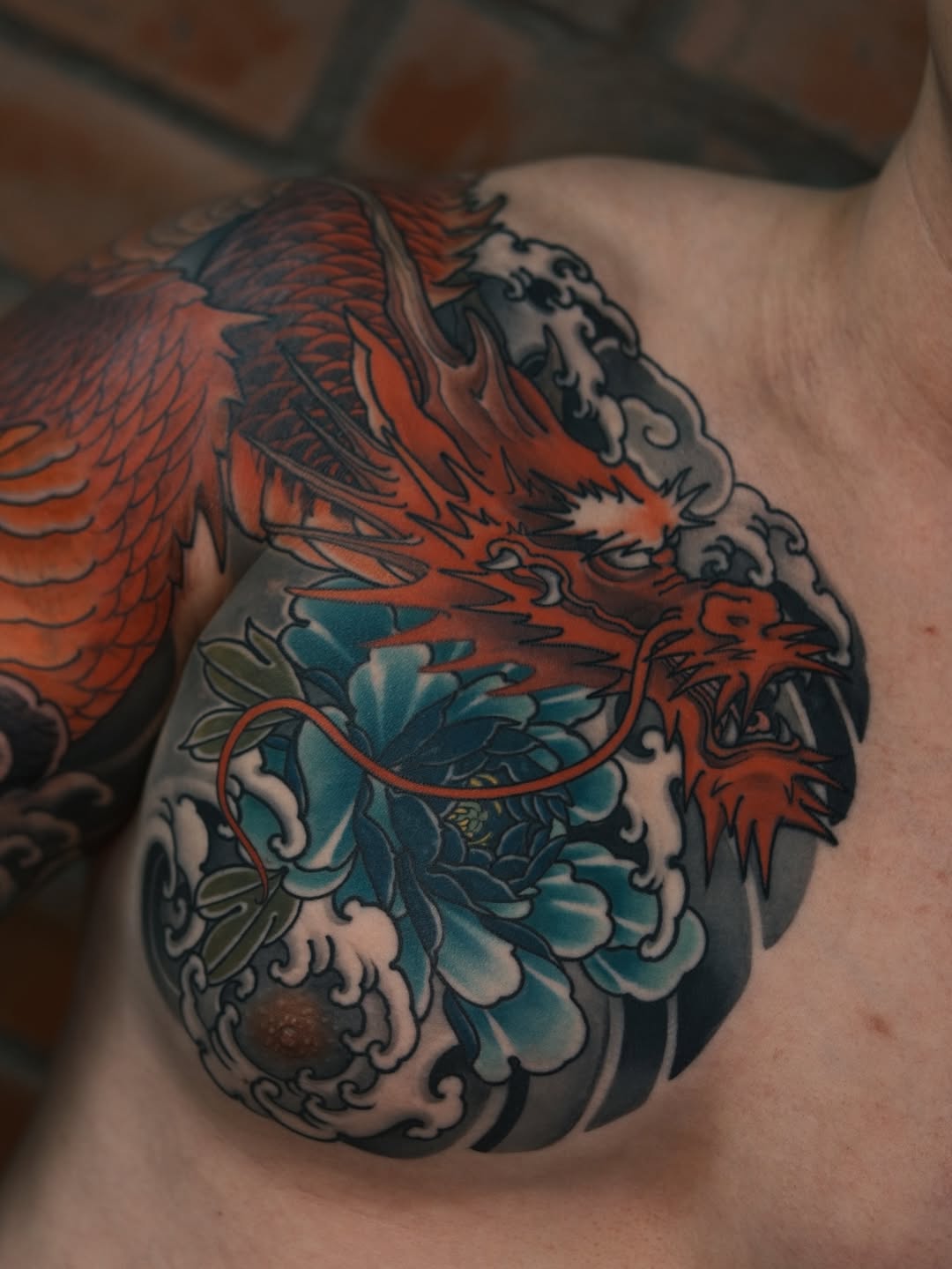
Valeria Elshina, Japanese style
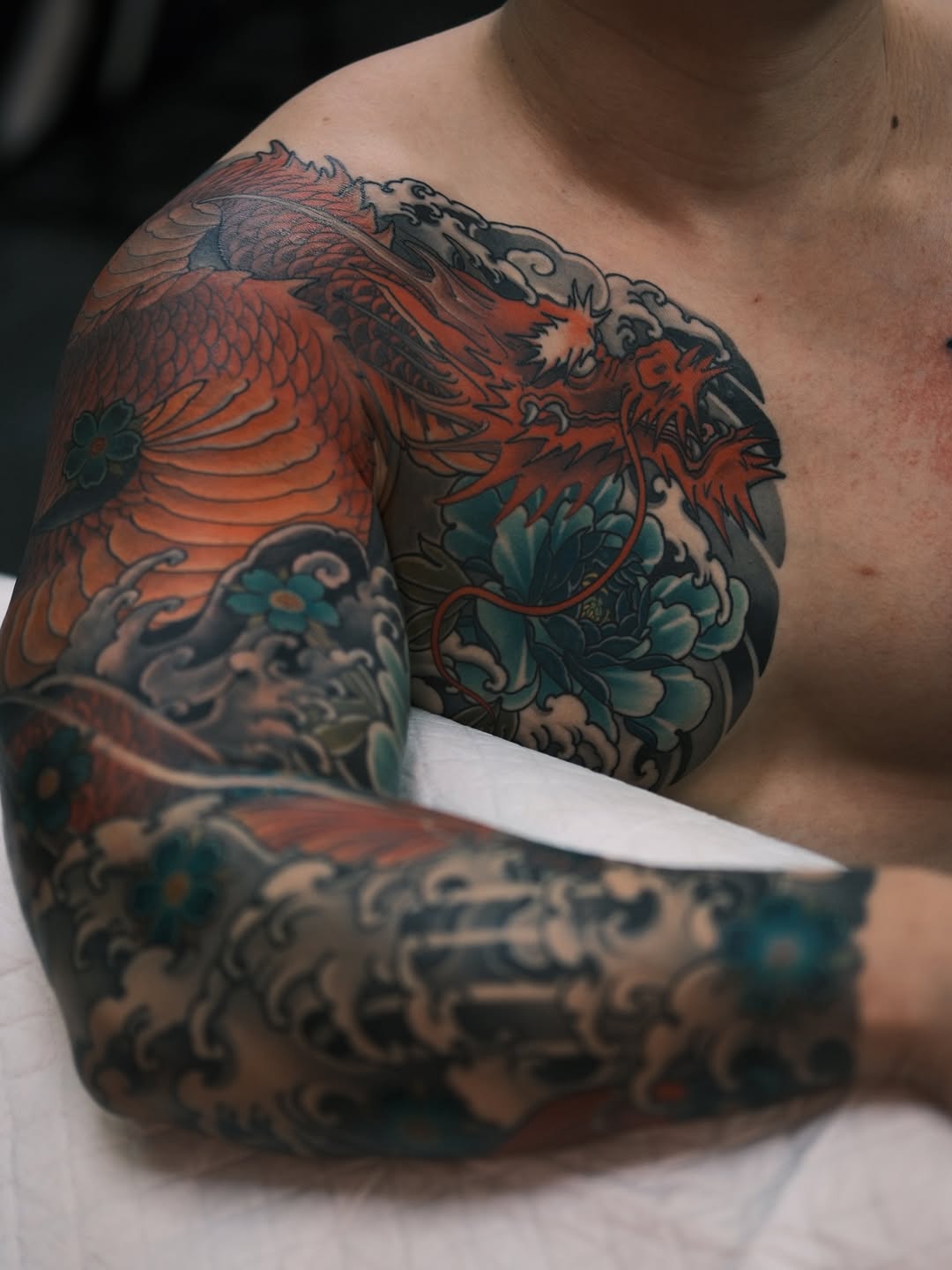
Valeria Elshina, Japanese style
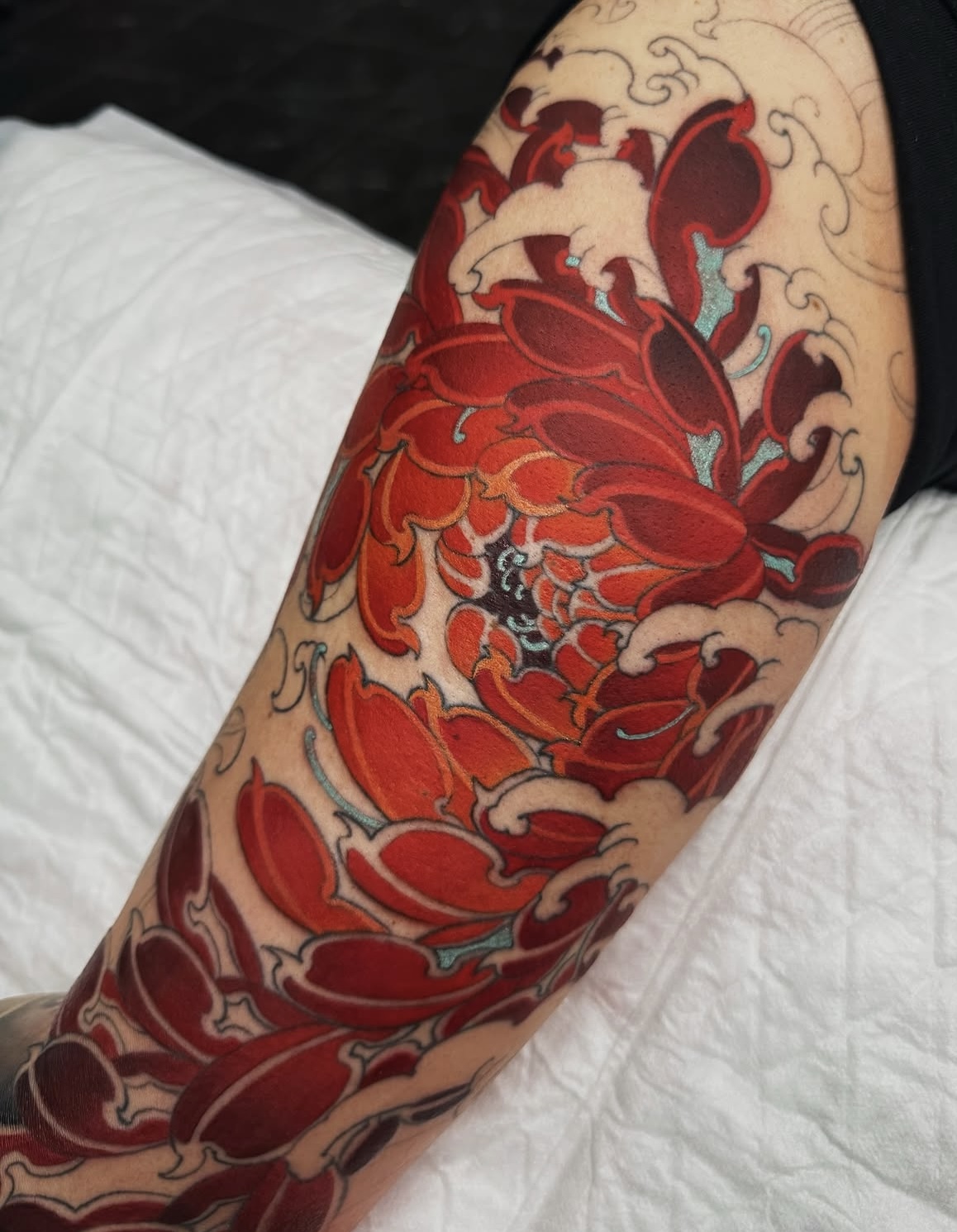
Valeria Elshina, Japanese chrysanthemum
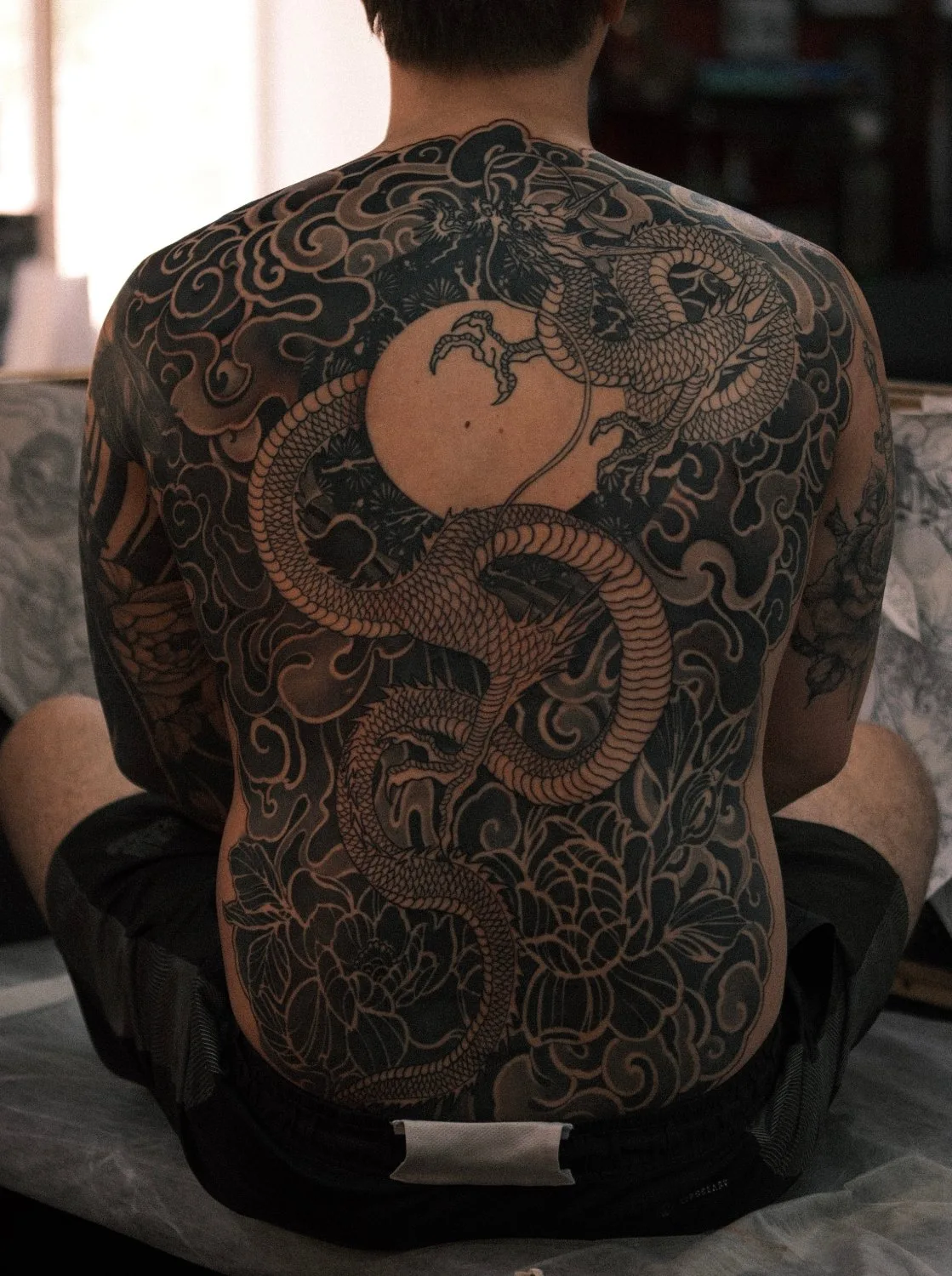
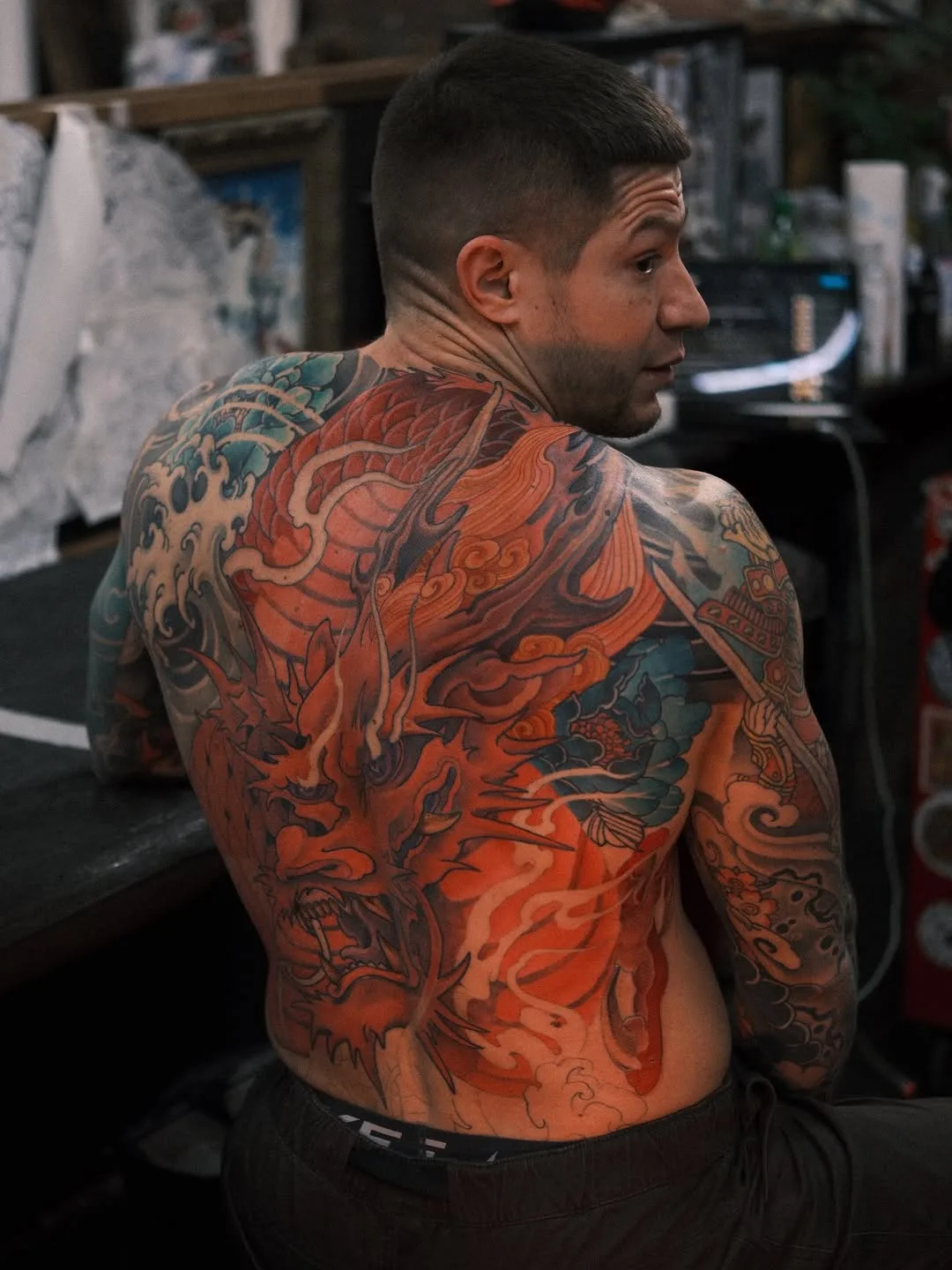
Japanese-style dragon tattoo by Valeria Elshina
You gradually build an entire universe where every character, every wave, and every flower doesn't exist on its own but becomes part of one story.
That's why I've always been drawn to large-scale works. They allow for freer thinking and the creation of not just a tattoo, but a space you want to immerse yourself in again and again.
Only in large format does Japanese tattooing fully reveal itself.
How does work on a large Japanese project usually begin: with the client's idea, a chosen image, a body part, or the overall composition?
Honestly, none of the above. For me, it all starts with dialogue and a personal consultation.
It's important for me to understand who is in front of me. Why did the person choose Japanese tattooing? What attracts them to it? What meanings do they want the work to convey?
Sometimes, during the conversation, it turns out that the image the client came with is not at all the one that can best reveal their idea.
Only after that do I start thinking about the composition. It becomes the foundation of the future project. Within it, characters, background, movement, and all other elements are born.
Valeria Elshina, Japanese style
Valeria Elshina, Japanese sleeve
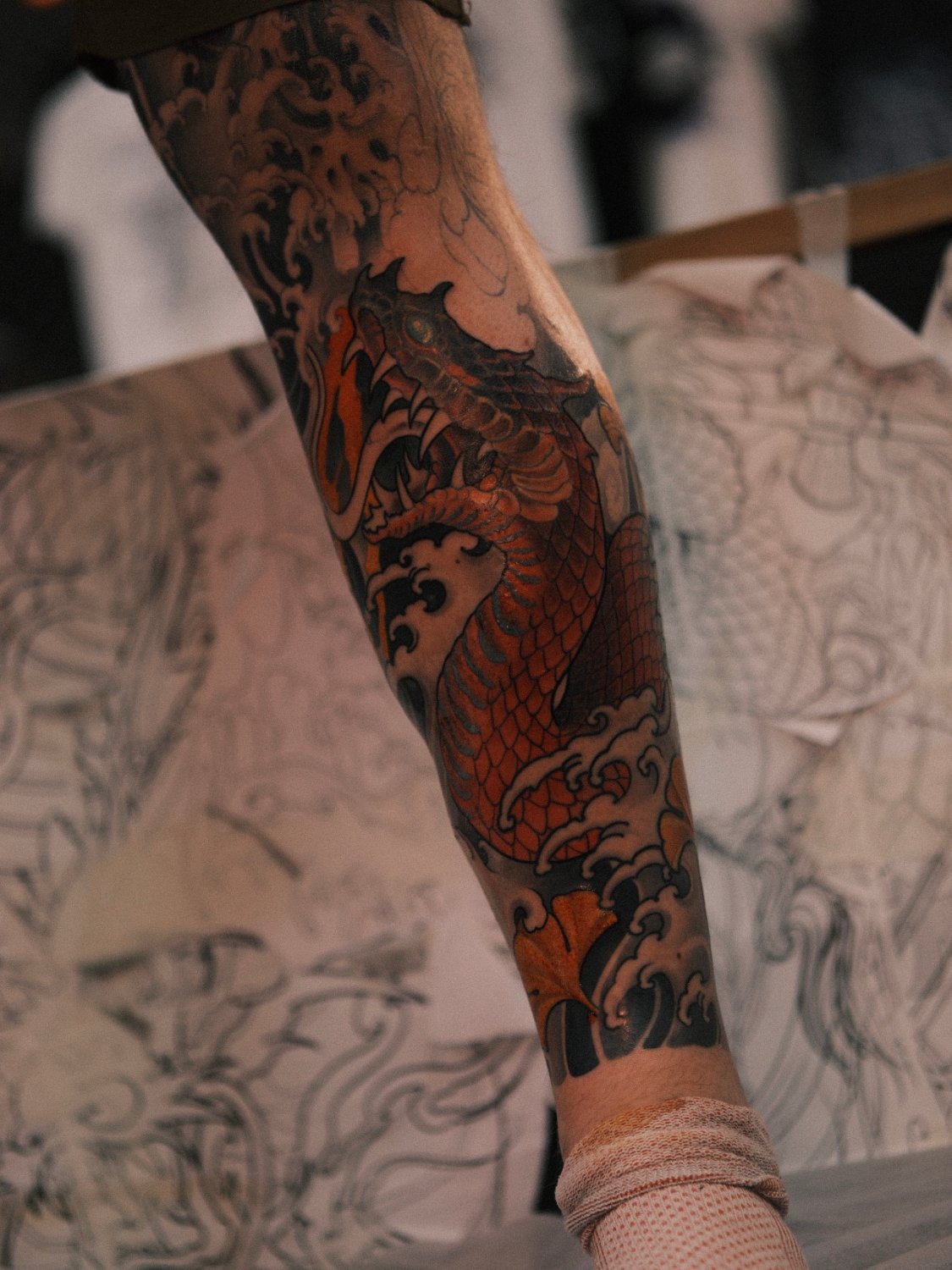
Valeria Elshina, Japanese dragon
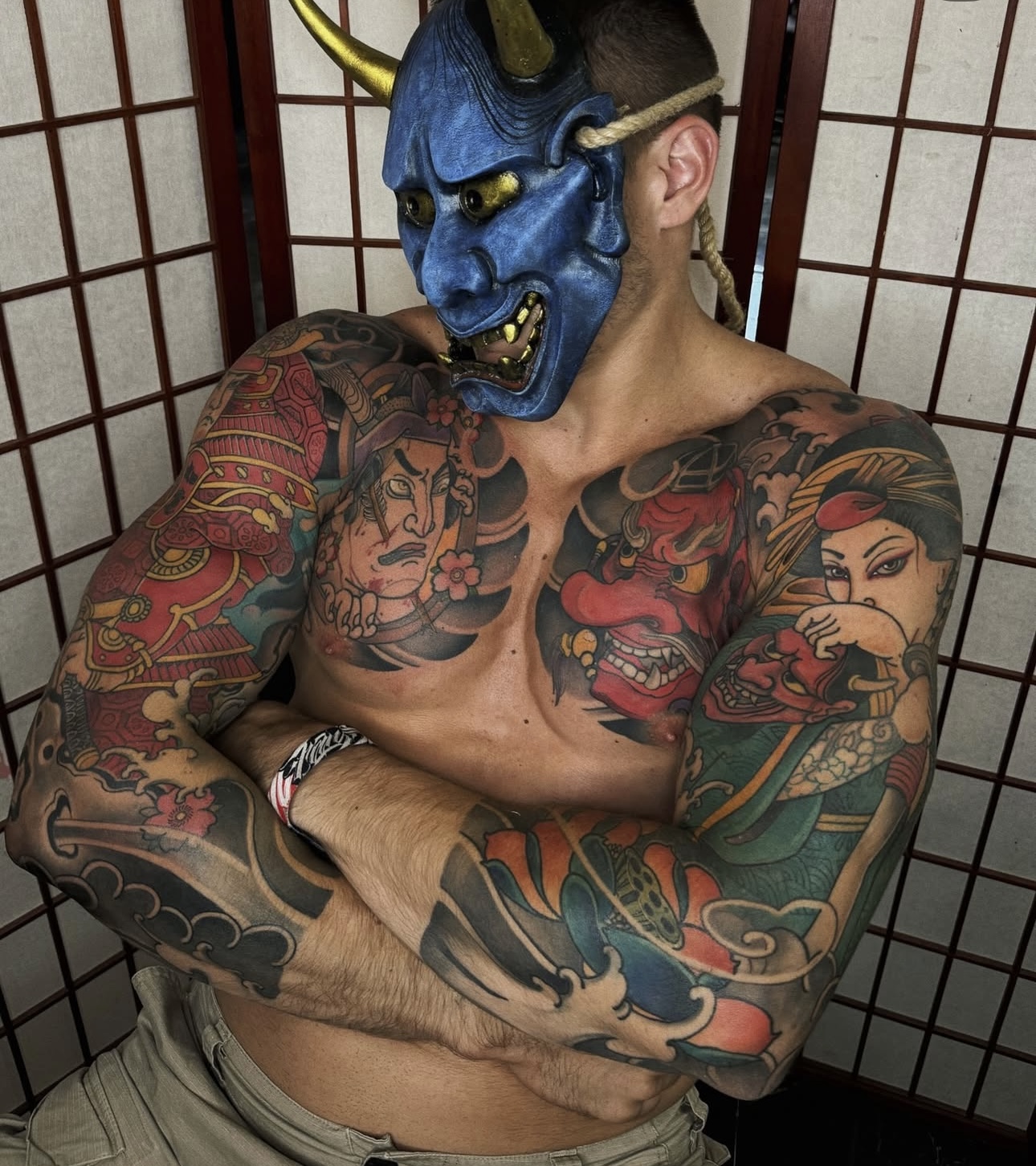
Japanese Irezumi sleeve and chest work
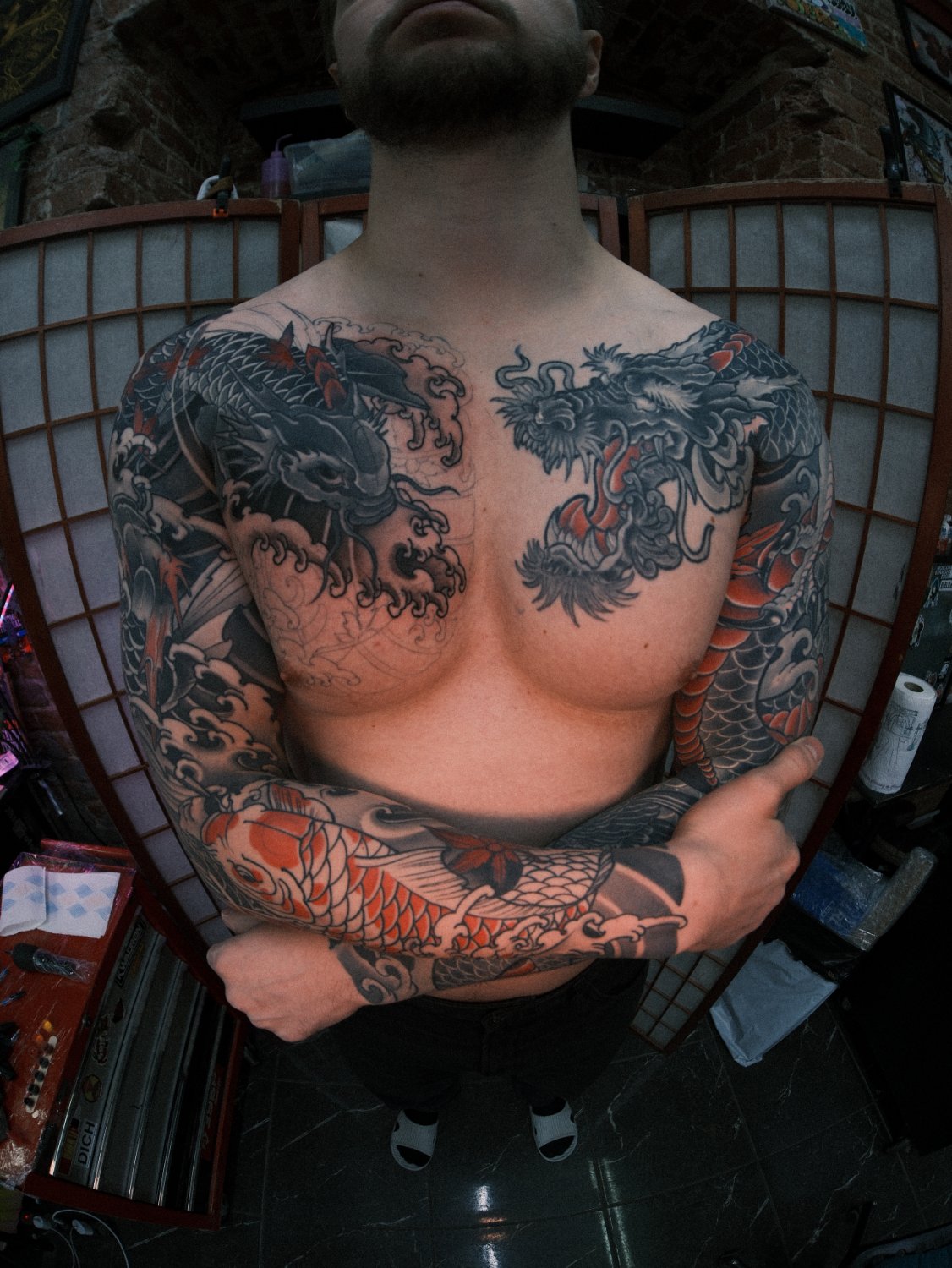
Irezumi dragons and koi carp
Which Japanese themes and images are particularly close to you right now? Why these specifically?
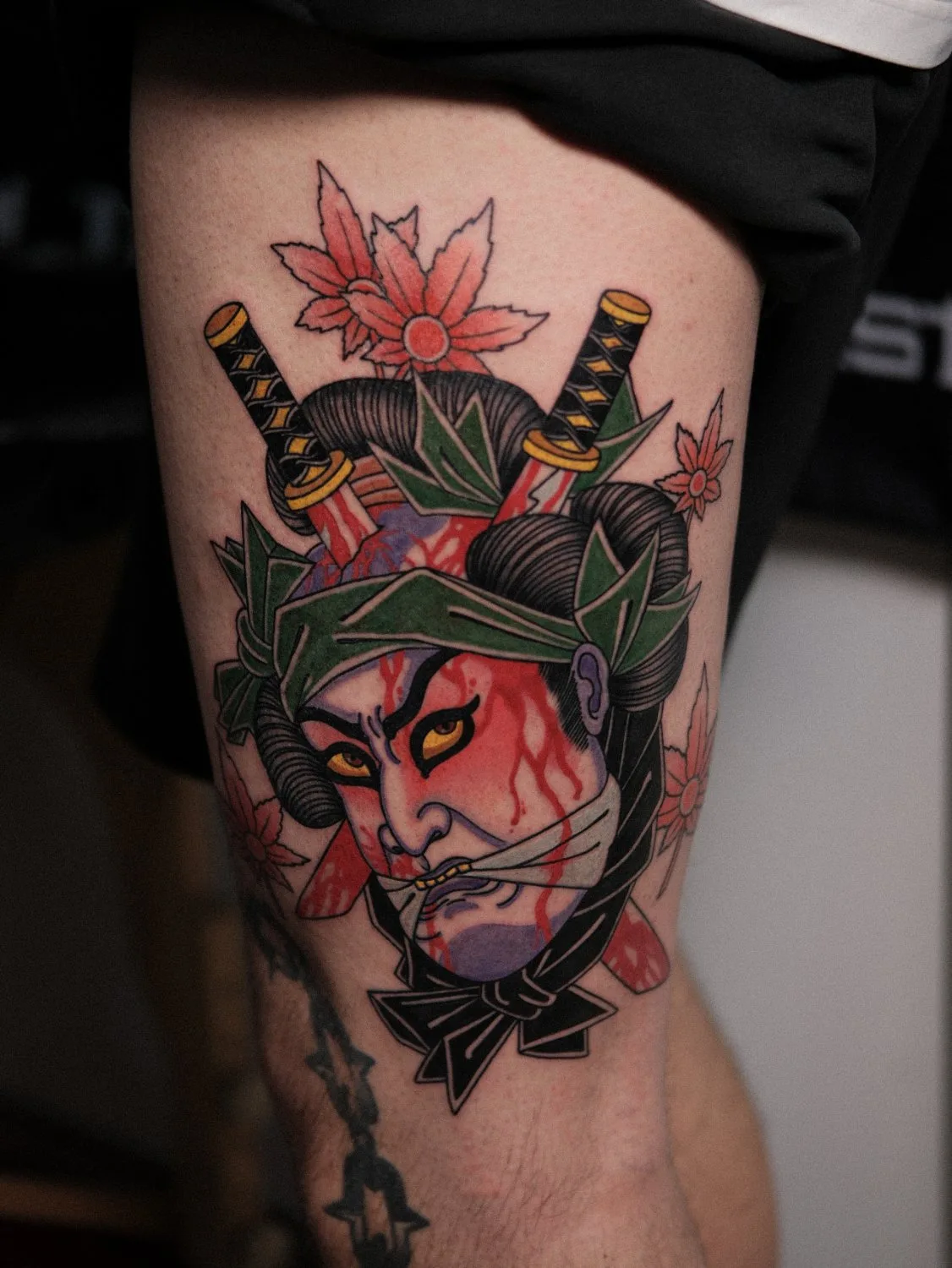
I have always been interested in characters that cannot be fully understood at first glance. In Japanese culture, there are no absolutely positive or absolutely negative heroes.
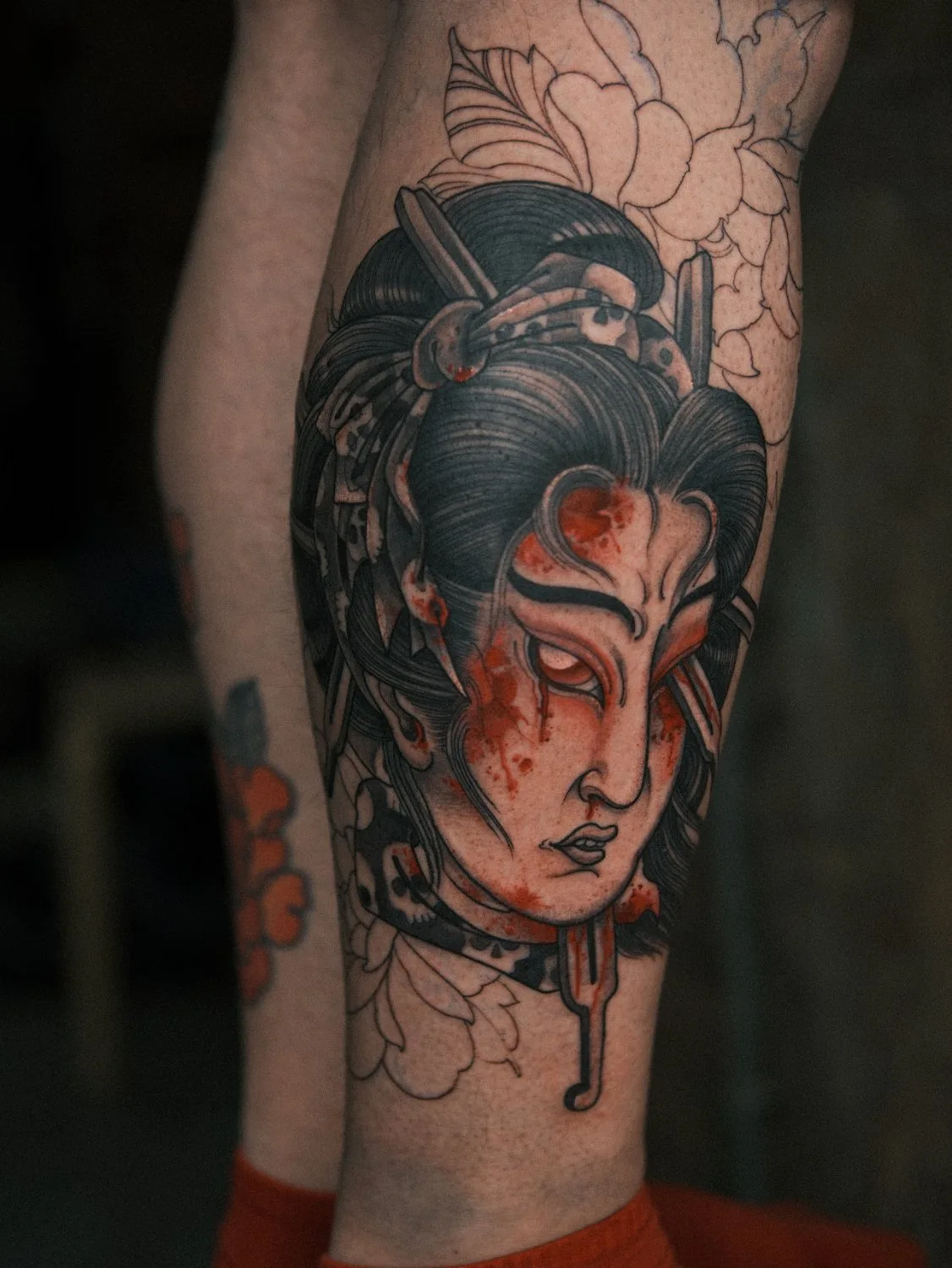
A dragon can be wise and formidable at the same time, a tiger, a symbol of strength and yet a protector, and a Hannya mask, not an embodiment of evil, but a reflection of complex human emotions.
It is this multi-layered nature that attracts me. The deeper you study Japanese culture, the more you understand that each image can be interpreted differently.
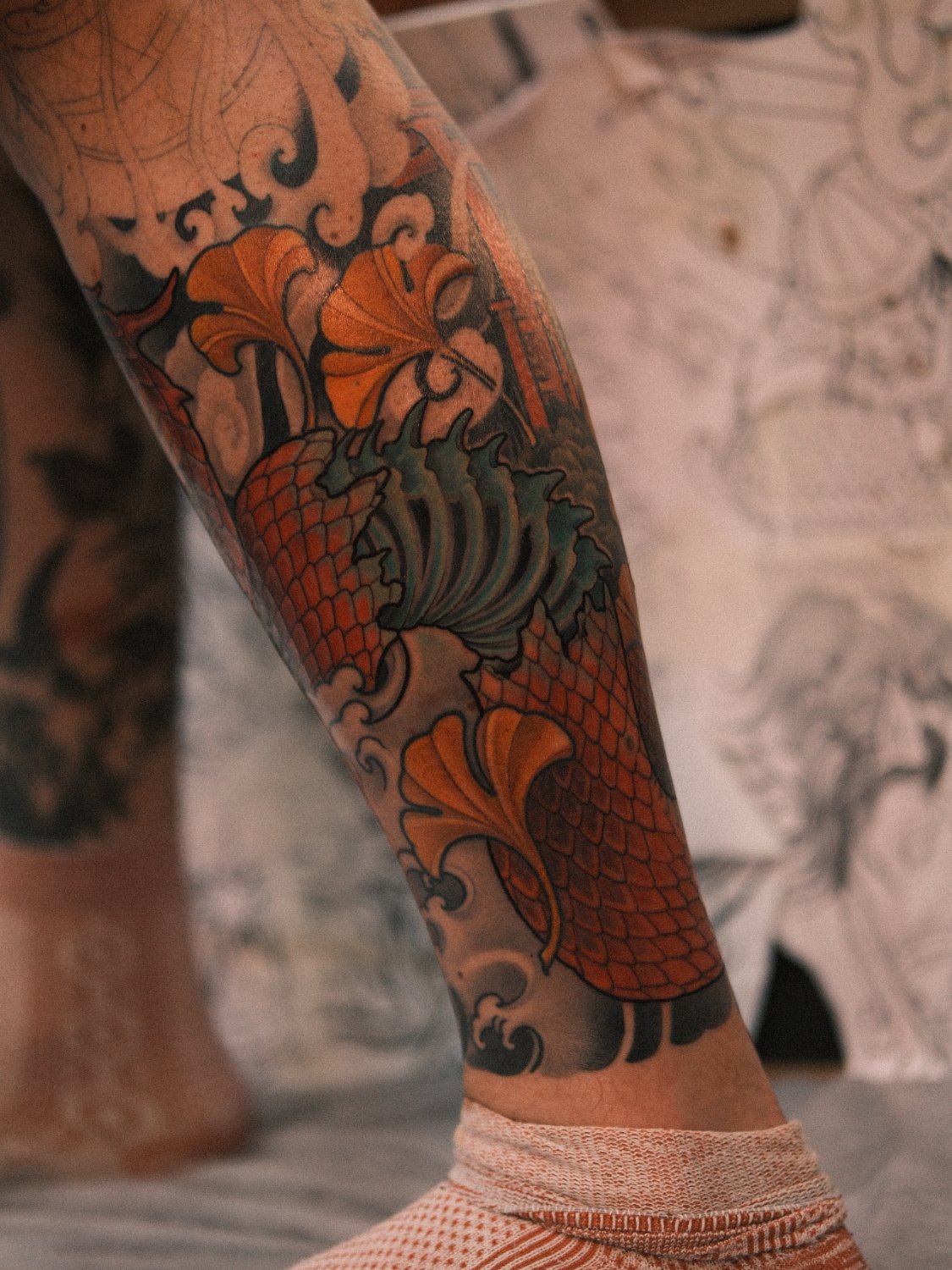
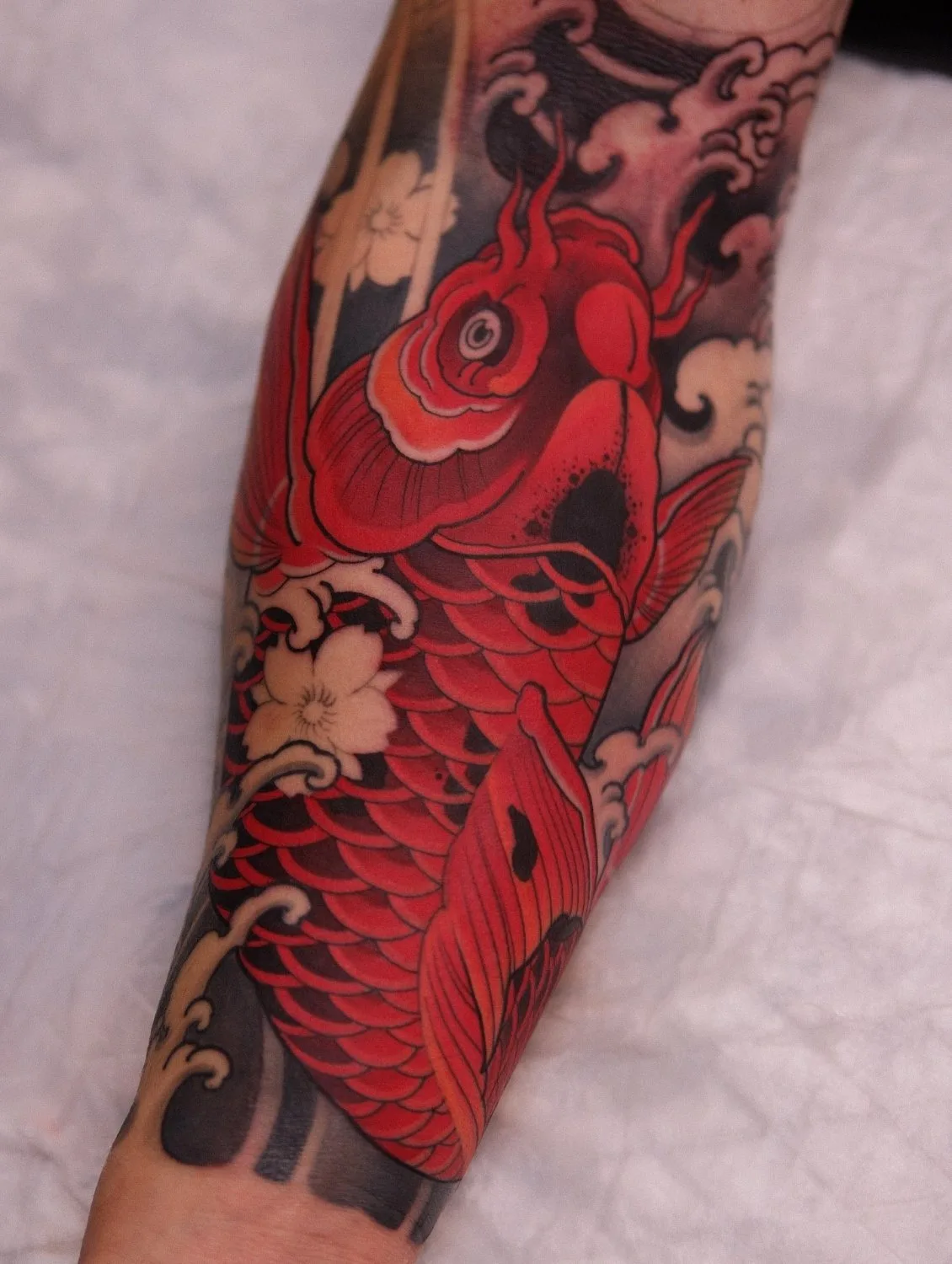
But most of all, I am fascinated by waves. For me, they are perhaps the most beautiful and interesting part of Japanese tattooing. They can be a background, but it is the waves that set the rhythm of the entire composition, connect the elements, and literally bring the work to life. Perhaps that's why I love them the most.
Where do you draw the line between respect for tradition and artistic freedom in Japanese tattooing?
For me, that line is between reinterpretation and distortion.
I believe that artistic freedom is only possible when you understand Japanese traditions and know exactly what you are reinterpreting. Only then can you maintain respect for the culture while expressing yourself in your own artistic language.
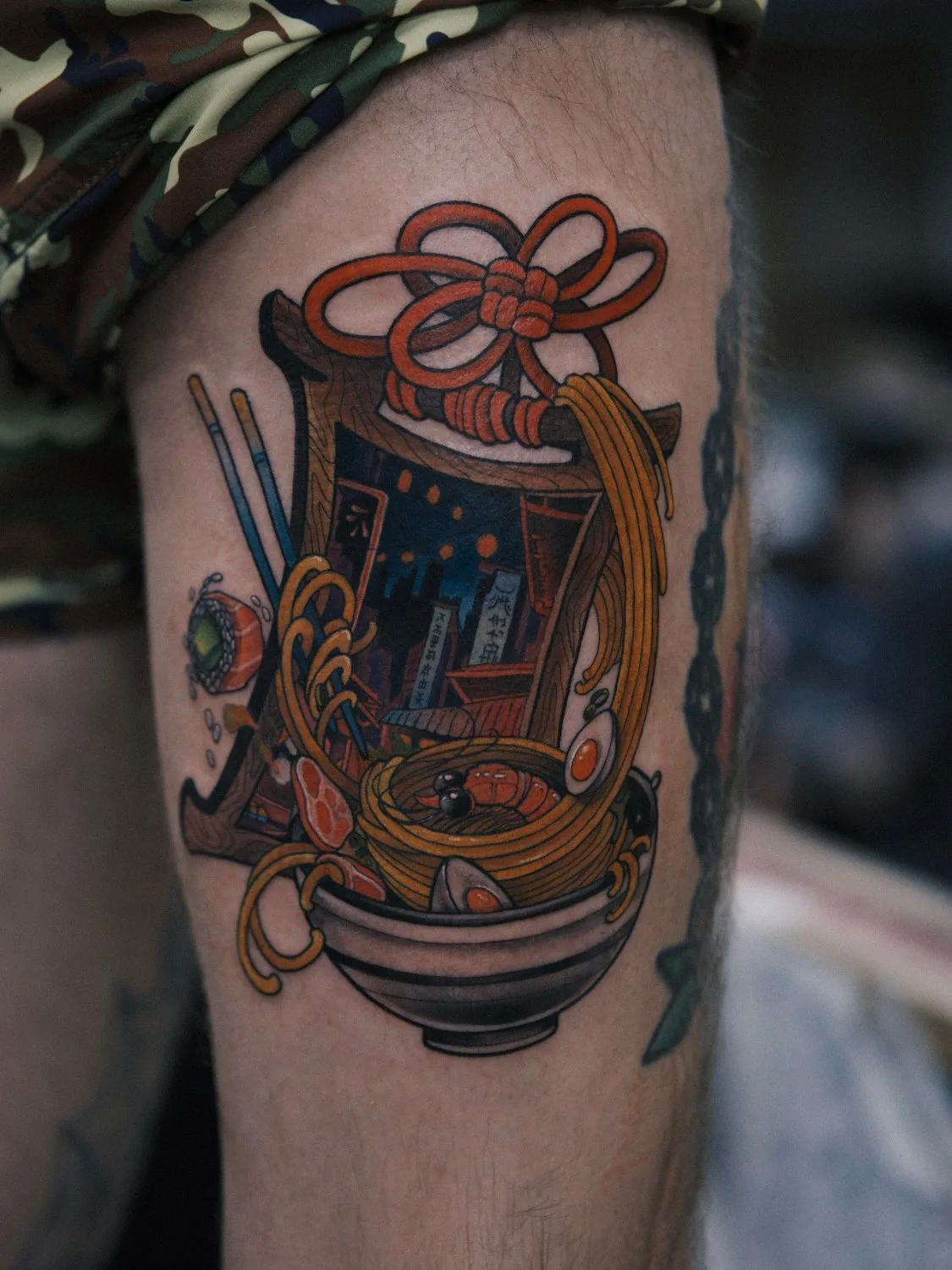
Color is an important part of your work. How do you choose your palette so that the tattoo remains vibrant, deep, and legible after healing?
Color in my tattoos is an extension of the story. It can complement the image and tell its history.
“Many people think the secret to a vibrant tattoo lies in color. In reality, it lies in black.”
I select the palette considering Japanese symbolism, seasonality, and the character's status, and technically, I rely on skin tone and contrast for execution.
It's important that after healing, the colors don't clash with each other, and the composition remains deep, vibrant, and legible.
Many people think the secret to a vibrant tattoo lies in color. In reality, it lies in black. It is black that creates depth and contrast, thanks to which other colors remain expressive after healing.
Tell us about the most ambitious project in your practice. What kind of work was it, how long did it take, and what made it particularly memorable?
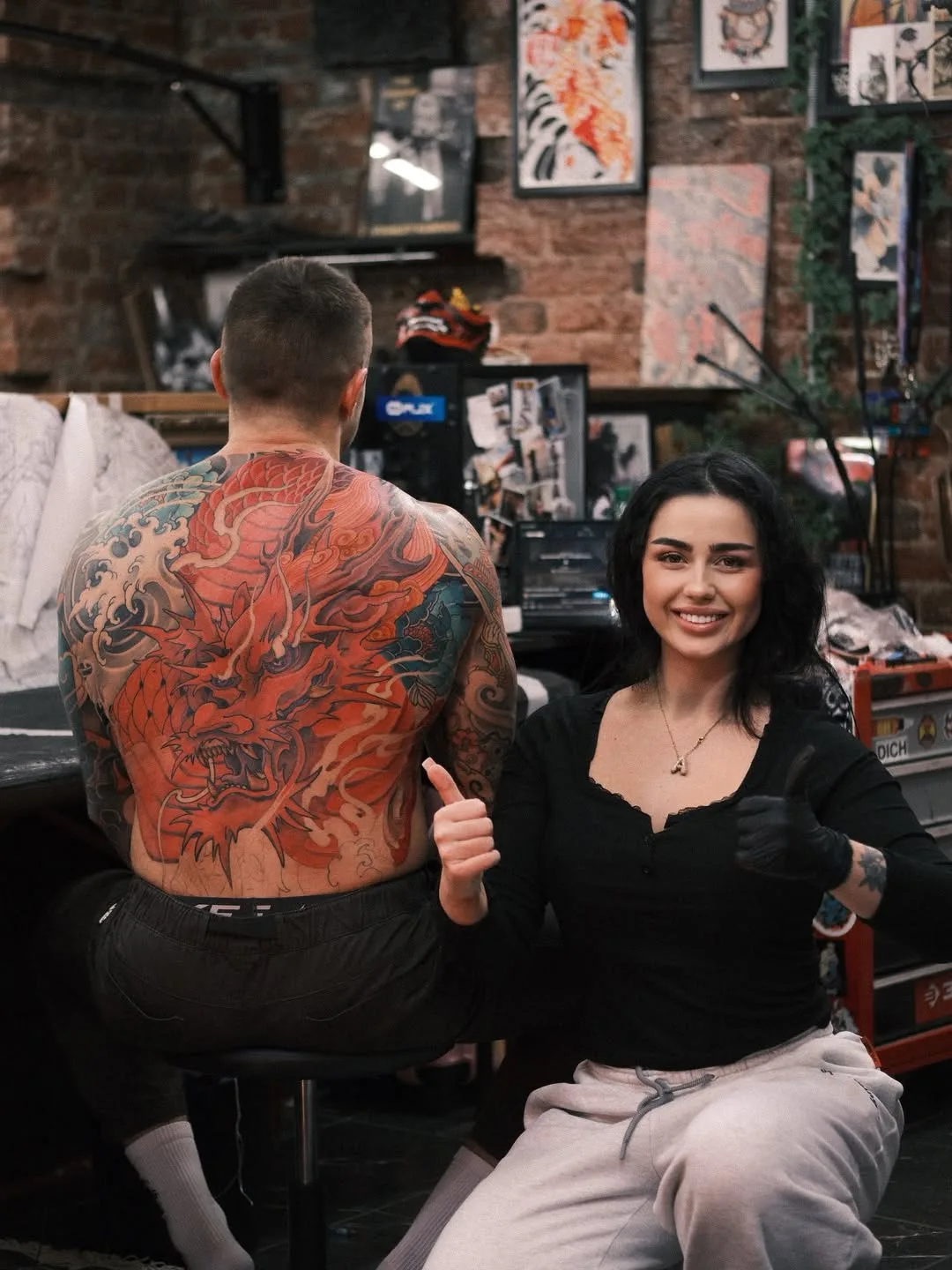
The most ambitious project in my practice was a tattoo suit, including the back, buttocks, arms, and chest. We plan to continue working on it in the future and complete a full bodysuit.
The project has already taken about a hundred hours, although the exact number is difficult to count.
What I remember most is the client's trust. He completely entrusted me with the project's creation, from the initial idea to the placement of all elements.
For a tattoo artist, this is probably the highest degree of recognition. Such trust allows one to create not just a large tattoo, but a coherent story that perfectly fits the body.
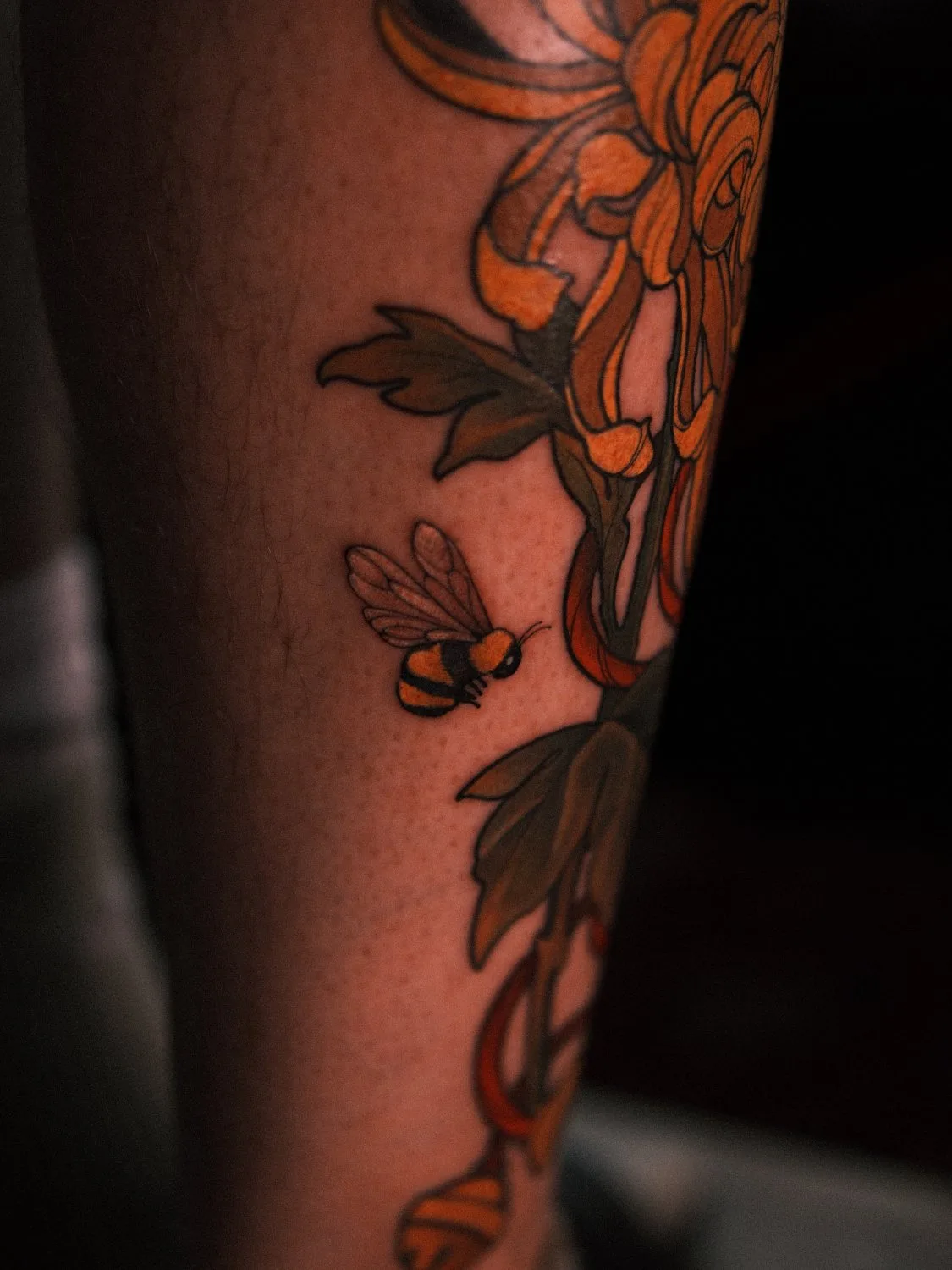
How many sessions on average do large Japanese projects require, such as a sleeve, back, or a large leg composition?
It all depends on the person's anatomy, the project's detail, and the color density.
On average, a sleeve takes six to ten sessions, a leg ten to fifteen, and a full bodysuit can take several years to create.
I never state the exact number of sessions in advance. A good Japanese project takes time, and rushing it is always evident.
Which victories, awards, or nominations at conventions do you consider key in your career?
Among my most significant achievements are second place in the Neo Oriental category at the XXII Moscow Tattoo Festival in 2023 and second place in the Oriental category at the INKSIDE festival, also in 2023.
These awards are especially valuable to me because they were received for works in the direction to which I dedicate most of my practice and in which I continue to develop.
You also serve as a judge at conventions. Which events have you judged at, and how do you evaluate your judging experience?
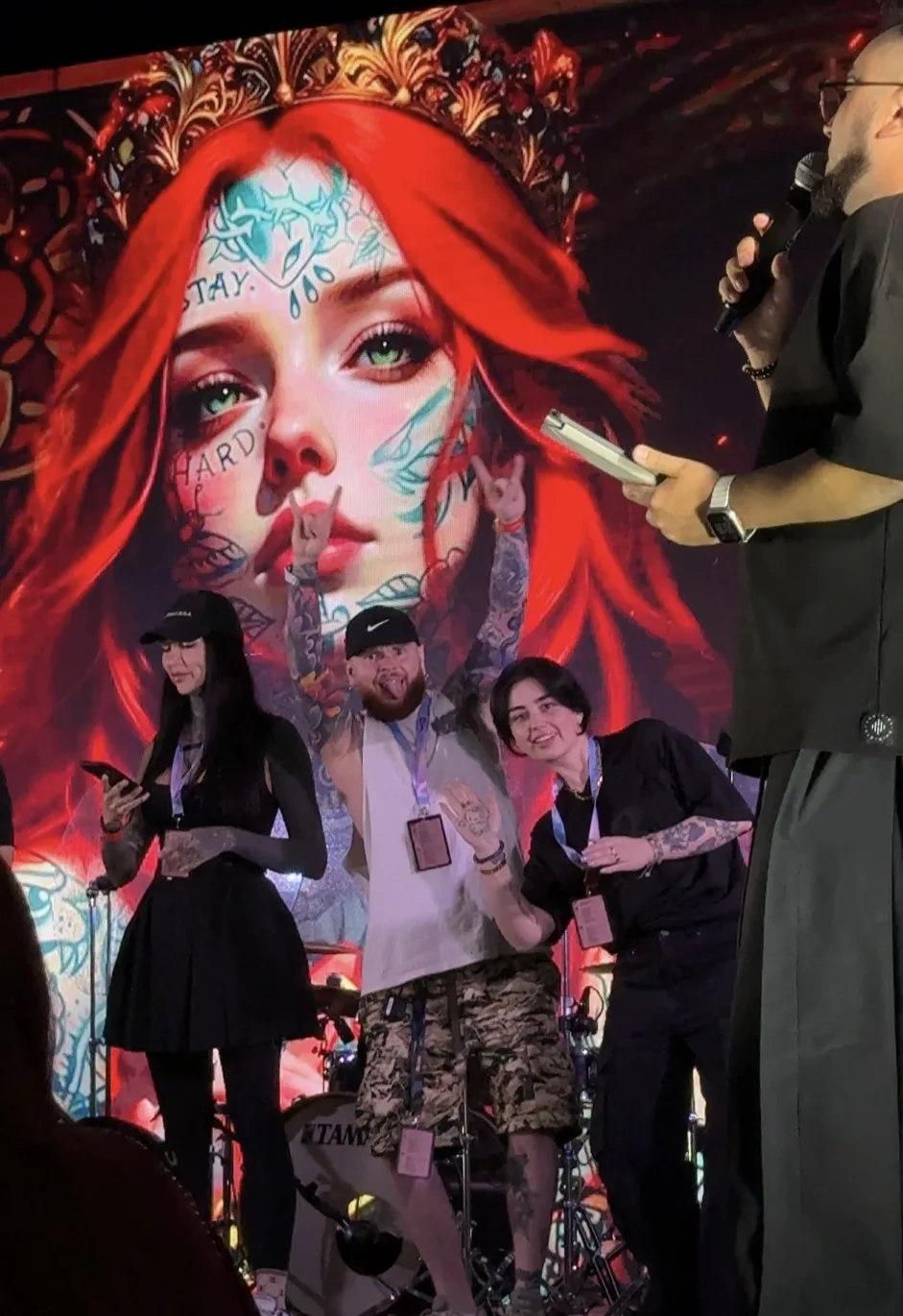
I had the opportunity to judge at the Red Ink festival.
This experience teaches you to look at tattoos more objectively and constantly raises the bar for my own work. That's why I consider judging not a reward, but an opportunity for professional growth.
Are you currently part of any professional teams or brand pro-teams? What does such collaboration mean to you?
Currently, I am an ambassador for WJX.
For me, collaboration with a brand is not just a status, but an opportunity to participate in the development of the industry, test new products, and influence their quality through feedback.
I believe that any collaboration should be built on shared values and trust. When a brand shares your approach to work, it becomes a true partnership, not just advertising.
Besides tattooing, do you have other art forms, personal projects, or creative practices that currently occupy your attention?
Besides tattooing, I dedicate a lot of time to photography, videography, editing, music, and, of course, painting.
I believe an artist shouldn't limit themselves to just one tool. Each of these areas develops my eye for composition, light, color, and rhythm, allowing me to see future projects in new ways and unleash my creative potential.
The main source of inspiration for me remains Japanese culture: art, architecture, prints, cinema, music, and the people who continue to preserve and develop this heritage today. This shapes my visual language and is directly reflected in my tattoo work.
I would like to become part of something truly big and creative. To turn my whole life into art, so that I, what I create, and what remains after me, become a single entity.
If you are reading this interview today, perhaps it means that I have already taken the first step on this path.