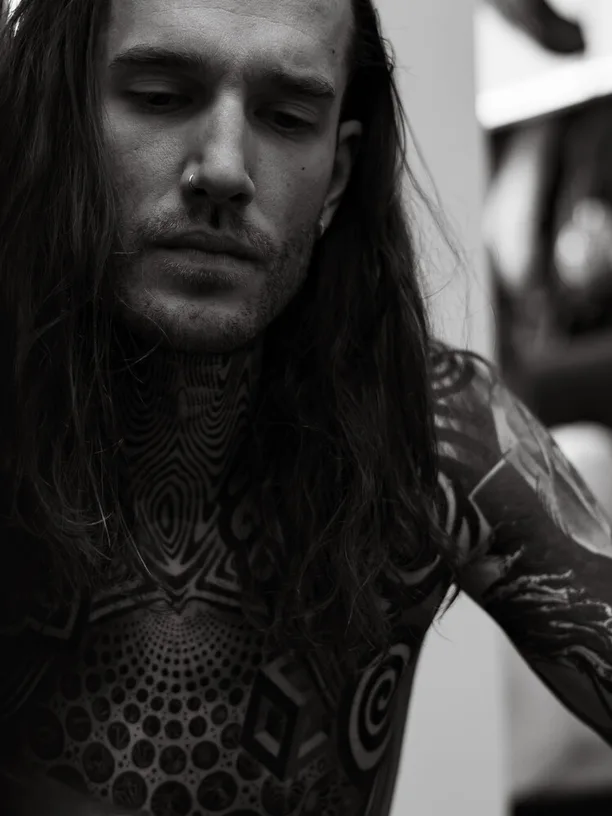
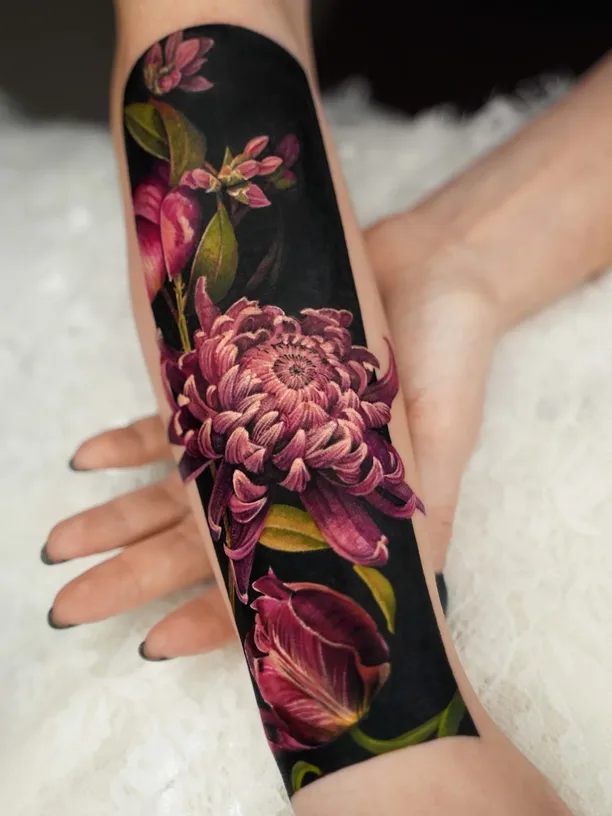
Somewhere between a graffiti wall and a tattooed torso, Lehel Nyeste found his medium. The Hungarian artist came up through street art, computer graphic design, and a self-taught home practice before the industry took notice, and the path shows in every saturated, character-driven composition he puts on skin.
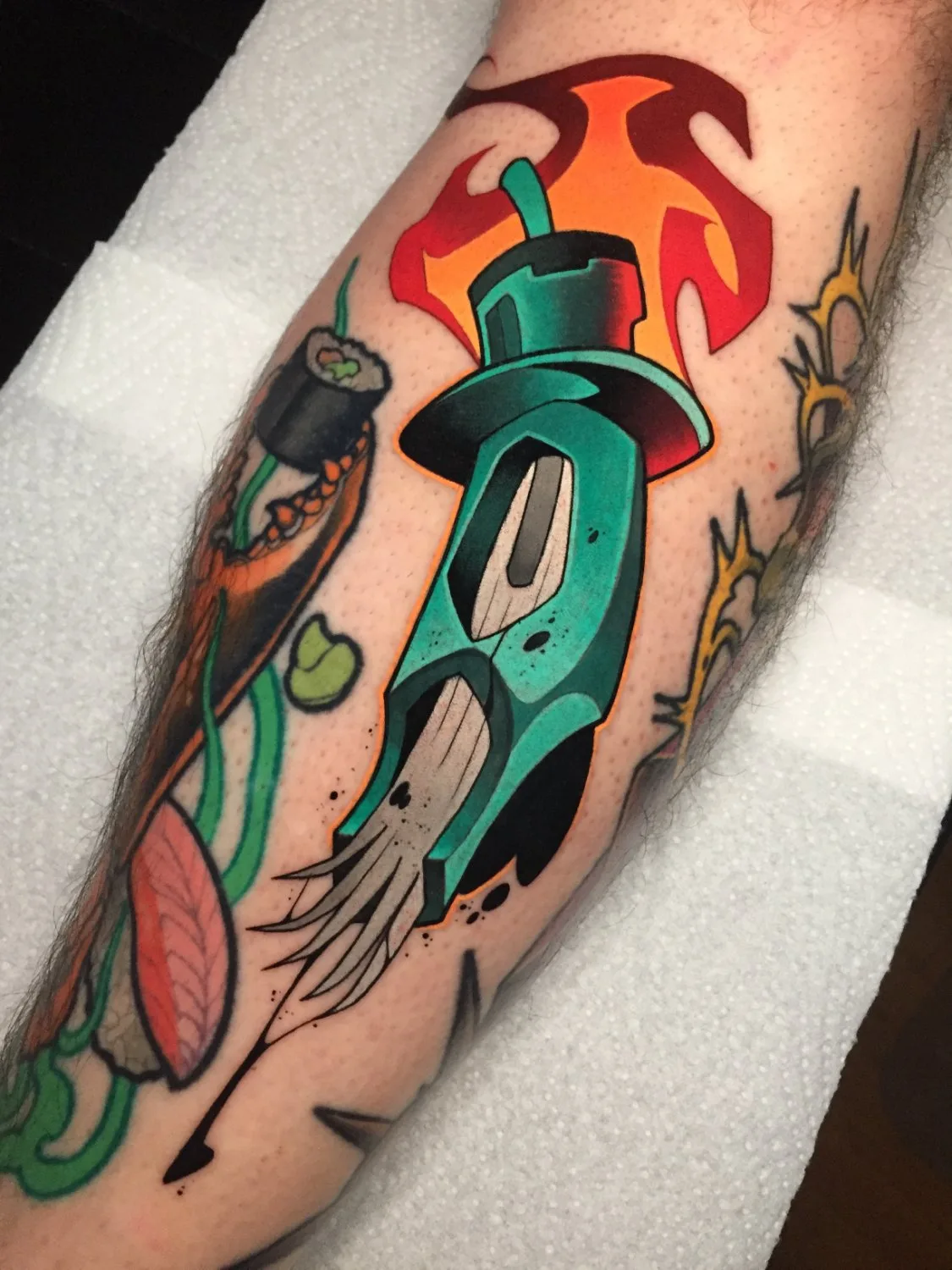
Nyeste grew up in Mezőkövesd, a small town in northeastern Hungary. As a kid he drew constantly, and that habit eventually pulled him toward graffiti and then into formal studies in computer graphic design. The two threads, the disciplined and the feral, have run parallel through his work ever since.
He entered tattooing in 2009, before finishing his studies, buying a tattoo set and practicing at home on fake skin and willing friends. Self-taught first, studio-trained second. After roughly a year of that, he became an apprentice at Psychogang in Eger, where a tattooist named Joci helped him find his footing in the craft.
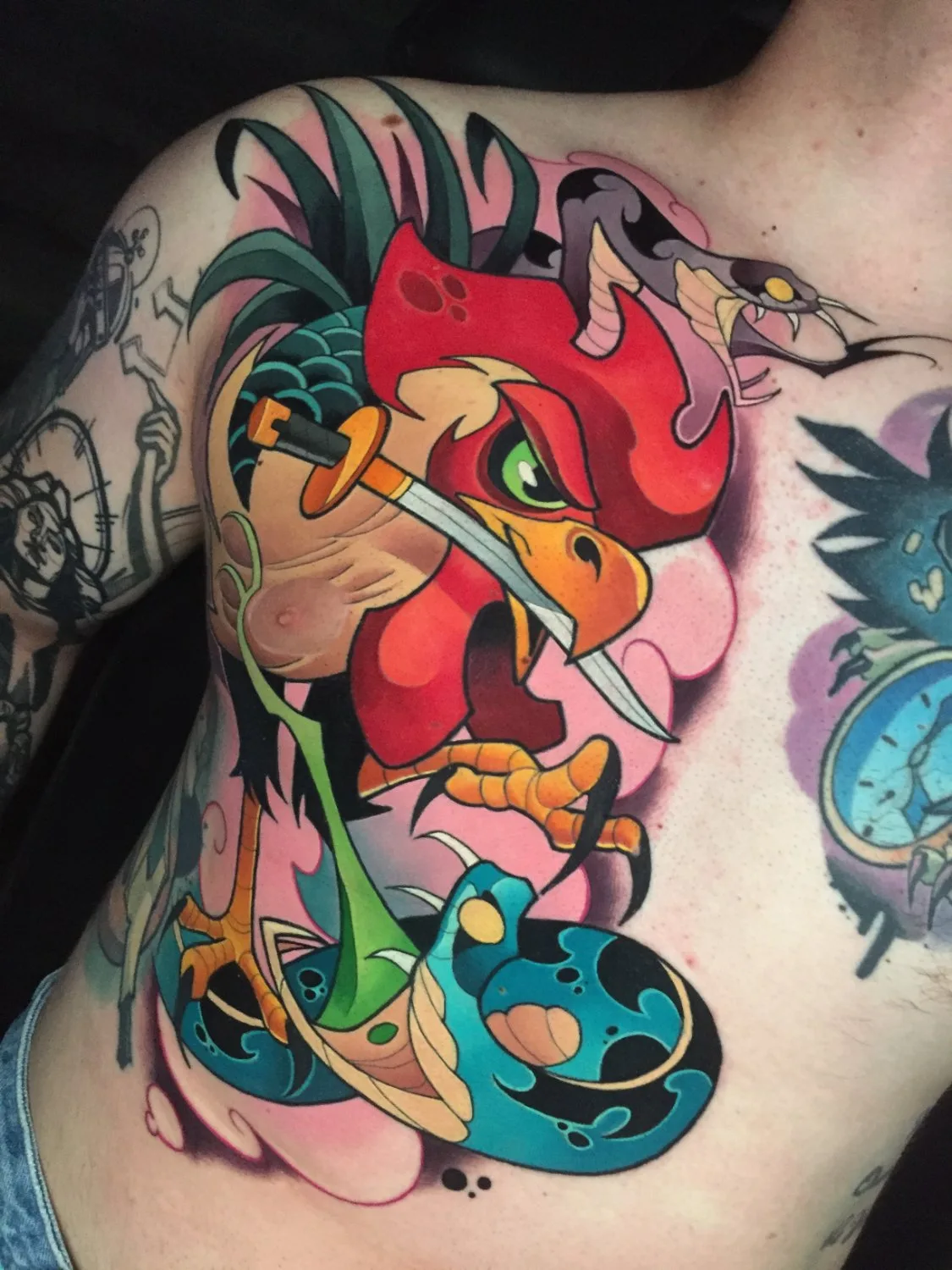
From Eger he moved to Skin Workshop in Miskolc, a busy shop, six days a week, multiple styles, the kind of environment that either breaks you or builds serious technical range. It built his. He credits the people there alongside him for pushing his development before he eventually relocated to Budapest and joined Perfect Chaos Tattoo.
Budapest was the next stage, and then came his own private studio, Tattoo Perspektiv. Each move represented a deliberate step: more autonomy, more control over the work, more room to pursue the specific visual territory he had been mapping since those early graffiti years.
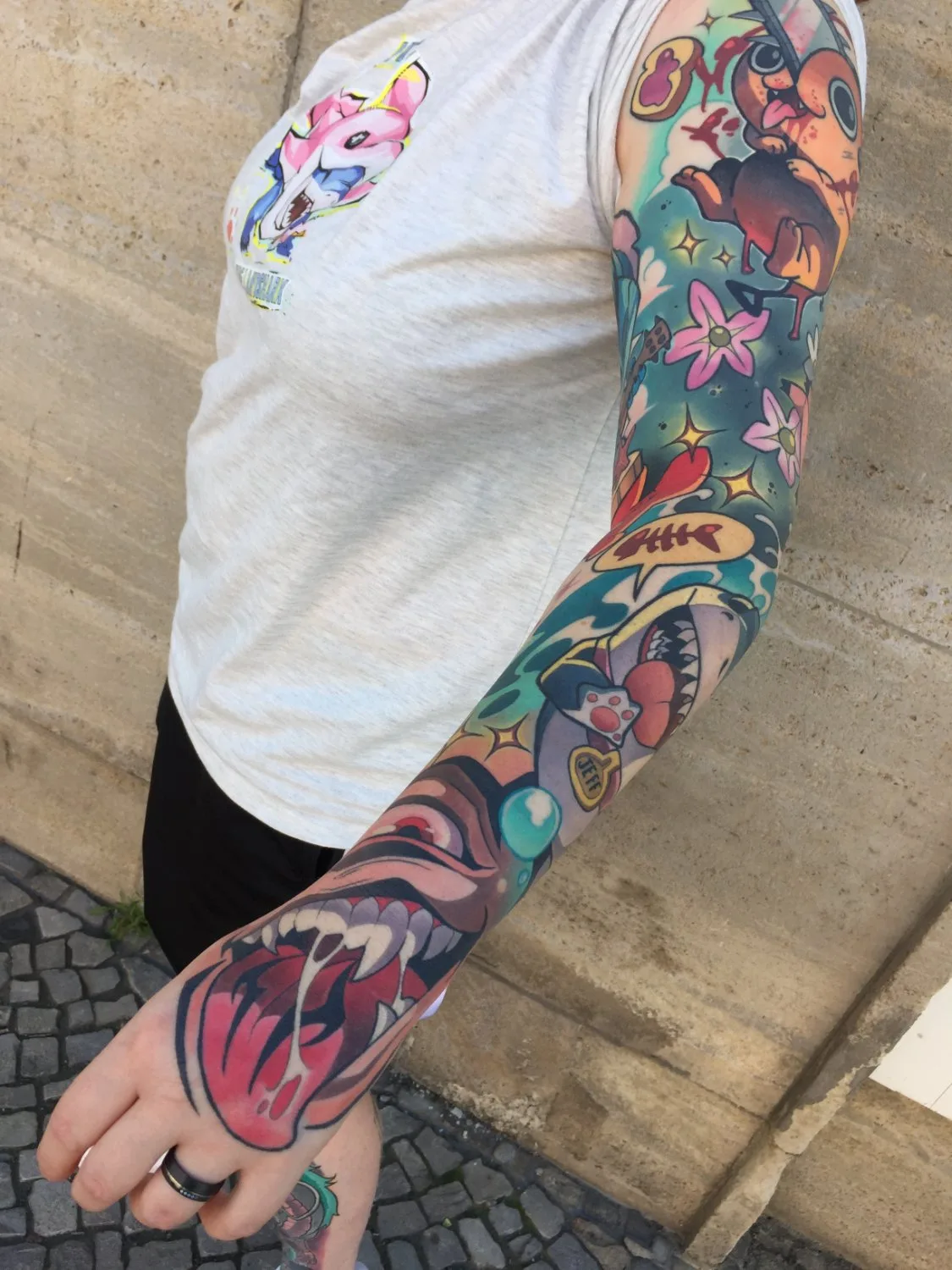
“I have realized there are people who's actually doing this kind of style in tattooing, like Joe Capobianco, Jesse Smith, Jime Litwalk, just to mentioned few. I already knew this is my way.”
The pull toward New School was never really a choice so much as a recognition. The bold lines and chromatic density of the style matched instincts he had already developed on walls. Artists like Joe Capobianco, Jesse Smith, and Jime Litwalk showed him the style existed at a high level in tattooing. He saw it and knew.
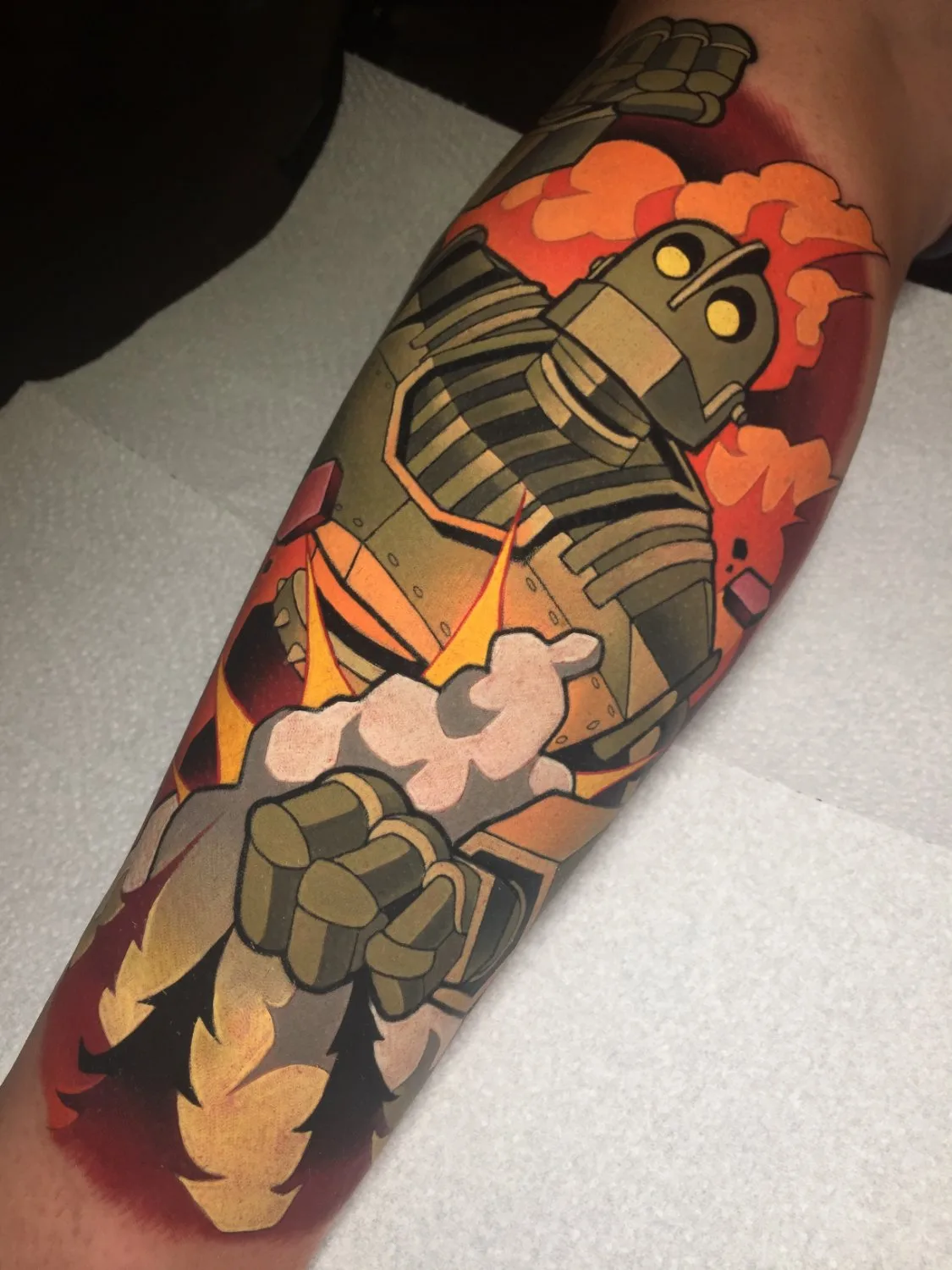
Finding a personal visual language inside that style took longer. Nyeste estimates around five to six years of sustained drawing practice, deliberate experimentation with shapes and forms, and the slow process of filtering influences without being consumed by them. His style has kept evolving since, which probably says more about his discipline than any single breakthrough moment.
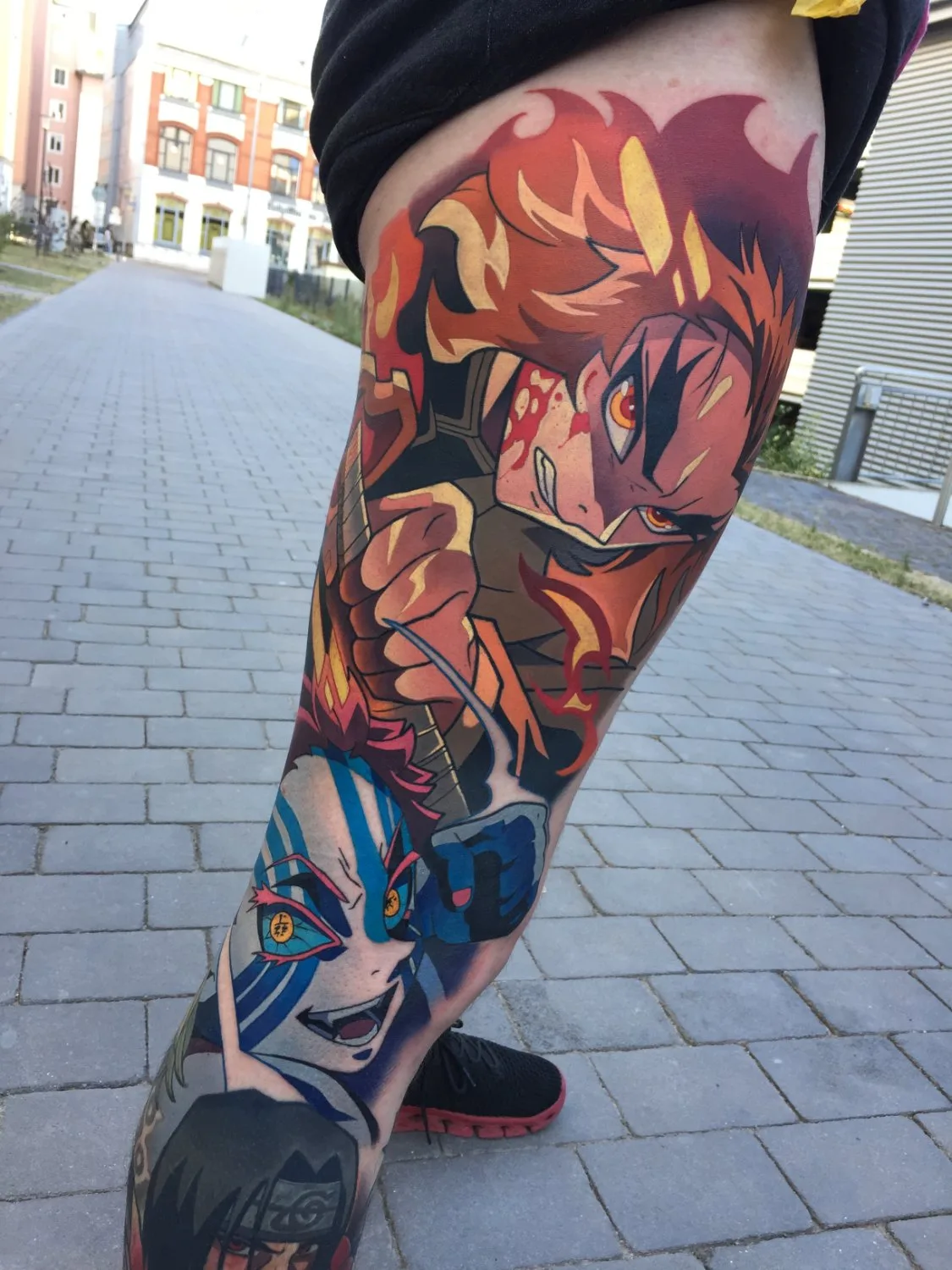
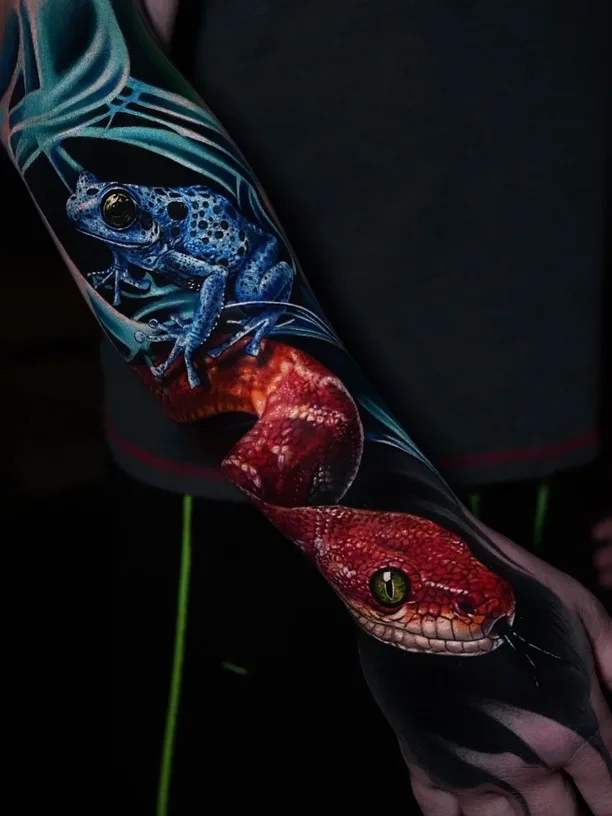
The work itself is character-driven, vivid, often funny, and built around a kind of controlled exuberance. A client might arrive with something as open as a 'happy face animal' or a 'wild one,' and from that starting point Nyeste sketches, researches, and shapes the design to the specific body part it will occupy. The client's idea is a door, not a blueprint.
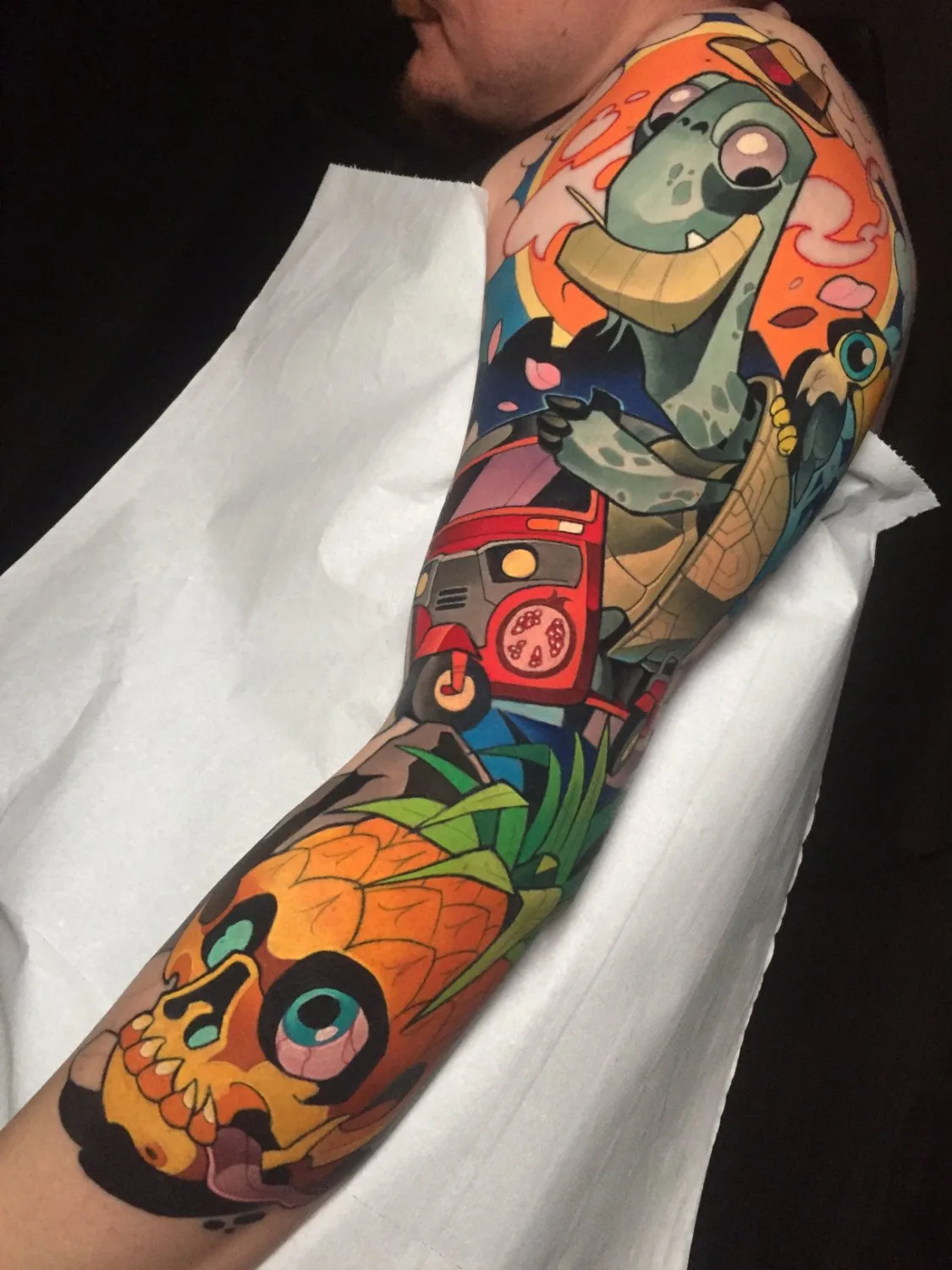
Nearly all his clients give him close to full creative freedom once a concept is established. Custom design is the default, whether the subject is a fictional creature or an existing cartoon character. The best results, in his view, come when the client steps back and trusts the process, and from what he sees in the finished work, that trust is consistently well placed.
“My customers are giving me nearly 100% freehand, besides having an idea, even it is a fictional thing or an existing cartoon character.”
Large-scale projects are where his approach becomes most visible. A full composition across a major body area typically runs five to eight sessions, each lasting around five to six hours of actual tattooing. The sessions are long, the skin management is deliberate, and the satisfaction comes partly from watching the image accumulate, session by session, the thing becoming itself.
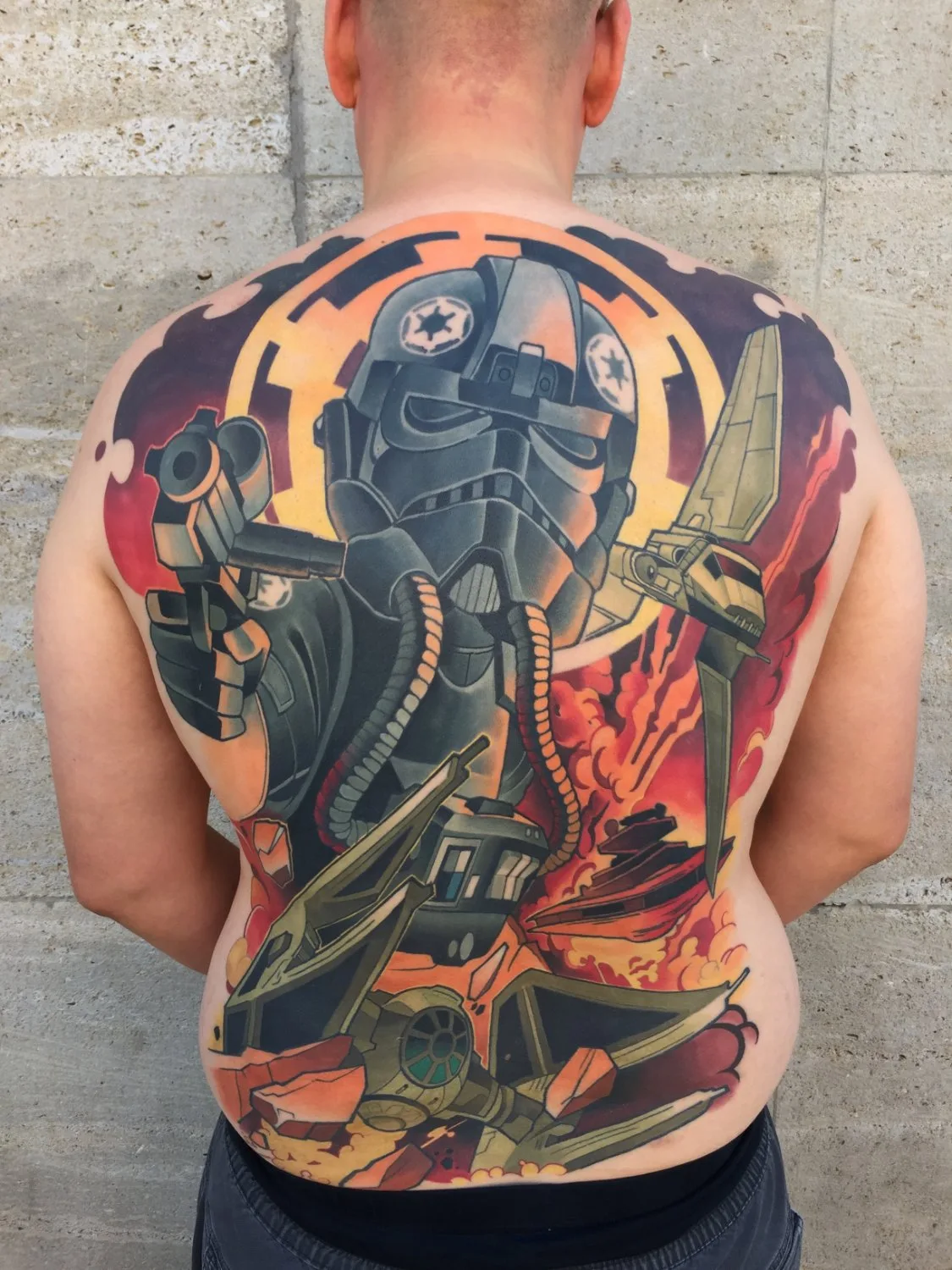
Technically, Nyeste works fast relative to the density of color blending he puts into a piece. He is careful about that distinction: speed that protects the skin, not speed that cuts corners. He has been working with Starbrite Colors for years, a sponsorship that has shaped the consistency of his palette. Bright, high-contrast, vibrant, his color choices are not accidental.
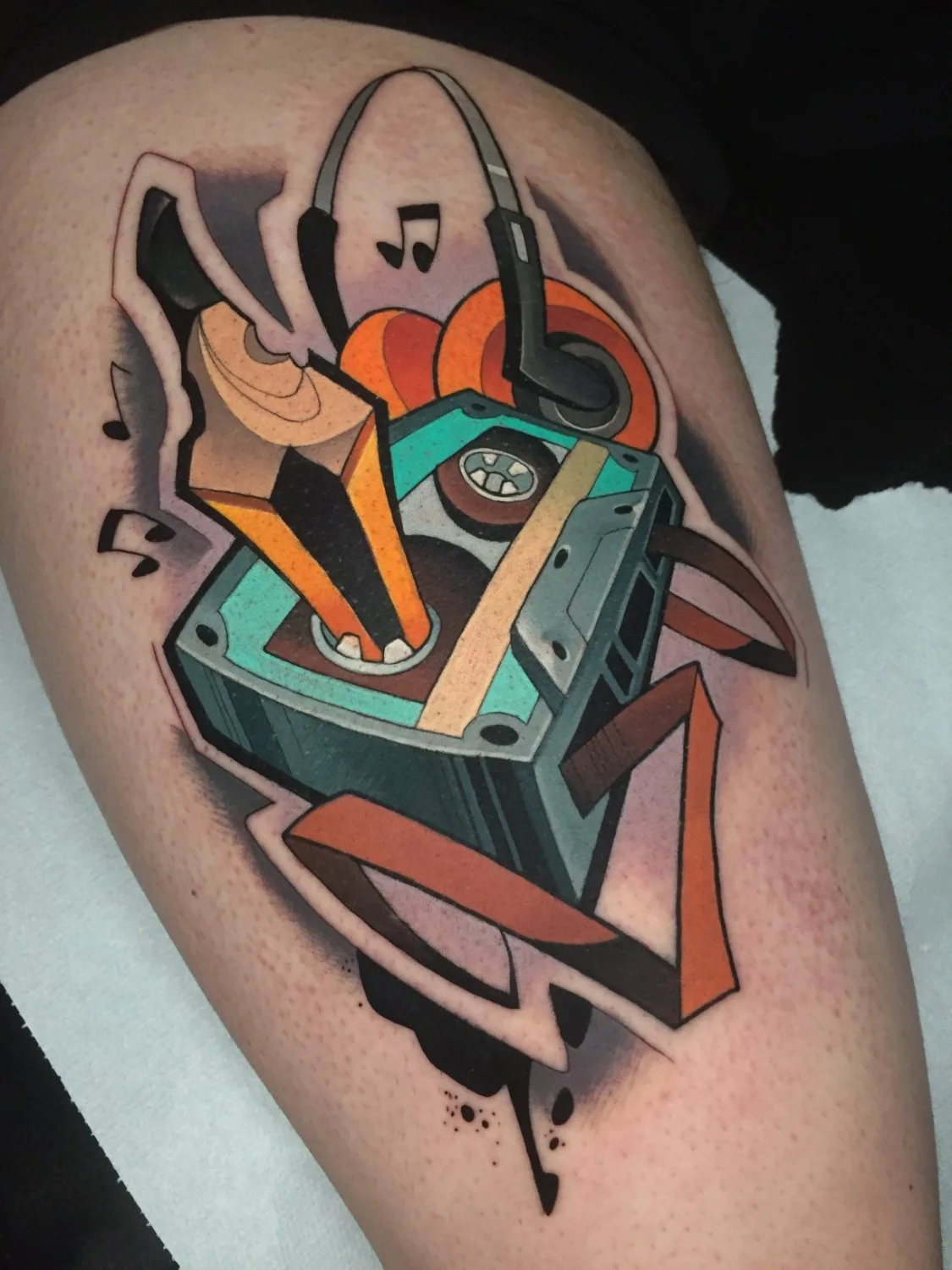
Collaborations with other tattooers have contributed to his development in ways that solo studio work cannot quite replicate. He names those experiences as genuinely formative. The real measure of a tattoo, though, comes later: a fully healed piece tells him things a fresh one cannot, and he uses that information to adjust the next project.
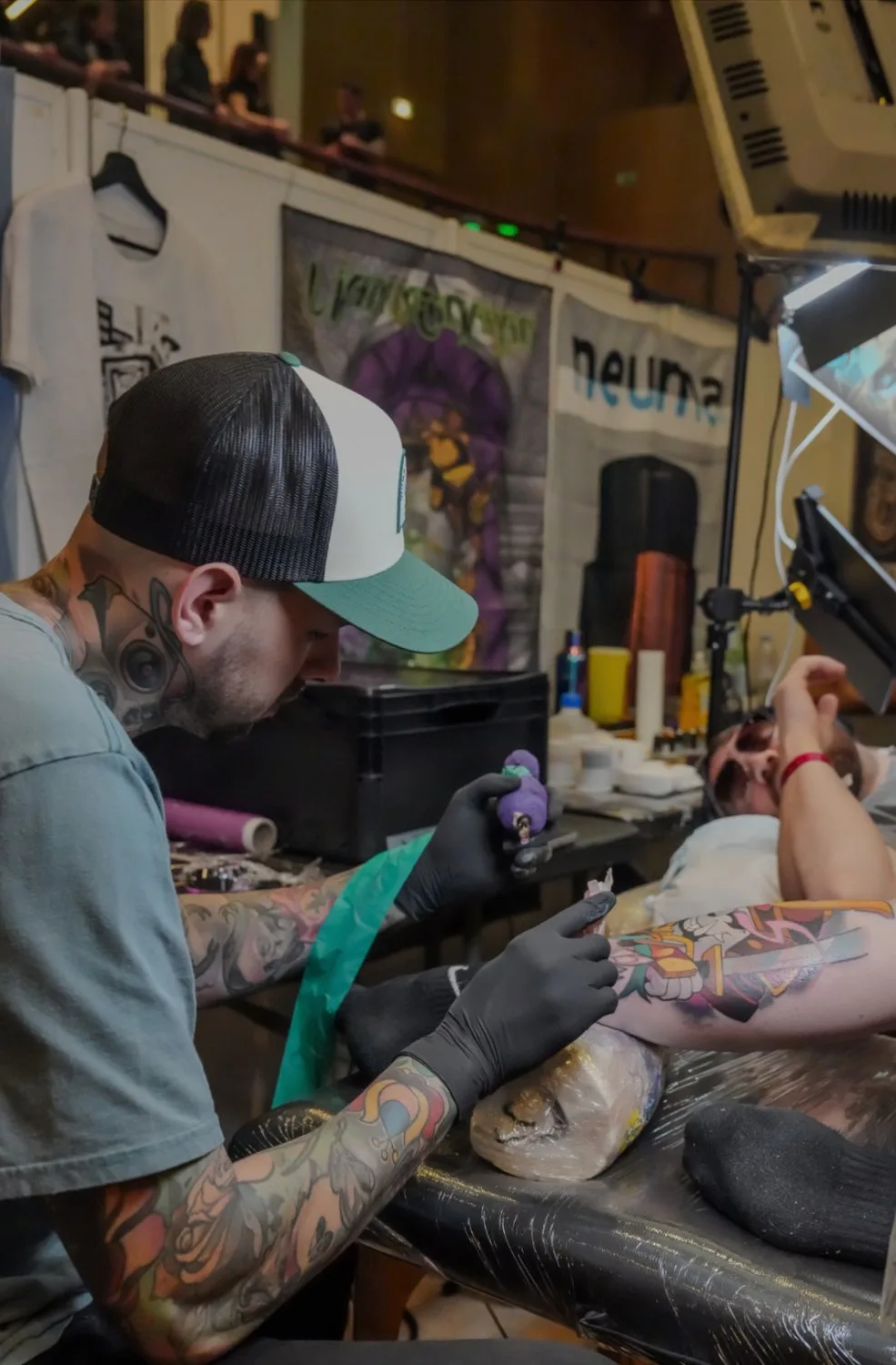
“For me the real feedback comes when I see the tattoo fully healed, because I could improve or do differently next time.”
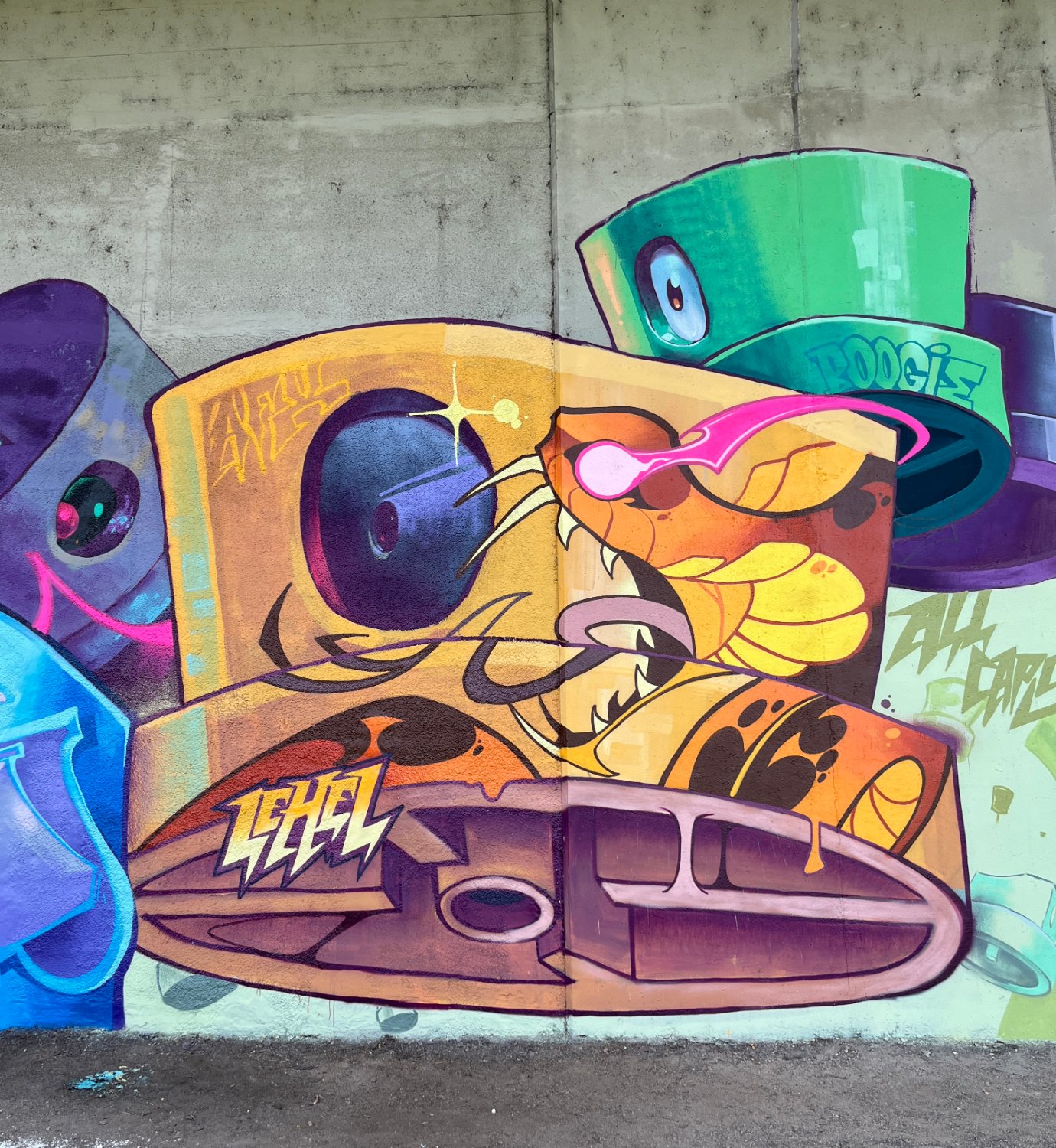
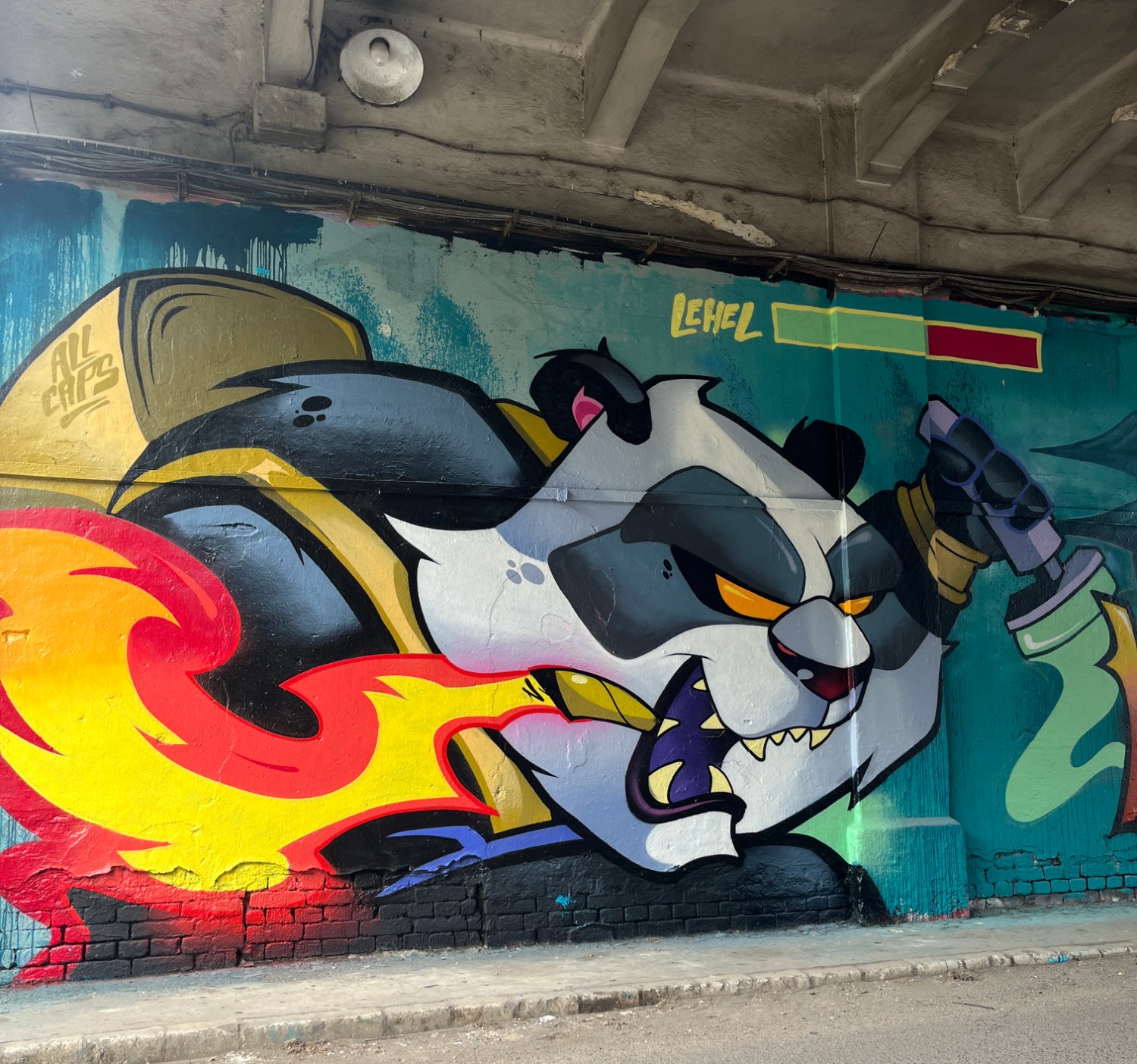
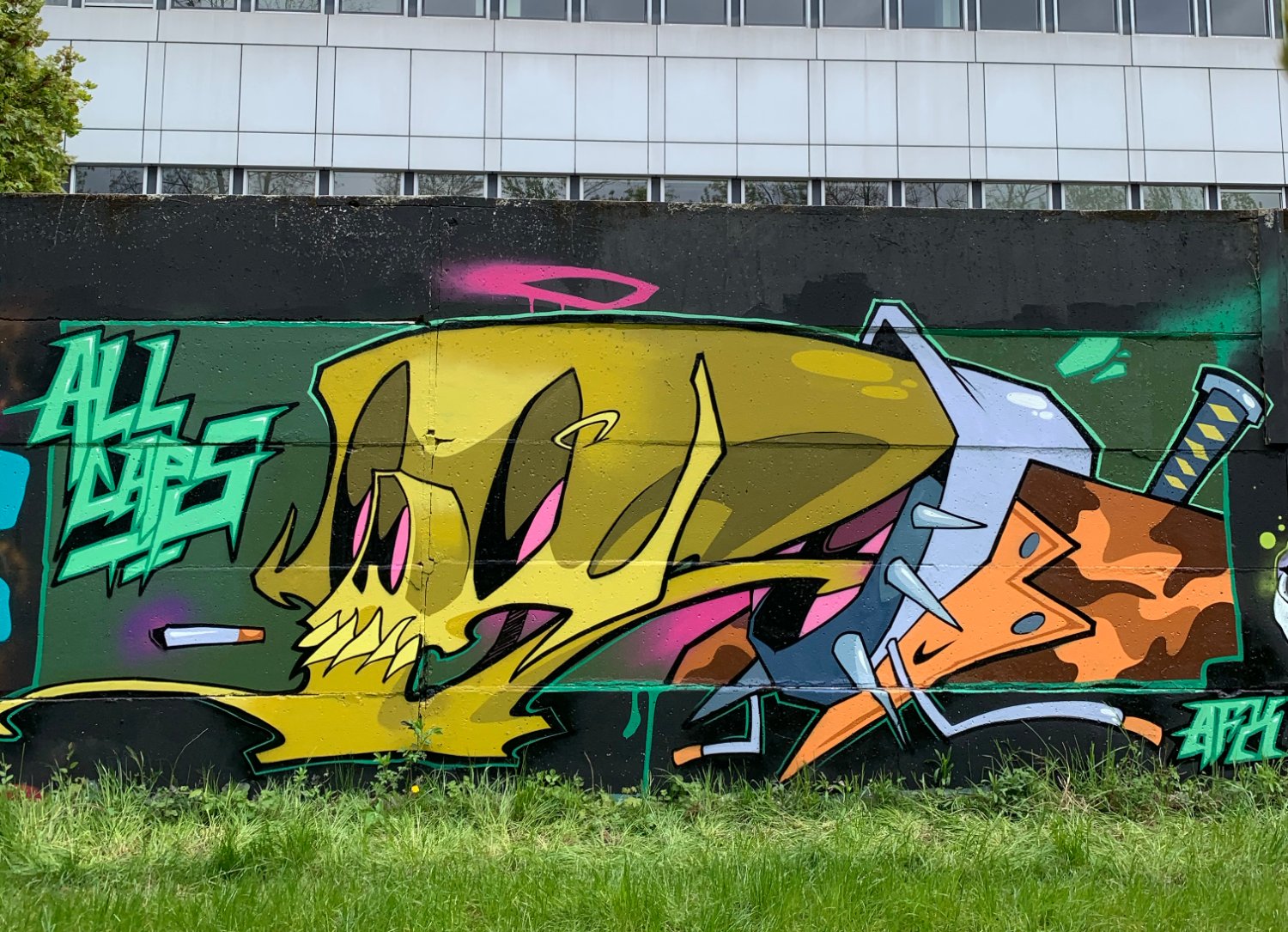
Graffiti never stopped. Nyeste still paints regularly, mostly in Miskolc, though legal walls mean pieces cycle in and out. He has painted extensively in Germany and visited Italy the previous year. The discipline of developing a singular, recognizable visual identity, which street art demands, carries directly into how he thinks about his tattoo work.
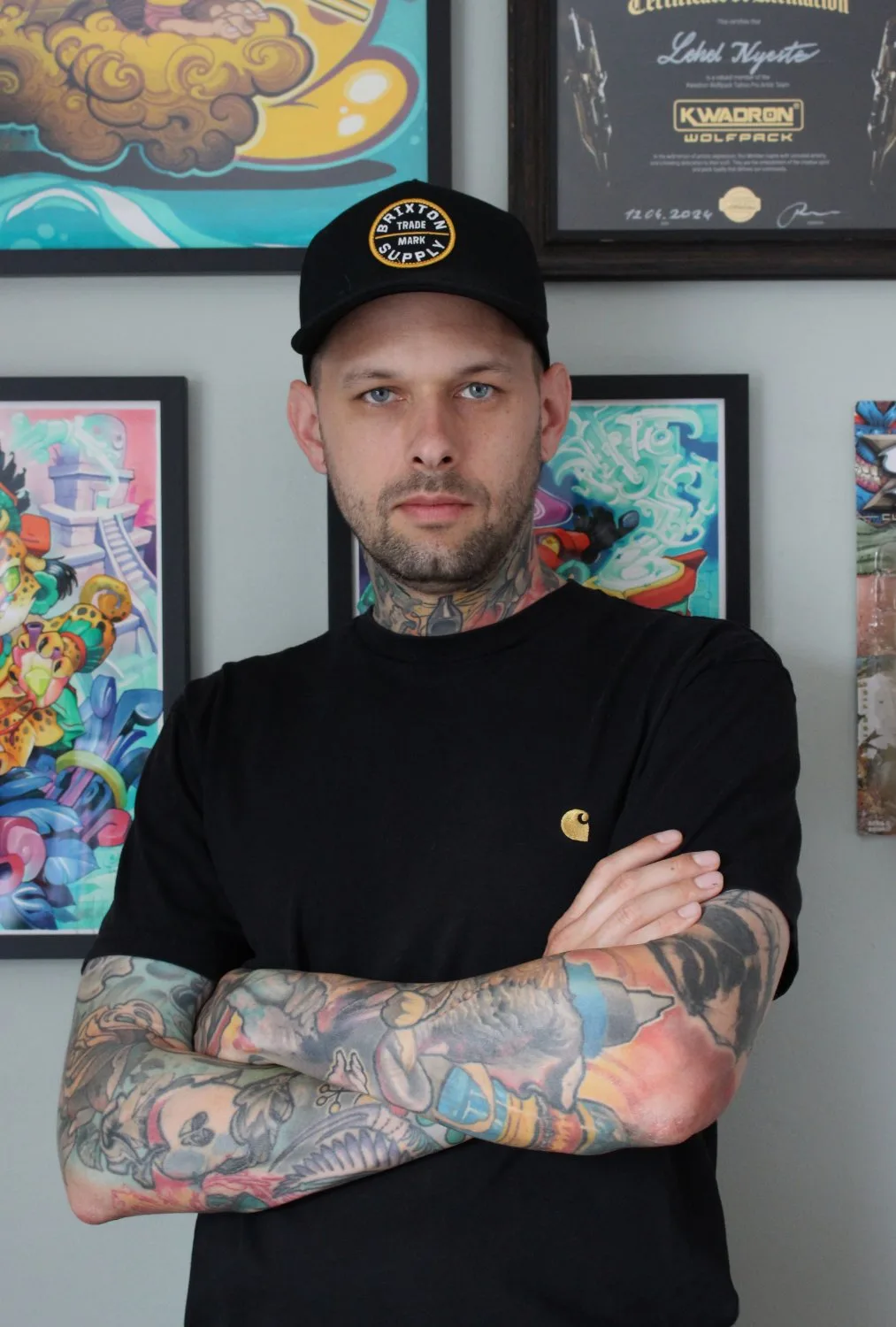
The most significant wall he ever painted was in Budapest, about ten years ago: a large-scale piece executed over three days on a bridge pier during the 'The city and water' festival. It is still there. For an art form that often disappears under weather and paint, that kind of permanence means something.
Lehel Nyeste graffiti mural
Lehel Nyeste graffiti mural
Lehel Nyeste, large-scale graffiti mural
His convention record is substantial. Across events in Amsterdam, Milan, Paris, Kraków, and Brussels, he has collected multiple awards: three consecutive 'Best of Color' wins at the Budapest Tattoo Convention from 2015 through 2017, 'Female Composition' at TattooFest Kraków in 2017, and 'Best of Day' at the Evian Tattoo Show in 2018, 2019, and 2024. The Mondial du Tatouage in Paris remains his favorite, the scale of the venue, the atmosphere, and the density of talent gathered there.
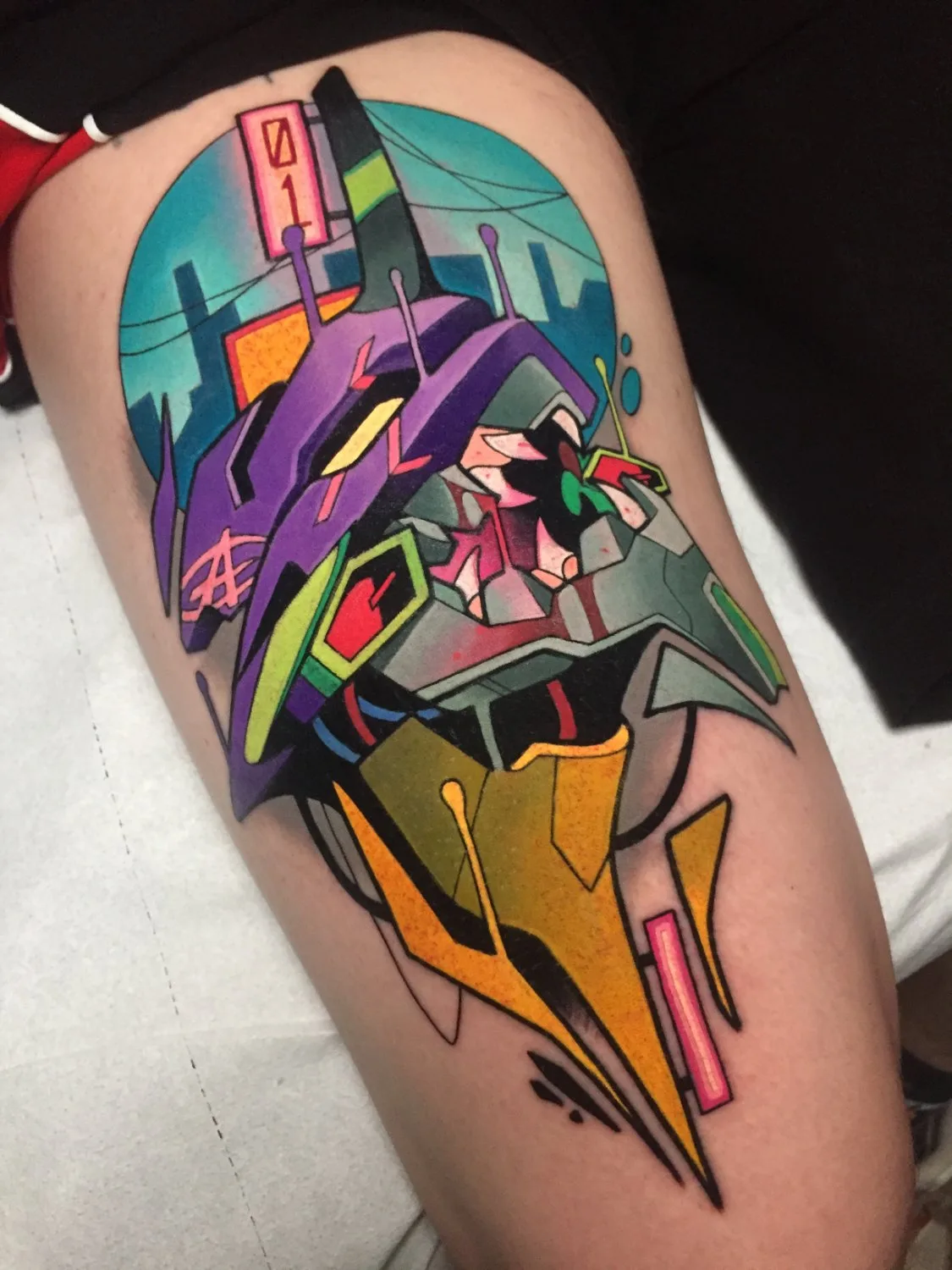
Convention tattooing is a different discipline. Limited equipment, unfamiliar conditions, decisions made on the spot. Nyeste finds that the constraints sharpen his efficiency rather than compromise his output. Preparation increases, more finished designs, more stencils ready, but the pressure of the environment pushes him in ways a quiet studio day does not.
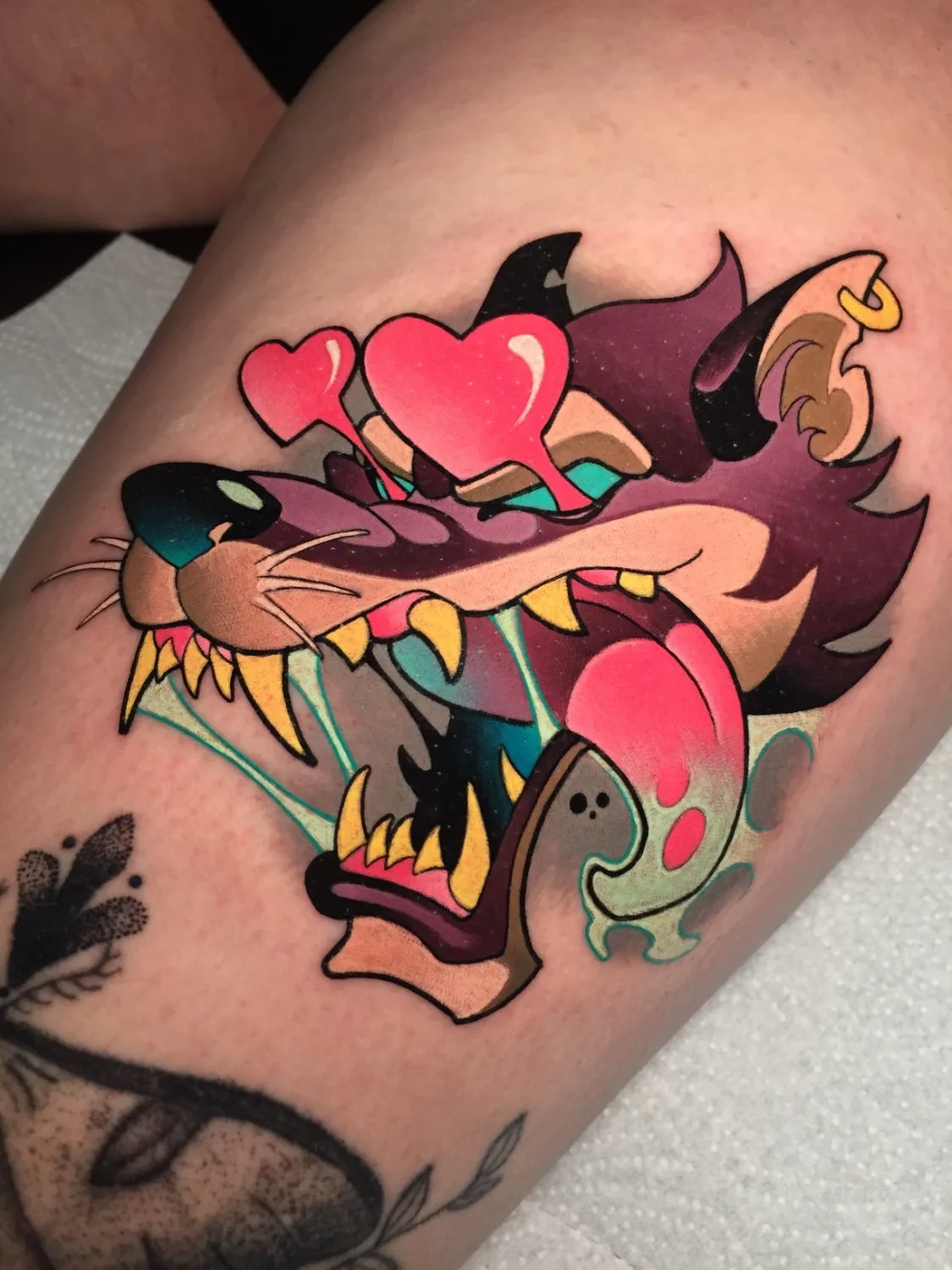
“My favorite has been the 'Mondial du Tatouage' in Paris, because of the huge venue, the atmosphere and work alongside nearly 400 tattoo artists from all over the world.”
Outside the tattoo industry, he is building toward an exhibition planned for this year, producing prints, and releasing merchandise including t-shirts, tote bags, and stickers. He is open to collaborations with clothing brands and bands, and reachable at lehel.chaos@gmail.com for anyone with an interesting project. The work is expanding outward.
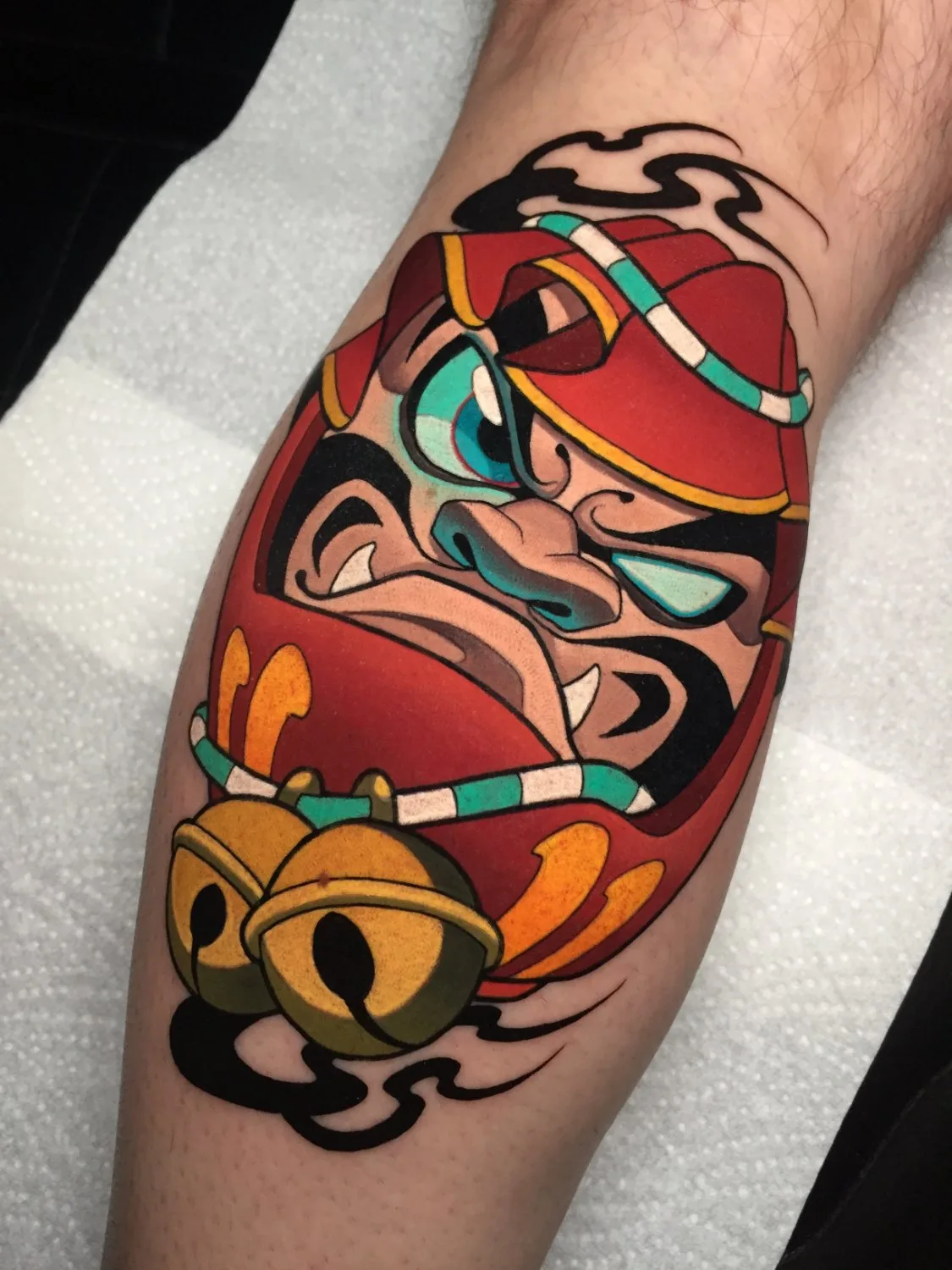
What holds it all together, the walls, the skin, the prints, the convention floors, is the same thing it has always been: a commitment to a visual identity that is specific enough to be recognized and flexible enough to keep growing. Nyeste has been building that identity since he first picked up a spray can in a small Hungarian town. He is still building it.